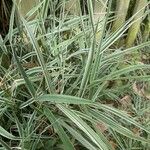
Phalaris arundinacea
Ribbon grass · Reed Canary grass · Spider Plant · Gardener's-garters · Variegated grass
Description
Source: leafsnapPhalaris arundinacea, commonly known as reed canary grass, is a tall perennial grass native to Europe, Asia, and North America. This plant can grow up to 2 meters in height and features long, flat, narrow green leaves. In the summer months, it produces dense clusters of flowers, which are followed by small seeds. Reed canary grass is typically found in wetlands, along riverbanks, and in other moist habitats. It is often used for erosion control because its extensive root system helps stabilize soil. While reed canary grass has some beneficial uses, such as providing forage for livestock and serving as a source for biofuel production, it also poses a threat as an invasive species. It spreads rapidly through rhizomes (underground stems), allowing it to outcompete native plant species. In summary, Phalaris arundinacea is a noteworthy plant with both positive and negative environmental impacts depending on how it is used or managed.
🌳 Although it isn't the most showy plant, reed canary grass is tough and suited to a variety of practical uses. Its rapid growth makes it well suited for producing biomass energy, offering an environmentally friendly alternative to fossil fuels. As a biomass source it can be converted into heat, electricity, or bioethanol suitable for vehicles. It also serves as a valuable alternative fodder for animals in areas with limited grazing. Most notably, reed canary grass has strong phytoremediation capabilities: it absorbs and neutralizes soil pollutants, which could be revolutionary for cleaning up land harmed by industry.
🎭 Persistence
Care Guide
💧 Water Every 7 days
Reed canary grass thrives in wetlands and waterways due to its need for consistent moisture. To keep it healthy, water the plant twice a week, making sure the soil remains damp but not waterlogged. When grown outdoors, it benefits from rain and high humidity, which are essential for its growth. Maintaining the right balance between moisture and drainage is crucial for the plant's well-being.
What should I do if I give my Reed canary grass too much or too little water?
For the best performance, it is important to water this beautiful ornamental grass properly. When planted in the ground, any watering issues can be resolved. However, in a container, too little or too much water can quickly kill Reed canary grass. When Reed canary grass isn't receiving the right amount of water, it may stop growing. Overwatering can cause yellow leaves with brown tips, while underwatering can result in drooping leaves, weak seed head production, and browned leaves. If you suspect improper watering, the first step is to determine if the problem is too much or too little water. If it is receiving too much water, stop watering immediately. Keep in mind that heavy soils may take weeks to dry out, so be patient. Once new growth is observed, test the soil for moisture and decide if more water is necessary. On the other hand, if the grass is receiving too little water, simply give it a deep drink and see if it improves. It is important to remember that a long, deep watering is better than frequent shallow waterings. This encourages the growth of deep roots, making the grass more resistant to drought and less vulnerable to watering issues.
How often do I need to water my Reed canary grass?
The watering needs of Reed canary grass depend on its location. In general, it should be watered weekly. In hot climates, watering once or twice a week during summer may be necessary. In moderate climates, watering once every seven days or more may be enough. Grass in containers usually needs more frequent watering than grasses in the ground. However, the location of the grass also matters. Shaded grasses require less frequent watering than grasses planted in the ground. Reed canary grass should only be watered when the soil is dry. To determine if the soil is dry, you can press your finger a couple of inches into the soil or use a portable scale to check the weight of potted grass. If the soil feels light or the grass blades appear folded and thinner than usual, it is a sign that the roots lack sufficient water. Although Reed canary grass is drought-tolerant, regular and deep waterings will enhance its appearance. In the wild, Reed canary grass grows in open scrubland, exposed to extreme heat, bright sun, and intermittent rain. Although it is drought-resistant, it still requires care and attention. Consistent watering is recommended by gardeners for optimal growth. When newly planted, Reed canary grass needs more frequent watering until it establishes deep roots. For potted grass, the soil dries out quickly, especially if exposed to hot, direct sun. Testing the soil every 3 to 4 days and watering when it feels dry is advised. In-ground Reed canary grass generally requires less watering, but this depends on the soil type. Heavy clay soil may appear dry at the surface while still retaining moisture below, while sandy soils that drain quickly will require more frequent watering.
What do I need to be careful about when watering my Reed canary grass in different seasons, climates, or during different stages of growth?
To determine if you are watering enough, consider the rate of growth of your grasses. Reed canary grass, for example, can double in size within a year during the hottest months. If it's hot weather and the grass isn't growing vigorously, you may need to adjust your watering schedule. In winter, watering once a month may suffice, but check the soil for moisture. During the growth cycle in warm months, the grass requires increased water. However, during winter and cooler months, the need for water significantly decreases. Remember, it's crucial to let the soil dry out completely before watering Reed canary grass.
☀️ Light Full sun
Reed canary grass grows best in places that receive abundant sunlight throughout the day, though it can also adjust to locations with less light. Sunlight is essential for its healthy development, especially during its early growth stages. Excessive or insufficient sunlight can reduce its vigor.
What are the sunlight requirements for reed canary grass?
Reed canary grass requires a significant amount of sunlight to thrive, ideally being exposed to full sun, which means receiving more than 6 hours of sunlight daily, or partial sun, with about 3-6 hours of sunlight. The plant primarily thrives in areas with abundant sun exposure throughout the day but can adapt to areas with lesser light exposure. Sunlight is crucial for its healthy growth, especially during the early growth stages. It's important to observe how sunlight moves through your garden over the day to find spots that offer the right balance of light and shade to ensure the plants' development and happiness.
What solutions exist for reed canary grass receiving insufficient sunlight?
For indoor plants suffering from low sunlight exposure, a gradual move towards a sunnier location each week is advised until they achieve at least 6 hours of direct sunlight daily, with a south-facing window being a desirable spot. If the plant is too large or not easily movable, using artificial light such as a desk or ceiling lamp for at least 8 hours daily, or investing in professional plant grow lights, can be beneficial. For outdoor plants, moving them gradually to sunnier locations can help, avoiding sudden changes to prevent sunburn. Reducing obstructions like pruning trees to let sunlight through and transplanting smaller plants during their dormant period to locations with ample sunlight and good drainage are effective strategies. However, it's noted that parts of the plant affected by insufficient sunlight may not recover, but new growth will be healthier post light exposure increase.
How does artificial lighting benefit plants with inadequate natural sunlight?
Artificial lighting serves as a vital solution for indoor plants when natural sunlight is insufficient, particularly during winter or in less sunny spaces. It promotes faster, healthier growth by compensating for the lack of natural light. LED lights are a popular choice because they can be customized to provide specific wavelengths of light needed by the plants. Full sun plants require 30-50W/sq ft, partial sun plants need 20-30W/sq ft, and full shade plants need 10-20W/sq ft of artificial light. Proper placement is crucial, with the light source being 12-36 inches above the plant to mimic natural sunlight effectively. Moreover, the duration of exposure should mimic natural daylight hours, with most plants needing 8-12 hours of light per day.
What are the symptoms of light deficiency in reed canary grass?
Symptoms of light deficiency in reed canary grass include the growth of smaller new leaves compared to mature ones, leggy or sparse growth, faster leaf drop, slower or halted growth, lighter-colored new leaves indicating a lack of chlorophyll, and chlorosis where leaves turn yellow due to chlorophyll breakdown. Excessive sunlight can also lead to adverse effects like sunscald, which damages plant tissues, leaf curling as a defense mechanism against water loss, wilting due to increased transpiration rates, and leaf scorching characterized by brown, dry edges or patches on leaves. These symptoms signal the plant's struggle with its light environment, necessitating adjustments to its light exposure.
🌡️ Temperature 5–35°C
In its native habitat, reed canary grass grows in temperate areas that typically have fairly mild summers and winters. It prefers temperatures from 41 to 95 ℉ (5 to 35 ℃), meaning it is suitable for a broad range of climates. In winter it can withstand much colder conditions, surviving even when temperatures drop below 0 ℉ (-18 ℃).
What is the native environment of reed canary grass?
Reed canary grass (Phalaris arundinacea) thrives in temperate regions known for their relatively mild summers and winters. It prefers a temperature range of 41 to 95°F (5 to 35°C), making it adaptable to many climates. Even during the winter, it can withstand temperatures below 0°F (-18°C) without the need for special frost protection. However, in extremely cold conditions where temperatures may fall below -30°C, precautionary measures such as covering the plant with soil or straw can be beneficial. It's also advised to water the plant abundantly before the first freeze in autumn to ensure the soil stays moist and prevents drought during the colder months.
How does reed canary grass respond to low temperatures?
Reed canary grass shows remarkable cold tolerance and generally thrives best when temperatures are above 5°C but should remain above -25°C during winter. If temperatures drop below -30°C, you might not notice immediate damage during winter, but there can be a significant impact on the plant's ability to sprout in spring. Sprouting may decrease or not occur at all. The recommended solution for this issue is to remove any parts of the plant that fail to sprout in the spring, allowing for new growth and recovery.
How does reed canary grass respond to high temperatures?
During the summer, it is important to ensure that the temperature around reed canary grass does not exceed 35°C. Exposure to temperatures above 38°C can lead to leaves turning lighter in color, curling, becoming prone to sunburn, and in severe cases, the entire plant may wilt and dry out. To mitigate damage from high temperatures, trim away any sunburned and dried parts of the plant. Moving the plant to a shaded location or using a shade cloth to protect it from the midday and afternoon sun can be effective. Additionally, watering the plant in the morning and evening helps keep the soil appropriately moist during hot periods.
💨 Humidity
🪴 Soil 6-8
🌱 Fertilizer
Reed canary grass benefits from extra nutrients to encourage healthy new growth. Applying compost around the plant’s base in spring can effectively supply the nutrients it requires. Fertilizing helps support robust growth and improves the plant’s resistance to diseases and pests.
Why should I put fertilizer on my Reed canary grass?
Fertilizing Reed canary grass is important for a few reasons. Firstly, it provides your plant with the necessary nutrients to promote healthy new growth. Additionally, these extra nutrients also help maintain the health of the existing growth, while also boosting its ability to resist diseases and pests.
When should I fertilize my Reed canary grass?
To ensure the survival of Reed canary grass in your garden, it's important to understand when to fertilize it. This type of grass doesn't require a lot of nutrients and doesn't need any additional feeding when it's dying back. While it might be tempting to use diluted fertilizer at the beginning of the growing season, it's actually not recommended. Instead, a better approach is to apply some mulch or compost around the base of the plant.
When is it best to not fertilize my Reed canary grass?
You don't have to worry about when to stop feeding Reed canary grass since you're not using packaged fertilizers. Simply apply a layer of compost or mulch in the spring, and that will be sufficient to keep Reed canary grass thriving all year long. As for mulching or composting in the winter, there's no need to worry since the plant is dormant.
What kind of fertilizer does my Reed canary grass require?
Instead of rushing to the garden center to buy fertilizer for reed canary grass, you can simply lay down compost in the spring. This will provide the plant with the essential nutrients it needs. Additionally, annual mulching with bark will also help keep the plant well-nourished and content.
How can I provide nutrients to my Reed canary grass?
When using mulch or compost, the steps for Reed canary grass are the same. Start by laying down a layer of the material, ensuring it covers the plant's base. If you decide to use both mediums, remember to decrease the amount of compost used. Adding a layer of mulch serves two purposes - it retains moisture in the soil and provides nutrients for your plant.
🪴 Pot & Repot 2-3 years
When repotting Reed canary grass, select a pot 1-2 inches (2.5–5.1 cm) larger that has ample drainage. Use a well-draining potting mix. Repot in spring or fall, making sure the root ball sits slightly lower than the rim of the flower pot. Water thoroughly after repotting and place it in a warm spot with indirect sunlight.
✂️ Pruning
Reed canary grass is a robust perennial that requires pruning in early spring to control its growth. By cutting the stems down to the ground, you can promote healthy growth and prevent the grass from spreading invasively, keeping it at a more manageable size. Regular pruning also enhances the plant's vigor and resilience, as confirmed by trustworthy horticultural sources.
🌿 Propagating
🐛 Diseases & pets
☠️ Toxicity
Characteristics
- Plant Type
- Grass
- Life Cycle
- Perennial
- Genus
- Phalaris
- Family
- Poaceae
- Hardiness Zone
- 4-9
- Mature Height
- 2.13 m
- Mature Spread
- 3.05 m
- Leaf Color
- Green, White, Variegated
- Leaf Type
- Deciduous, Evergreen
- Flower Color
- Green, Brown
- Flower Size
- 1.02 cm to 4.06 cm
- Bloom Time
- Late spring, Early summer, Mid summer
- Planting Time
- Spring, Summer
- Harvest Time
- Mid summer
- Native Area
- Turkey, Austria, Sweden, Belarus, Uzbekistan, Iraq, Germany, Estonia, Romania, Latvia, Belgium, Moldova, France, Portugal, Tajikistan, Bulgaria, Armenia, Poland, Greece, Ukraine, Lithuania, Norway, Kyrgyzstan, Kazakhstan, Italy, Spain, Switzerland, Denmark, Finland, Iran, Albania, Azerbaijan, United Kingdom, Hungary, Turkmenistan