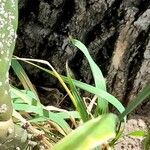
Phalaris canariensis
Seed Canary grass · Canary grass · Common Canary Grass · Annual canarygrass · Birdseed Grass
Description
Source: leafsnapPhalaris canariensis, commonly known as Canary grass or alpiste, is a species of grass native to the Mediterranean region. It is an annual plant that can grow up to 1.5 meters tall and features a dense cluster of spikelets at the top of its stem. The leaves are long, narrow, and have a bluish-green color. Canary grass has been cultivated for centuries as a food source for birds, particularly canaries. It is also used in traditional medicine for its diuretic and anti-inflammatory properties. In addition to its uses in bird feed and medicine, Canary grass has been studied for its potential as a biofuel crop due to its high biomass production and low water requirements. However, it should be noted that Phalaris canariensis contains alkaloids, which are toxic if ingested in large quantities by humans or livestock. Therefore, it should be used with caution when consumed by animals or humans. Overall, the Phalaris canariensis plant holds great potential both economically (as bird feed) and environmentally (as a biofuel crop), but requires careful handling due to the toxicity concerns associated with its alkaloid content.
Care Guide
💧 Water Every 7 days
Annual canarygrass thrives with moderate moisture and prefers weekly watering to simulate its natural, consistent rainfall environment. Being an annual plant, it requires careful watering during its growing season to ensure robust growth, especially when cultivated outdoors.
What should I do if I give my Annual canarygrass too much or too little water?
Proper watering is essential for this beautiful ornamental grass. When planted in the ground, watering issues can be resolved. However, in a container, excessive or insufficient water can quickly kill Annual canarygrass. Insufficient watering can cause stunted growth, while overwatering can result in yellow leaves with brown tips. Underwatering can cause drooping leaves, weak seed head production, and browned leaves. If you suspect your Annual canarygrass has been improperly watered, first determine whether it has been overwatered or underwatered. In the case of overwatering, stop watering it immediately and wait for the soil to dry out. Test the soil for moisture before deciding whether it needs more water. If the grass has been underwatered, simply give it a deep drink and observe if it perks up. Remember, long and deep watering is better than frequent shallow waterings, as it encourages deep root growth, making the grass more drought-resistant and less susceptible to watering issues.
How frequently do I need to water my Annual canarygrass?
The watering needs of Annual canarygrass depend on the planting location. In general, watering once a week is recommended. However, in hot climates, watering once or twice a week during summer may be necessary. In moderate climates, watering once every seven days or more should be enough. Grass in containers typically needs more frequent watering than grass in the ground. The location also matters for this species, as shaded grasses require less frequent watering compared to in-ground grasses. It is important to only water Annual canarygrass when the soil is dry. You can check soil moisture by pressing your finger a couple of inches into the soil or weighing the potted grass with a portable scale. Lack of sufficient water can cause blades to appear folded along their centers and thinner than usual. Regular, deep waterings will enhance the grass's color, despite its drought tolerance. While it may seem that Annual canarygrass does not require water due to its natural resilience in the wild, it still needs care and attention. Consistent watering is recommended as it thrives best with sufficient water. Newly planted Annual canarygrass requires more frequent watering until it establishes deep roots. Potted grasses dry out quickly, especially in hot, direct sunlight. Test the soil every 3 to 4 days and water only when it feels dry. In-ground grass generally needs less watering, but this depends on the soil type. Clay soil can retain moisture below the surface even if it feels dry on top, while sandy soil that drains quickly may require more frequent watering.
What do I need to be cautious about when watering my Annual canarygrass in different seasons, climates, or during different stages of growth?
To determine if you are watering your grass enough, pay attention to how quickly it grows. Annual canarygrass, for example, can double in size within a year during the hottest months. If the weather is hot but the grass isn't growing well, you may need to adjust your watering schedule. In winter, you can probably water once a month, but make sure to check the soil for moisture. Generally, the grass needs more water during the growth cycle in warm months, while water requirements decrease significantly during winter and cooler months. Remember to let the soil dry out completely before watering Annual canarygrass.
☀️ Light Full sun
Annual canarygrass prefers sites where it gets unobstructed sun for most of the day. Its native habitat demonstrates its liking for sunlit environments. Conversely, insufficient sunlight can keep it from developing in a healthy, vigorous way.
What are the sunlight requirements for Annual Canarygrass?
Annual Canarygrass requires full sun, which means it needs above 6 hours of sunlight daily to grow healthily and robustly. Its growth can be hindered by less than optimal sunlight exposure. It is essential to watch how sunlight moves through your garden, choosing spots that offer a balance of light and shade to ensure the plants' happiness. In conditions where natural sunlight is insufficient, especially during winter or in less sunny spaces, artificial lighting can be a vital solution. Indoor plants benefit from LED lights, which can be customized to provide specific wavelengths needed by the plants, with full sun plants requiring 30-50W/sq ft, partial sun plants needing 20-30W/sq ft, and full shade plants needing 10-20W/sq ft of artificial light.
What symptoms of light deficiency might Annual Canarygrass show?
When cultivated indoors or in conditions with inadequate light, Annual Canarygrass may exhibit symptoms such as small leaves, leggy or sparse growth, faster leaf drop, slower or no new growth, and lighter-colored new leaves. Moreover, excessive sunlight can lead to chlorosis (leaves losing their green color), sunscald (damage from intense sunlight exposure), leaf curling (a defense mechanism to reduce water loss), wilting (loss of turgor pressure), and leaf scorching (brown, dry edges on leaves due to excessive sunlight). These symptoms indicate a need to adjust the plant's lighting conditions to promote healthy growth.
How can you mitigate light deficiency symptoms in Annual Canarygrass?
To combat light deficiency in Annual Canarygrass, gradually exposing the plants to more sunlight is crucial. For indoor plants, move them to a sunnier location week by week until they receive at least 6 hours of direct sunlight daily, use a south-facing window, or consider artificial lighting solutions like desk lamps or grow lights for at least 8 hours daily. Outdoor plants should also be moved gradually to sunnier spots to prevent sunburn. If physical obstructions block sunlight, like trees, pruning might be necessary, or for smaller plants, transplanting during their dormant period to a location with ample sunlight and good drainage can help. Note that parts of the plant affected by insufficient sunlight may not recover, but new growth post-adjustment will be healthy.
🌡️ Temperature 5–35°C
Annual canarygrass is native to temperate areas and prefers a temperature range of 68 to 95°F (20 to 35℃). It tolerates seasonal temperature swings, but keeping this preferred range in a controlled setting can greatly enhance growth.
What are the ideal growing conditions for annual canarygrass?
Annual canarygrass, indigenous to regions with moderate climates, thrives in temperatures ranging from 68 to 95°F (20 to 35°C). This plant adjusts well to seasonal temperature fluctuations, however, maintaining this preferred temperature range in a controlled environment can significantly enhance its growth. The plant possesses a strong resistance to cold, thus special frost protection measures are generally not necessary. If winter temperatures are anticipated to dip below -25°C, providing cold protection by covering the plant with soil or straw is recommended. To aid in drought and water scarcity prevention during winter and early spring, it is advisable to water the plant abundantly before the first freeze in autumn, ensuring the soil remains moist and enters a frozen state.
What should be done if annual canarygrass is exposed to temperatures below -25°C?
Annual canarygrass has notable cold tolerance, preferring temperatures above 20°C and ideally kept above 0°C during winter. In instances where temperatures fall below -25°C, there may not be noticeable changes immediately, but a decrease in sprouting or absence of sprouting can occur by springtime. The recommended solution is to remove any parts of the plant that have failed to sprout as spring arrives.
How should annual canarygrass be cared for in high temperatures?
In summer, it is critical to ensure that the annual canarygrass is not exposed to temperatures exceeding 35°C. Should the temperature rise above 38°C, the plant's leaves may lighten in color, become prone to curling, susceptible to sunburn, and in severe cases, the entire plant may wilt and dry out. To mitigate these effects, trim away any sunburned and dried-up parts of the plant. Move the plant to a shady location, away from the midday and afternoon sun, or use shade cloth for protection. Additionally, watering the plant in the morning and evening will help keep the soil adequately moist.
💨 Humidity
🪴 Soil 6-7
🌱 Fertilizer
For best development, Annual canarygrass needs three fertilizer applications: before planting, one month after seedling emergence, and a final application 1 to 1.5 months after the second. Some Annual canarygrass varieties also benefit from extra fertilizer at planting to support rapid growth.
🪴 Pot & Repot
When repotting Annual canarygrass, choose a pot that is 1–2 inches (2.5–5.1 cm) larger in diameter and that has good drainage. Use a well-draining potting mix and consider adding perlite for extra drainage. Repot in spring or early summer, water thoroughly afterward, and place it in a shady spot at first.
✂️ Pruning
Annual canarygrass is an ornamental grass appreciated for its tufted growth and distinctive seed heads. To maintain its health and appearance, prune the plant from early to late spring by trimming any dead stems and thinning the plant periodically to improve air circulation. After the grass blooms, cut it back to encourage better flowering and promote healthy growth for the next season, ensuring its longevity.
🌿 Propagating
🐛 Diseases & pets
☠️ Toxicity
Characteristics
- Plant Type
- Grass
- Life Cycle
- Annual
- Genus
- Phalaris
- Family
- Poaceae
- Hardiness Zone
- 5-9
- Mature Height
- 1.83 m
- Mature Spread
- 76 cm
- Leaf Color
- Green
- Leaf Type
- Semi-evergreen
- Flower Color
- White, Green
- Flower Size
- 1.02 cm to 2.03 cm
- Bloom Time
- Early summer, Mid summer
- Planting Time
- Spring, Summer
- Harvest Time
- Late summer, Early fall
- Native Area
- Egypt, Turkey, Austria, Slovakia, Romania, Cyprus, Bulgaria, Greece, Croatia, Slovenia, Belarus, Ukraine, China, Russia, Lithuania, Hungary, Portugal, Italy, Spain, Switzerland, Estonia, Albania, Azerbaijan, South Korea, Latvia, France