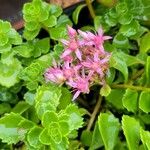
Phedimus spurius
Caucasian Stonecrop · Two-row Stonecrop · False Stonecrop
Description
Source: leafsnapPhedimus spurius, commonly known as Caucasian stonecrop or two-row stonecrop, is a succulent plant that belongs to the Crassulaceae family. Native to the Caucasus region of Eurasia, it has also been introduced and naturalized in many parts of the world. This plant features fleshy, green leaves arranged in a rosette pattern, growing up to 10 centimeters long. The oval-shaped leaves have pointed tips and slightly serrated edges. Its stems can reach up to 30 centimeters in height and produce small clusters of star-shaped flowers, which can range in color from pinkish-white to yellow. Phedimus spurius is easy to grow, thriving in well-draining soil with full sun exposure, although it can also tolerate partial shade. This drought-tolerant plant requires minimal watering once established. Its rapid spread through runners or offsets makes it an excellent choice for use as an ornamental garden plant or ground cover. In summary, Phedimus spurius is a hardy succulent with attractive foliage and flowers. Its low-maintenance nature and aesthetic appeal make it a valuable addition to any garden enthusiast's collection.
💡 Phedimus spurius, previously referred to as Sedum spurium, was reclassified due to differences in DNA, leading to its removal from the Sedum genus. This plant is available in two varieties: one with white flowers and another with reddish flowers. Among them, the variety known as "dragon's blood" is particularly popular in gardens and has numerous cultivated varieties.
🌳 Although frequently praised for its striking ruby-red foliage, caucasian stonecrop offers more than just visual beauty. The plant releases a subtle yet alluring sweet fragrance, caused by a compound called Dracorubin found in its sap. Historically used as incense, Dracorubin's resistance to high temperatures and pleasant aroma imply it could be suitable for making perfumes and scented products, suggesting caucasian stonecrop's cosmopolitan potential in the beauty sector.
Care Guide
💧 Water Every 7 days
Dragon's blood thrives in well-drained soil and only needs to be watered every three weeks, thanks to its high drought tolerance. This makes it perfect for rock gardens or containers. Its adaptability to low-rainfall environments also makes it ideal for xeriscaping.
When Should I Water My Dragon's Blood?
Watering your Dragon's Blood (Phedimus spurius) correctly is vital for its health and development. The plant needs water when the top 1 to 2 inches of soil feel dry to the touch. Wilting or lackluster leaves and fading or yellowing of the normally vibrant green leaves are clear signals that the plant needs more water. During hot and dry weather, especially in the summer months, it may require more frequent watering. It's crucial to monitor the time since the last watering and pay special attention during the pre-flowering stage. Avoid watering when the soil is already moist to prevent risks of over-watering such as root rot.
How Should I Water My Dragon's Blood?
Dragon's Blood requires well-draining soil and benefits from infrequent but deep watering sessions. The preferred technique is bottom-watering, where you fill a dish with water and let the plant absorb it from the bottom, preventing water from touching the foliage. Using a watering can with a narrow spout helps to control the water flow and avoid splashes, and a moisture meter can guide you to water the plant adequately without over or under-watering. Focus on watering the soil, not the plant itself, and ensure the water doesn’t pool at the rosette base. During winter, water even less to match the plant's reduced water needs.
How Much Water Does Dragon's Blood Really Need?
Dragon's Blood prefers infrequent yet thorough watering, allowing its roots to seek out moisture deeply within the soil. Typically, it requires about 1-2 inches of water per week, but this can vary based on the pot size, root depth, and the plant's overall size. Properly watered Dragon's Blood will display plump, succulent leaves and vibrant growth. The plant thrives in well-draining pots and sandy, gravelly soil mixes to prevent waterlogged conditions. Pay attention to your plant's size and pot size to adjust the watering volume accordingly.
What Kind of Water is Best for Dragon's Blood?
Non-chlorinated water, such as rainwater or filtered water, is optimal for watering Dragon's Blood due to its sensitivity to chlorine and fluoride found in tap water. These elements can cause leaf burn or discoloration. Room temperature water is ideal to avoid root shock. To minimize potential harm, let tap water sit out for about 24 hours before using it to allow chlorine to evaporate, or use a filtration system to remove other minerals and impurities. Continuous usage of tap water without precaution can lead to a build-up of minerals that may affect the plant’s health over time.
How Do Dragon's Blood's Watering Needs Change with the Seasons?
Throughout the year, Dragon's Blood's watering needs will vary. Spring calls for ensuring the soil is evenly moist due to increased growth, whereas summer necessitates less frequent watering but with thoroughness to support its succulent properties. In autumn, as the plant enters dormancy, reduce the frequency significantly, and further reduce watering in winter, catering only when the soil dries out completely. These adjustments help prevent root rot and ensure the plant remains healthy across the changing seasons.
☀️ Light Full sun
Caucasian stonecrop does best with abundant sunlight, though it can tolerate moderate sun because of its adaptable nature. Its native habitat receives generous solar exposure. Insufficient light can limit growth, while excessive exposure can cause scorching.
What are the sunlight requirements for Dragon's Blood?
Dragon's Blood, or Phedimus spurius, thrives best with extensive exposure to sunlight, ideally flourishing under full sun conditions with more than 6 hours of sunlight daily, though it can also adapt to partial sun, receiving about 3-6 hours of sunlight. Its ability to adapt is rooted in its origin habitat, which features generous solar exposure. It's crucial to observe the movement of sunlight through your garden to select spots ensuring the right balance of light for plant happiness, keeping in mind that insufficient light hampers growth, while excessive exposure may cause scorching.
How can artificial lighting support Dragon's Blood growth indoors?
For indoor growth, when natural sunlight is limited, especially during winter or in less sunny spaces, Dragon's Blood can benefit significantly from artificial lighting. LED lights, due to their ability to be customized to specific wavelengths, are recommended for providing the necessary light. Full sun plants, including Dragon's Blood, typically need 30-50W/sq ft of artificial light. The light source should be placed 12-36 inches above the plant, mimicking natural sunlight conditions and ensuring it receives 8-12 hours of light per day to promote healthy growth.
What are the symptoms of light deficiency in Dragon's Blood?
Dragon's Blood may exhibit symptoms like lighter-colored or pale new leaves indicating insufficient sunlight and a lack of essential nutrients due to reduced chlorophyll. Leggy or sparse growth signals insufficient light as the plant stretches towards light sources, making it appear weak. Faster leaf drop can occur under low light as the plant conserves resources. Conversely, symptoms of excessive sunlight include chlorosis (leaves turning yellow), sunscald, leaf curling, wilting from increased water loss, and leaf scorching, signaling damage from overexposure.
How can you address light-related issues with Dragon's Blood?
To mitigate light deficiency, gradually increase sunlight exposure to at least 6 hours daily, using a south-facing window for indoor plants or moving outdoor plants to sunnier locations weekly to prevent sunburn. Artificial lighting can supplement sunlight for indoor plants requiring more light. For outdoor plants, reduce obstructions like tree branches that block sunlight. If necessary, transplant smaller plants during their dormant period to sunnier locations with good drainage, ensuring a careful move to promote health in new growth despite potential non-recovery of parts previously affected by insufficient sunlight.
🌡️ Temperature 5–35°C
The caucasian stonecrop does well in its native habitats where temperatures range from 5 to 35 ℃ (41 to 95 ℉). It favors the cooler end of that range for optimal growth. During the winter season, keep the plant in a warmer location to prevent frost damage.
What are the ideal temperature conditions for Dragon's Blood?
Dragon's Blood thrives best in environments where temperatures range between 5°C (41°F) and 35°C (95°F), preferring the cooler end of this spectrum for optimal growth. To prevent frost damage during winter, it's important to keep the plant in a warmer location. As a heat-loving plant, Dragon's Blood enters a dormant state in winter. When outdoor temperatures plunge below -25°C, the plant should be moved indoors near a south-facing window for maximum sunlight exposure. If natural light is insufficient, supplemental lighting is recommended. Below 5°C, the plant's growth slows, reducing the need for watering to avoid root rot. Outdoor Dragon's Blood plants should not be watered in low temperatures but may benefit from a temporary greenhouse or being wrapped in plastic film or fabric for insulation.
How does low temperature affect Dragon's Blood and what are the solutions?
Dragon's Blood thrives in high temperatures and does not tolerate low temperatures well. It prefers temperatures above 5°C and should be kept above -25°C during the winter. Exposure to temperatures below -30°C can weaken the plant, causing it to wilt and become prone to root rot. Mild frost damage might not show immediate symptoms, but the plant may gradually wither after a week. Solutions include trimming off frostbitten areas while checking the roots for rot. Rotten roots should be removed, and the plant can be propagated through cuttings. It's crucial to move the plant indoors to a warm environment near a south-facing window or use supplemental lighting when natural light isn't sufficient.
How does high temperature affect Dragon's Blood and what are the solutions?
During the summer, it's vital to keep Dragon's Blood below 35°C as temperatures exceeding 38°C will stop the plant's growth and cause water loss, wilting, and increase the risk of sunburn. To manage heat-related issues, remove sunburned and rotten parts of the plant. Protecting the plant from afternoon sunlight until it recovers and resumes growth is essential. If the plant suffers from root rot due to overwatering, halt watering until new roots form, supporting the plant's recovery.
💨 Humidity dry (<40%)
This plant prefers dry conditions, so don't mist it. However, watering it less often can also thrive in higher humidity.
🪴 Soil 6-7
🌱 Fertilizer
For Caucasian stonecrop, light applications of fertilizer once or twice a year during the growing season are enough. Do not fertilize in winter or in summer when the plant is dormant. Cut back on fertilizer for repotted plants and wait a couple of months after repotting before applying fertilizer. Fertilizing helps maintain healthy growth and promotes blooming.
Why is it necessary to fertilize my Dragon's blood plant?
Applying plant food during the growing season is beneficial for Dragon's blood as it adds nutrients to the growing medium and supports healthy growth. Fertilizing can also stimulate the production of blooms in mature specimens during the growing season.
When should I fertilize my Dragon's blood plant for the best results?
Dragon's blood plants require a light dose of fertilizer during the growing season, with a frequency of 1-2 times a year. It is best to fertilize them in the spring and autumn, while avoiding the dormant periods of winter and summer. When repotting these plants, be cautious about the amount of fertilizer used and wait a few months before beginning to apply it.
When is it not a good idea to add fertilizer to my Dragon's blood plant?
Dragon's blood, like other plants, goes through a dormancy period where it stops growing. During this time, it is recommended to discontinue applying fertilizer. It is also a good practice to refrain from fertilizing for a few months after repotting in the spring.
What kind of fertilizer does my Dragon's blood plant need?
When fertilizing Dragon's blood, it is recommended to use a liquid plant food specifically made for succulents and cacti. Dilute the fertilizer by mixing it with water until it is half-strength. It is important to prevent the fertilizer from accumulating in the soil. To apply the fertilizer, pour it onto the base of the plant and water it thoroughly. Make sure any extra moisture either drains from the container or seeps into the ground.
What will happen if I put too much fertilizer on my Dragon's blood?
One common issue faced by both new and experienced gardeners is over-fertilizing Dragon's blood. This plant actually requires minimal nutrition, but it's often easy to accidentally apply too much fertilizer. When Dragon's blood is over-fertilized, its delicate roots can be burnt, which leads to a gradual decay. Consequently, without a healthy root system, the plant becomes unable to absorb essential nutrients and moisture.
🪴 Pot & Repot Every 2 years
When repotting Caucasian stonecrop, choose a container a bit bigger than the current one that has adequate drainage. Fill it with a gritty, well-draining succulent or cactus potting mix. Gently take the plant out of its former pot, brush away extra soil, and set it in the new pot at the same planting depth. Hold off watering for several days so any damaged roots can recover. Repot during spring or autumn and place the plant where it receives bright light.
✂️ Pruning
To keep your dragon's blood plant in an ideal shape, it's important to prune it regularly, especially during the spring and autumn seasons. Use tools such as scissors or a knife to trim away any excess or overly dense branches. For propagation, take cuttings with 5-6 leaves each, apply sulfur powder to the cuts to protect them, and plant these cuttings in slightly moist soil.
🌿 Propagating
🐛 Diseases & pets
☠️ Toxicity
Characteristics
- Plant Type
- Succulent, Herb
- Life Cycle
- Perennial
- Genus
- Phedimus
- Family
- Crassulaceae
- Hardiness Zone
- 4-9
- Mature Height
- 5 cm to 15 cm
- Mature Spread
- 61 cm to 91 cm
- Leaf Color
- Green, Yellow, White, Red, Variegated
- Leaf Type
- Evergreen
- Flower Color
- Pink, White, Red
- Flower Size
- 0.76 cm to 1.02 cm
- Bloom Time
- Early summer, Mid summer
- Planting Time
- Spring, Summer, Autumn
- Harvest Time
- Mid summer