Philadelphus lewisii
Lewis's mock orange · Wild mock orange · Lewis' mock orange · Indian arrowhead · Lewis's syringa
Description
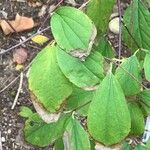
Source: leafsnapPhiladelphus lewisii, commonly known as Lewis' mock orange, is a deciduous shrub native to western North America. It typically reaches a height of 3 to 10 feet and features an upright growth habit with arching branches. The leaves are dark green, oval-shaped, and have serrated edges. In late spring to early summer, the plant produces clusters of fragrant white flowers that resemble orange blossoms, hence the name "mock orange." These flowers attract bees and butterflies. After the flowering period, small brown capsules appear, containing numerous seeds. Philadelphus lewisii thrives in full sun to partial shade and well-drained soil but can tolerate some drought once established. It is often used in landscaping as a specimen plant or in mixed borders for its attractive foliage and showy flowers.
🌳 Although Lewis' Mock Orange is not commonly noted for its scent, it offers promise in perfumery. Its striking fragrance and potential for essential oil extraction make it suitable for use in creating perfumes and cosmetics. While it is not widely utilized, the plant's aromatic character is valued in niche perfumeries for its natural, sweet aroma, which could result in more widespread adoption in fragrance formulations.
🎭 Deception
Care Guide
💧 Water Every 7 days
Lewis' Mock Orange is a deciduous plant that thrives in moderate humidity and prefers consistent moisture. It should be watered every two weeks. This plant enjoys full sun or partial shade and requires well-draining soil. During its dormant period in the cooler months, its water needs decrease, and once established, it becomes drought-tolerant.
How should I water Lewis' Mock Orange?
Using soaker hoses can be an effective way to keep leaves and flowers moist without getting the entire plant wet. Simply lay the hose around the plant and leave it on for 30 to 45 minutes, ensuring the soil is moist but not overly saturated. Another option is to connect your regular hose to the soaker hose and cover it with mulch for continuous moisture throughout the day. If you have Lewis' Mock Orange planted in pots, it's best to use a watering can. Water the plant until you see water dripping out from the bottom of the pots. This method allows the water to reach the roots and promote healthier growth.
What should I do if I give Lewis' Mock Orange too much or too little water?
If you have overwatered Lewis' Mock Orange, there are a few steps you can take to prevent further damage. Despite this, the plant is hardy and has a good chance of surviving. To help the plant recover, give it a chance to dry out and stop watering it. It's important to note that the plant's roots don't like to sit in water for extended periods, so aerating the soil can be beneficial. Some signs of overwatering include the premature yellowing and falling of leaves, fewer flowers, and misshapen buds. In severe cases, the leaves may wilt and turn brown, indicating long-term damage such as root rot. On the other hand, underwatering can also cause wilting in Lewis' Mock Orange. To check if the plant is dehydrated, feel the soil by sticking your finger into it. If the soil feels too dry, this is a sign that it needs more water. It's important to add water in the evening if the plant is not receiving enough. Remember to always check the soil for dryness and follow a regular watering schedule in the morning.
How often should I water the Lewis' Mock Orange plant?
To ensure proper watering for the Lewis' Mock Orange, it is recommended to water it deeply two to three times a week. However, if you live in a hot climate, you may need to water it more often. The plant requires average water needs and prefers moist but well-drained soil. A useful tip is to check the soil moisture by feeling it. If you notice the top 2-4 inches of soil are dry, it is likely time to water your plant. If the Mock Orange is planted outdoors, watering it 1-2 times a week should be sufficient. Keep in mind that outdoor plants receive moisture from rainwater, so it is best to reduce watering when rainfall is plentiful.
How often should I water my Lewis' Mock Orange?
The water needs of plants can vary depending on several factors, such as weather, shade, and species. For example, newly planted Lewis' Mock Orange requires more water than established ones. Providing a can of water each week is usually sufficient, especially during the growing season and if they are in pots. When the plants are outdoors, it's important to monitor the amount of rain they receive using moisture meters. If the soil is dry, it's best to water them thoroughly with a sprinkler. To ensure proper moisture levels, it's recommended to water the Lewis' Mock Orange less frequently but more thoroughly.
Why is it important to water my Lewis' Mock Orange?
It is important to understand the watering needs of the plant you are growing, regardless of its type, to ensure proper growth. Lewis' Mock Orange, for example, requires a significant amount of water and can wilt quickly if not provided with adequate moisture. While they need moist soil, it is important to ensure that the ground is well-drained, as Lewis' Mock Orange do not like having wet feet, which can cause root rot. Both overwatering and underwatering can result in issues such as slow flower production and stunted growth.
☀️ Light Full sun
Lewis' Mock Orange does best with abundant sunlight, though it can tolerate somewhat reduced—but not severely lacking—light. Sunlight supplies the energy required for healthy growth and survival. Too much or too little light can weaken the plant, causing poorer growth and problems with flowering.
What are the sun requirements for Lewis' Mock Orange?
Lewis' Mock Orange requires specific sunlight conditions to thrive. For optimal growth, it needs full sun, which is above 6 hours of sunlight per day. However, it can also grow in partial sun, receiving about 3-6 hours of sunlight. It's important to monitor how sunlight moves through your garden to find spots that offer the right balance of light and shade, ensuring the plants' health and happiness.
How does sunlight affect the growth of Lewis' Mock Orange?
Sunlight plays a crucial role in the development and survival of Lewis' Mock Orange. Adequate sun exposure ensures the plant grows healthy and strong, whereas both overexposure and underexposure can lead to less vigorous growth and flowering issues. During less sunny conditions or winter, artificial lighting can be employed to support its growth, with variations in lighting requirements based on the type of plants (full sun, partial sun, or full shade plants) and specific details on how to implement artificial lighting effectively.
What are the important symptoms of light deficiency or overexposure in Lewis' Mock Orange?
Lewis' Mock Orange may show several symptoms if it doesn't receive the right amount of light, including smaller new leaves, leggy or sparse growth, faster leaf drop, slower or no new growth, lighter-colored new leaves, as well as symptoms from excessive sunlight like chlorosis, sunscald, leaf curling, wilting, and leaf scorching. These symptoms indicate issues with photosynthesis, hydration, and overall plant health due to inadequate light conditions.
What solutions can help Lewis' Mock Orange with light issues?
To address light issues for Lewis' Mock Orange, indoors, gradually move plants to sunnier locations to ensure at least 6 hours of sunlight daily, utilize a south-facing window, or consider artificial lighting if direct sunlight isn't enough. Outdoors, the transition to sunnier spots should be gradual to prevent sunburn. Removing obstructions like overhanging branches can also improve sunlight access. For smaller plants, transplanting during the dormant period to a location with better light conditions might be necessary. However, parts of the plant already affected by insufficient light might not recover, but new, healthy growth will emerge with proper light exposure.
🌡️ Temperature 0–35°C
The lewis' Mock Orange plant does best in temperate climates with temperatures from 32 to 95 ℉ (0 to 35 ℃). To adapt to seasonal changes, keep the plant in well-drained soil and water it moderately in spring and summer. Decrease watering in fall and winter. Avoid exposing it to temperatures below 0 ℃.
What are the ideal growing conditions for Lewis' Mock Orange?
Lewis' Mock Orange thrives in temperate environments and prefers a temperature range of 32 to 95°F (0 to 35°C). It is important to plant it in well-drained soil and to ensure moderate watering during the summer and spring months. Watering should be reduced during the winter and fall to adjust for different seasonal needs. Although Lewis' Mock Orange has strong cold resistance and usually does not require special frost protection measures, if winter temperatures are expected to drop below -35°C, it's advisable to wrap the trunk and branches with materials such as non-woven fabric or cloth. Additionally, before the first freeze in autumn, watering the plant abundantly to keep the soil moist can help prevent drought and water scarcity during the colder months.
How does Lewis' Mock Orange react to low temperatures, and what are the solutions if damage occurs?
Lewis' Mock Orange is notably cold-tolerant, ideally staying above 0°C during the winter months and should not be exposed to temperatures below -30°C. When temperatures fall below -35°C, the plant may not show immediate signs of distress during winter, but by spring, the branches might become brittle, dry, and fail to produce new shoots. The solution for this type of damage is to prune away any dead branches in the spring that have not sprouted new leaves.
What are the effects of high temperatures on Lewis' Mock Orange and how can they be mitigated?
During the summer, it's crucial to keep Lewis' Mock Orange in conditions below 35°C. Exposure to temperatures above 38°C can cause the leaves to lighten in color, tips to become dry and withered, and make the plant more susceptible to sunburn. To mitigate these effects, trim away the sunburned and dried-up parts. Moving the plant to a shadier location during the midday and afternoon sun, or using a shade cloth, can protect it from excessive heat. Additionally, watering the plant in the morning and evening helps keep the soil moist and reduces stress on the plant.
💨 Humidity
🪴 Soil 6-7
🌱 Fertilizer
Fertilize your Lewis' Mock Orange in early spring to encourage healthy growth. Regular feeding improves overall health, producing vigorous growth, greater tolerance of challenging conditions, and increased resistance to pests and diseases. Follow a consistent fertilization routine for your Lewis' Mock Orange to maintain lively foliage with deep color and a full, lush appearance.
Why should I add fertilizer to my Lewis' Mock Orange?
No matter what type of Lewis' Mock Orange you have, regularly fertilizing it will promote optimal health and growth. Providing the right nutrients will result in stronger growth, increased resilience to difficult conditions, and improved ability to combat diseases and pests. It's important to maintain the foliage of your Lewis' Mock Orange, as it is a key attractive feature. To achieve this, establish and follow a consistent fertilization schedule tailored to your specific plant. By doing so, your Lewis' Mock Orange will produce vibrant leaves with a rich color and a lush appearance.
When should I fertilize my Lewis' Mock Orange?
To properly fertilize your Lewis' Mock Orange, start by applying fertilizer in late winter or early spring. This will provide the necessary nutrients for healthy growth when the weather becomes warmer. Additionally, if you live in a warm climate region, it is recommended to fertilize your Lewis' Mock Orange again in early fall. This will give the plant extra nutrients for the following growing season and help it withstand the winter cold without foliage damage. Fertilizing earlier in the fall will also give the new branches enough time to grow and be stronger against the winter.
When is it a bad idea to put fertilizer on my Lewis' Mock Orange?
Do not fertilize your Lewis' Mock Orange during specific periods throughout the year. Firstly, avoid fertilizing during the early and mid-winter months when the plant is dormant and does not require feeding. Secondly, it is not recommended to fertilize during the late spring and summer when the weather is hotter and drier. These conditions can have a detrimental effect on the plant if fertilization is performed. To prevent these issues, stick to a fertilization schedule that includes feeding only in early spring and early fall.
Which fertilizer should I use for my Lewis' Mock Orange plant?
Nitrogen is typically the most crucial nutrient for a Lewis' Mock Orange, but this does not imply that phosphorus and potassium should be disregarded. On the contrary, your Lewis' Mock Orange would benefit from a sufficient amount of all three main nutrients. For this reason, a balanced fertilizer such as a 10-10-10 composition would be effective. Nevertheless, a more precise nutrient ratio often promotes optimal growth in a Lewis' Mock Orange. Fertilizers with a slightly higher nitrogen content, like a 10-6-4 ratio, tend to work well. Both granular and liquid fertilizers can be used for fertilizing purposes.
How can I put fertilizer on my Lewis' Mock Orange plant?
To fertilize your Lewis' Mock Orange, you have two options: using granular fertilizer or liquid fertilizer. With granular fertilizer, simply sprinkle it on the soil at the right time. This type of fertilizer releases nutrients slowly over time. Before applying granular fertilizer, it's generally a good idea to lightly water your Lewis' Mock Orange. On the other hand, liquid fertilizer is less common but can also be used. To do this, mix the fertilizer with water and pour it around the base of your plant. If needed, you can perform a soil test beforehand to check if the pH needs adjustment.
🪴 Pot & Repot 2-3 years
When repotting Lewis' Mock Orange, select a pot 1-2 inches (2.5–5.1 cm) larger with ample drainage. Use a well-draining potting mix. Repot in spring or fall, making sure the root ball sits slightly lower than the rim of the flower pot. Water thoroughly after repotting and place it in a warm spot with indirect sunlight.
✂️ Pruning
To keep Lewis' Mock Orange healthy and blooming beautifully, it should be pruned in late spring after it finishes flowering. Focus on a few key techniques: remove weak branches, thin out crowded stems, and cut back older wood. These steps help improve air circulation and light penetration, which encourages vigorous growth. Always use clean, sharp tools to prevent disease and maintain the plant’s shape, leading to better blooms.
🌿 Propagating
🐛 Diseases & pets
☠️ Toxicity
Characteristics
- Plant Type
- Shrub
- Life Cycle
- Perennial
- Genus
- Philadelphus
- Family
- Hydrangeaceae
- Hardiness Zone
- 3-9
- Mature Height
- 0.91 m to 2.74 m
- Mature Spread
- 3.05 m
- Leaf Color
- Green, Blue
- Leaf Type
- Deciduous
- Flower Color
- White
- Flower Size
- 2.54 cm to 5.08 cm
- Bloom Time
- Late spring, Early summer
- Planting Time
- Spring, Autumn
- Harvest Time
- Mid summer