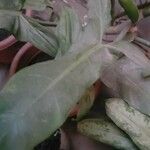
Philodendron bipennifolium
Fiddle-leaf philodendron · Horsehead philodendron
Description
Source: leafsnapPhilodendron bipennifolium, commonly known as the horsehead philodendron, is a tropical plant native to Central and South America. This climbing vine can grow up to 10 feet tall and features large, glossy green leaves shaped like horse heads. The leaves are bipinnate, meaning they have two rows of leaflets on either side of the stem. This plant is popular among indoor gardeners due to its attractive foliage and ease of care. It thrives in bright, indirect light but can also tolerate lower light conditions. Additionally, it requires well-draining soil and regular watering, though it can endure short periods of drought. Beyond its visual appeal, Philodendron bipennifolium possesses air-purifying properties, making it a fantastic addition to any indoor space. However, it is important to note that all parts of this plant are toxic if ingested by humans or pets. In summary, Philodendron bipennifolium is an attractive, low-maintenance tropical plant with air-purifying qualities. It is an excellent choice for indoor gardening enthusiasts looking to add an easy-to-care-for plant to their collection.
💡 Tree philodendrons are tropical foliage plants known for their large, thick, and lustrous green leaves. Their sturdy petioles add to their robust appearance. These plants have a high ornamental value and exude vitality.
Care Guide
💧 Water Every 7 days
The Horsehead Philodendron is native to tropical rainforests and thrives in humid, moist conditions. It should be watered weekly, ensuring the soil doesn't become waterlogged. While it can tolerate moderate drought, higher indoor humidity levels encourage its evergreen foliage and vibrant growth throughout the year.
☀️ Light Partial sun
Native to habitats such as forest understories and rocky areas, the Horsehead Philodendron naturally grows in shaded conditions. It prefers partial sun but can tolerate both full sun and full shade, illustrating its adaptable and hardy nature.
🌡️ Temperature 20–37.8°C
Horsehead Philodendron comes from tropical areas, where the climate is usually warm and humid. Consequently, it is adapted to high temperatures and humidity. It does not tolerate abrupt temperature changes and favors a stable thermal environment, so avoiding temperature fluctuations indoors is important. It typically cannot endure cold and needs warmer temperatures to grow. If the surrounding temperature falls too low, the plant may stop growing or even die.
💨 Humidity
🪴 Soil 5-6
🌱 Fertilizer
Appropriate fertilization is essential for Horsehead Philodendron's health and appearance. Fertilize Horsehead Philodendron during summer, repeating the application monthly throughout the season. Nutrients fuel growth and sustain the plant's components. Fertilization enhances Horsehead Philodendron's flowering, ensuring the best blooms.
🪴 Pot & Repot Once a year
Repot the Horsehead Philodendron in spring or summer when temperatures are warm, choosing a slightly larger pot with proper drainage. Water thoroughly after repotting and place it in bright, indirect light. Consider using a moss pole to support the plant as it grows.
✂️ Pruning
The Horsehead Philodendron features lobed leaves and tends to climb as it grows. To maintain its health, prune the plant in the spring to remove any dead material and overly leggy stems. This practice improves air circulation and light access, which helps reduce the risk of disease. Supporting the plant's growth with a moss pole can also encourage a stronger and more stable structure.
🌿 Propagating
🐛 Diseases & pets
☠️ Toxicity
In general, all Philodendron species are hazardous to people and pets. The Fiddleleaf Philodendron contains calcium oxalates that are insoluble. When ingested, it produces irritation, soreness, and swelling of the mouth, tongue, and lips, as well as stomach discomfort. It also exhibits drooling, vomiting, and pawing at the mouth in animals.
Characteristics
- Plant Type
- Herb, Vine
- Life Cycle
- Perennial
- Genus
- Philodendron
- Family
- Araceae
- Hardiness Zone
- 10-11
- Mature Height
- 3.05 m
- Mature Spread
- 49 cm
- Leaf Color
- Green
- Leaf Type
- Evergreen
- Flower Color
- White, Green
- Flower Size
- 10.16 cm to 15.24 cm
- Bloom Time
- All year round
- Planting Time
- Spring, Summer, Autumn
- Harvest Time
- All year round
- Native Area
- Brazil, Venezuela