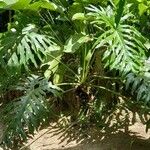
Philodendron bipinnatifidum
برگ انجیری · گیاه برگ انجیری · قرن الغزال · شاخی ئاسک · گل انجیری
Description
Source: leafsnapThaumatophyllum bipinnatifidum (common names: split-leaf philodendron, lacy tree philodendron, selloum, horsehead philodendron) is a plant in the genus Thaumatophyllum, in the family Araceae. Previously it was classified in the genus Philodendron within subgenus Meconostigma. The commonly used names Philodendron bipinnatifidum and Philodendron selloum are synonyms. This plant is native to South America, namely to Brazil, Bolivia, Argentina, and Paraguay, but is also cultivated as a landscape plant in tropical, subtropical and warm temperate climates. The common name "split-leaf philodendron" is also used for Monstera deliciosa.
🎭 Well-being and prosperity
Care Guide
💧 Water Every week
Selloum thrives in environments with high humidity and consistent rainfall. It prefers moist soil but can also withstand short dry periods. To support its lush indoor foliage, water the plant weekly and maintain sufficient air moisture by misting it or using a humidifier.
When Should I Water My Selloum?
Proper and timely watering is vital for the health and growth of Philodendron bipinnatifidum (Selloum). Water your Selloum when the topsoil feels dry up to the first knuckle or when the potting mix starts pulling away from the pot's edge. Wilting, drooping, or color changes in the leaves can indicate the need for water. During hot summer months, the plant's water requirement increases. However, be cautious not to water too early when the soil is moist, as this can lead to overwatering and root rot. Conversely, delaying watering for too long can cause dehydration and potentially kill the plant.
How Should I Water My Selloum?
Selloums are sensitive to over-watering and under-watering. Employ a method that involves using a watering can with a long spout to directly water the soil around the base without wetting the leaves. The frequency is dependent on various factors, including environmental conditions, and using a moisture meter can help in determining when to water. The soil should ideally be moist but not waterlogged. Always ensure to water the plant only when the top 1 to 2 inches of soil feel dry to the touch. Tools like a moisture meter and a watering can with a long, narrow spout, can enhance watering accuracy, preventing both over and under-watering.
How Much Water Does Selloum Really Need?
Considering Selloum's tropical origins, it thrives in consistently moist soil but cannot withstand waterlogged conditions. Offer enough water to saturate the soil thoroughly, allowing any excess to drain. The exact amount depends on the pot size, plant size, and root depth. Generally, for a mature Selloum in a 10-inch pot, 1.5 liters might suffice. Adequate hydration is indicated by glossy, vibrant leaves and a plant maintaining an upright stance. Be watchful for overwatering signs like yellowing leaves or root rot, and for underwatering symptoms like drooping leaves or dry soil.
What Kind of Water is Best for Selloum?
Selloum prefers soft water, such as distilled, rainwater, or filtered tap water. It is sensitive to chlorine and fluoride typically found in tap water. If tap water must be used, letting it sit out for a day or two can help evaporate the chlorine and adjust the temperature to room level. Avoid using hard water with high mineral content, as this can lead to leaf burning. Water at room temperature is ideal to prevent shock and potential root damage.
How Do Selloum's Watering Needs Change with the Seasons?
Seasons significantly influence Selloum's watering needs. During spring’s active growth phase, maintain consistently moist soil, increasing the watering frequency as the topsoil dries. In summer, with higher temperatures and more sunlight, ensure the soil doesn’t dry out, potentially increasing watering frequency. Autumn signals a reduction in watering as daylight decreases and growth slows; allow the topsoil to dry more between waterings. Winter, a period of dormancy, requires much less water; let the soil dry out significantly between waterings while avoiding complete dehydration.
☀️ Light Full shade
Split-leaf philodendron prefers shady spots and does best with moderate light. It can tolerate some sun, but not continuous exposure. In its native habitat it grows under dense vegetation that limits sunlight. Too much sun can scorch the leaves, while too little light may restrict its growth.
What are the sunlight requirements for Selloum plants?
Selloum plants, known botanically as Philodendron bipinnatifidum, thrive in environments with moderate light exposure, making them suitable for full shade (less than 3 hours of sunlight) to partial sun (about 3-6 hours of sunlight) conditions. It's important to observe how sunlight moves through your garden to choose spots that provide the perfect balance for these plants. While they can endure some sun, excessively bright conditions can lead to scorched leaves, whereas insufficient light may limit growth. Careful attention to the plant's lighting environment ensures healthy, vibrant Selloum plants.
How can artificial lighting benefit Selloum plants indoors?
Indoor Selloum plants require adequate lighting for optimal growth, which can be supplied by artificial lights, especially when natural sunlight is insufficient. LED lights are recommended due to their ability to be customized to provide specific wavelengths of light needed by plants. The intensity of artificial light should be adjusted based on the plant's natural sunlight needs: full sun plants need 30-50W/sq ft, partial sun plants need 20-30W/sq ft, and full shade plants require 10-20W/sq ft. Placing the light source 12-36 inches above the plant for 8-12 hours per day can mimic natural sunlight conditions, promoting healthier growth.
What are the signs of inadequate lighting for Selloum plants?
Inadequate lighting can lead to several issues for Selloum plants. Symptoms include lighter-colored new leaves or paleness indicating a lack of chlorophyll, smaller leaves than previous growths, faster drop of older leaves as the plant conserves resources, slower or no new growth as the plant enters a survival mode, leggy or sparse growth resulting in a thin appearance, chlorosis or yellowing leaves due to excessive sunlight exposure, sunscald which presents as bleached areas from intense light, leaf curling as a defense against too much sunlight, wilting from significant water loss, and leaf scorching marked by brown, dry edges. These signs show the plant's struggle with inappropriate light levels and the need for adjustments.
How can you address and correct lighting issues for Selloum plants?
To correct lighting issues for Selloum plants, it's crucial to reassess their placement and potential light sources. For indoor plants, moving them to a spot that ensures ample filtered light, including brief periods of direct morning sun, can make a significant difference. Placing them 1-2 meters away from a window or supplementing with artificial plant grow lights for at least 8 hours daily can provide the necessary light. Outdoors, gradually transitioning plants to sunnier spots can help them adapt without suffering from sunburn. Reducing obstructions such as overhanging branches or relocating plants during their dormant period are also effective strategies. While some damage from insufficient light may be irreversible, new growth can flourish under improved lighting conditions.
🌡️ Temperature 20–41.1°C
In its natural habitat, the split-leaf philodendron favors warm, humid conditions. It can withstand temperatures from 20 to 41 ℃ (68 to 105.8 ℉). In summer, the plant should be kept out of direct sunlight and given good airflow to avoid overheating. In winter, it will endure slightly cooler temperatures provided it is kept safe from frost.
What are the ideal growth conditions for a Selloum?
A Selloum thrives in its native warm and humid climate, ideally between temperatures of 20 to 41 °C (68 to 105.8 °F). During summer, it's crucial to shield the plant from direct sunlight and ensure good ventilation to avoid overheating. Conversely, in the winter months, while it can handle slightly cooler temperatures, safeguards against frost are necessary. Selloum plants are very sensitive to the cold; hence, during autumn, it's advisable to move any outdoor plants indoors, positioning them near a bright window but away from direct heat sources to maintain an optimal temperature for growth.
How should you care for a Selloum in low temperature conditions?
Selloum plants favor warm conditions and struggle with low temperatures. It's essential to keep the temperature above their minimum growth threshold during the winter to prevent damage. If temperatures drop below their growth limit, the leaves may discolor, showing a lighter hue and, following frost damage, may turn brown or black, accompanied by wilting. The best course of action for cold damage is to trim off the affected areas and move the plant to a warmer location indoors, preferably near a south-facing window for adequate sunlight but away from direct heat sources like heaters or air conditioning vents to avoid air dryness.
How does high temperature affect Selloum, and what are the remedies?
In high temperatures, especially above Selloum's maximum tolerance limit, the plant's leaves may lighten and become more prone to sunburn. To mitigate high temperature effects, it’s recommended to trim away any sunburned or dried-up foliage and relocate the plant to a shaded area, particularly away from the intense midday and afternoon sun. Additionally, watering the plant in the morning and evening can help maintain soil moisture and alleviate stress from high temperatures.
💨 Humidity
🪴 Soil 6-7
🌱 Fertilizer
The split-leaf philodendron needs the most fertilizer during its active growth period, which occurs mainly in spring, summer, and early autumn. Fertilizing supplies essential nutrients the soil might lack, encouraging healthy root and stem growth and enhancing the plant’s attractive foliage, a primary characteristic of this species.
Why should I put plant food on my Selloum?
All plants, including the Selloum, need soil nutrients for healthy growth. However, the soil they grow in may not always have all the necessary nutrients. To address this, fertilization and soil amendments can be used to ensure that your garden plants have both the basic nutrients they need and the specific nutrients they require. For the Selloum specifically, fertilizer is important for the continued development of its roots and stems, as well as for producing attractive leaves, which are a key ornamental feature of this plant.
When should I fertilize my Selloum plant?
During the active growing seasons of spring, summer, and early fall, a Selloum plant requires the highest amount of fertilizer. As winter ends, you should plan to feed it every two to four weeks. Keep up with this feeding schedule until fall approaches. In preparation for winter, you can gradually decrease the amount of fertilizer you give, eventually stopping the feedings altogether, as the Selloum will experience less active growth during that time.
When is it not a good idea to fertilize my Selloum plant?
For most of the year, which includes spring, summer, and most of the fall, it's important to regularly feed your Selloum. However, there are a couple of exceptions. If you notice that your Selloum has been over-fertilized or if you have made a mistake in fertilizing it, causing issues like fertilizer burn, you'll need to fix those problems before continuing with regular feeding. The only time you should refrain from fertilizing a Selloum is during winter. If you have this plant indoors in a cold winter area, it will go into a dormant phase. Feeding the plant during this dormant phase is unnecessary and unhelpful for its growth, and it's likely to result in fertilizer burn.
What kind of fertilizer does my Selloum plant need?
Selloum plants require a specific blend of nutrients in their fertilizer, with each nutrient being present in relatively low amounts. The ideal fertilizer for them should have an N-P-K ratio of 3-1-2. However, in some cases, a general-purpose fertilizer with an even nutrient blend can work well. When using any fertilizer, including a balanced one, it's important to make sure the ratio number representing the volume of each nutrient is at 10 or lower. You can choose between two types of fertilizers for your Selloum: granular or liquid-based. If you opt for a liquid-based fertilizer, it's often best to dilute the strength by half. Granular fertilizer doesn't have many downsides, but using liquid fertilizer is generally more practical, especially if you're watering your Selloum at the same time as feeding it.
How can I fertilize my Selloum plant?
When purchasing fertilizer for your Selloum plant, it is important to follow the application instructions provided. For Selloum plants, it is recommended to fertilize just before or while watering the soil to avoid burning the plant's roots. If using a slow-release granular fertilizer, sprinkle it on the soil and water it immediately. For liquid-based fertilizers, dilute it with water before applying to the soil and then provide additional water. It is especially important to dilute the fertilizer by at least half in the spring and fall when the plant's growth is increasing or decreasing.
🪴 Pot & Repot Once a year
Repot a Split-leaf philodendron in spring or summer once it’s warm enough, choosing a pot slightly larger that has good drainage. After repotting, water thoroughly and place the plant in a bright spot with indirect light. Consider adding a moss pole to support the plant as it grows.
✂️ Pruning
Selloum plants are known for their large, glossy, lobed leaves. To keep the plant healthy and encourage fuller growth, it's best to prune it from early to late spring. During pruning, be sure to remove any yellow or damaged leaves and trim back long, leggy stems. This will help the plant grow bushier. Make sure to sterilize your tools before pruning to prevent the spread of disease. Pruning also improves air circulation and helps you control the plant's size, making it suitable for different settings.
🌿 Propagating
🐛 Diseases & pets
☠️ Toxicity
Characteristics
- Plant Type
- Herb
- Life Cycle
- Perennial
- Genus
- Philodendron
- Family
- Araceae
- Hardiness Zone
- 10-13
- Mature Height
- 1.83 m to 4.57 m
- Mature Spread
- 3.05 m to 4.57 m
- Leaf Color
- Green
- Leaf Type
- Evergreen
- Flower Color
- Cream, Purple, White
- Flower Size
- 30.48 cm
- Bloom Time
- Late spring, Summer
- Planting Time
- Spring, Summer, Autumn, Winter
- Harvest Time
- Late summer, Early fall, Mid fall
- Native Area
- Rainforests of tropical Central and South America