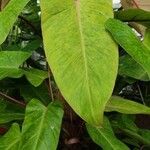
Philodendron erubescens
نوعی فیلودندرون، · Blushing philodendron · Pink Princess · Philodendron Prince of Orange · Red-leaf philodendron
Description
Source: leafsnapPhilodendron Imperial Green is a popular indoor plant from the Araceae family. Native to the tropical regions of South America, it is well-known for its large, glossy, heart-shaped leaves, which can grow up to 12 inches in length. The leaves are dark green with a smooth texture. This plant can reach a height and width of 3-4 feet, making it a perfect choice for filling empty spaces in your home or office. It thrives in bright, indirect light but can also tolerate low-light conditions. Philodendron Imperial Green requires moderate watering, allowing the soil to dry out slightly between waterings. Both overwatering and underwatering can harm or even kill the plant. During its growing season (spring-summer), this plant benefits from occasional fertilization with a balanced fertilizer solution. In summary, Philodendron Imperial Green is an easy-to-care-for indoor plant that enhances any space with its lush foliage and elegant appearance.
🌳 The "Blushing Philodendron", also known simply as blushing philodendron, is more than just a plant; it serves as a trendsetter in interior design. Its distinctive red-tinted stems and foliage become more intense with time, adding a splash of color to any room. The blushing philodendron is not purely ornamental; it also plays a key role in biophilic design, enriching environments by bringing a touch of nature indoors and promoting greater well-being and efficiency. Notably, placing these plants in office areas can increase productivity by up to 15%.
🎭 Companionship
Care Guide
💧 Water Every 7 days
The blushing philodendron, native to tropical rainforests, thrives in high humidity and moist soil. To keep it healthy, water it weekly to maintain the right moisture balance. As an evergreen plant, it retains moisture, ensuring lush foliage throughout the year. This makes it ideal for indoor environments where humidity levels can be controlled.
How should I water my Blushing philodendron?
To water your Blushing philodendron, there are several options available. If your plant is in a small indoor pot, you can take it to the kitchen sink and use the faucet to water it. Simply hold the pot and stop watering once the water starts draining out the bottom holes. However, avoid doing this during winter or in cold climates as it can harm the roots. If your tap water has high levels of fluorine, chlorine, or salts, consider using rainwater or lake water instead. Additionally, the Blushing philodendron does well with overhead watering or watering directly into the soil, so you can use a watering can, hose, or any other watering tool you prefer.
What should I do if I give my Blushing philodendron too much or too little water?
If you realize that you haven't been watering your Blushing philodendron enough, the first thing you should do is give it some water. Water it deeply until there's excess water draining out of the container, or if it's outside, water it until the soil is completely moist. On the other hand, if you notice that your Blushing philodendron is getting too much water, start by watering it less frequently. It's also important to consider the soil and container your plant is in. If the soil or container doesn't allow water to drain properly, your plant will likely get overwatered again. To fix this, you can use looser soil or a container with bigger drainage holes or a more porous material. Additionally, check the location of your plant. If it's in a spot with poor ventilation, like a corner, it's recommended to move it near a window or by a door to improve airflow. Having your plants in a well-ventilated area can help prevent overwatering to some extent.
How frequently should I pour water on my Blushing philodendron?
The Blushing philodendron doesn't need constant moisture in its soil. It's actually better to let the soil dry out between waterings. If you have this plant in a container, you can tell when it's time to water by checking how dry the soil is inside. If about half of the top layer of soil is dry, it's time to water. You can check by sticking your finger or a stick into the soil, or you can use a soil moisture meter. If you're growing the Blushing philodendron outdoors, you can water it about once every other week, as long as it hasn't rained recently.
How much water should I give my Blushing philodendron?
To water your Blushing philodendron, wait until the top half of the soil is dry. Then, add enough water to make the soil moist again. The amount of water needed depends on the size of your plant and the container it is in. For a small plant in a small to medium-sized container, one to two cups of water should be enough. Increase the amount of water for larger plants. To make sure the soil is properly moistened, either feel the soil with your finger or a trowel, or water until you see water draining from the bottom of the container.
How do I know if I'm giving enough water to my Blushing philodendron?
Both overwatering and underwatering can harm your Blushing philodendron. However, these issues have different effects on the plant. When your Blushing philodendron doesn't receive enough water, its leaves may turn yellow. Moreover, underwatering can make the leaf margins brown and brittle. In contrast, overwatering often causes yellow and brown marks to appear on the leaves simultaneously. Overwatering can even result in diseases like root rot, which may be visible on your plant. Fortunately, if you're familiar with the signs of overwatering and underwatering, you can likely fix both issues effectively.
☀️ Light Partial sun
Blushing philodendron does best in settings with moderate sun exposure. In its natural habitat it typically grows beneath larger plants, receiving partial light. While it can survive in complete shade, insufficient light may stunt healthy growth and cause it to lose its vibrant colouration. Conversely, too much exposure can scorch the leaves.
What are the sunlight requirements for a Blushing Philodendron?
The Blushing Philodendron requires partial sun, meaning it thrives best with about 3-6 hours of sunlight daily. However, it can also grow in full shade conditions, where it receives less than 3 hours of sunlight. It’s crucial to observe the movement of sunlight in your garden to select the ideal location that offers a balanced environment of light and shade to ensure the plant’s health and happiness.
What are the essentials for growing a healthy Blushing Philodendron?
A Blushing Philodendron flourishes with moderate sun exposure. Naturally, it grows under the canopy of larger plants, receiving partial light. Although it can adapt to shaded areas, insufficient light may stunt its growth and affect its vibrant coloration. Overexposure, conversely, can cause leaf scorch. Artificial lighting can be beneficial, especially when natural light is insufficient. LED lights are recommended for their ability to mimic natural sunlight wavelengths, with varying wattage requirements depending on whether the plant needs full sun, partial sun, or full shade.
What are common symptoms of inadequate lighting for Blushing Philodendron?
Symptoms of light deficiency in Blushing Philodendron include leggy or sparse growth, small leaves, slower or no new growth, lighter-colored new leaves, and conditions such as chlorosis, sunscald, leaf curling, wilting, and leaf scorching. These symptoms can arise from both too little and too much sunlight. Inadequate sunlight can lead to sparse growth and smaller leaves, while excessive sunlight can cause leaf scorching, chlorosis, and other damage to the plant.
How can I address inadequate lighting conditions for my Blushing Philodendron?
To address inadequate lighting, gradually acclimate your Blushing Philodendron to more sunlight by relocating it to sunnier spots each week until it receives the optimal 3-6 hours of direct sunlight daily. If moving the plant is not feasible, consider using artificial light sources like desk lamps or professional grow lights for a minimum of 8 hours a day. For outdoor plants, similarly move them gradually to avoid sunburn. Reducing obstructions that block sunlight, such as pruning trees or transplanting the plant to a sunnier location, can also improve light exposure. Note that parts of the plant previously affected by insufficient light may not recover, but new growth should be healthy with better light conditions.
🌡️ Temperature 20–41.1°C
The blushing philodendron thrives at temperatures from 68 to 105 ℉ (20 to 41 ℃) since it comes from tropical regions. In spring and summer, if it becomes too warm, place the plant by a window with partial shade to help lower the temperature. In winter, protect it from drafts and do not expose it to temperatures below 60 ℉ (15.5 ℃).
What are the essential care instructions for a Blushing Philodendron?
The Blushing Philodendron thrives best in temperatures ranging from 68°F to 105°F (20°C to 41°C), being native to tropical regions. During the warmer months of summer and spring, it's beneficial to place the plant near a window with partial shade to manage high temperatures. Conversely, in winter, it should be protected from drafts and maintained in conditions above 60°F (15.5°C) to avoid cold damage. As temperatures drop in autumn, it's advisable to move outdoor Blushing Philodendrons indoors to a spot with bright, indirect light, while ensuring they are not placed too close to heating sources. Maintaining temperatures above 60°F (15.5°C) during winter is crucial for the plant's well-being, as exposure to temperatures nearing or below this threshold can be harmful.
What should I do if my Blushing Philodendron is affected by low temperatures?
If exposed to cold temperatures, a Blushing Philodendron's leaves may lighten in color, progressing to brown or black as frost damage worsens, accompanied by wilting or drooping. To mitigate damage from low temperatures, it's important to trim away the frost-affected areas and then move the plant to a warm environment indoors promptly. Placing the plant near a south-facing window can provide adequate sunlight without the risk of cold damage. Additionally, keep the plant away from direct heat sources like heaters or air conditioning vents to avoid dry air, which could exacerbate the issue.
How should I care for a Blushing Philodendron during high temperatures?
During the hotter summer months, it's crucial to keep the Blushing Philodendron's temperature below 105°F (41°C) to prevent the leaves from lightening in color or the plant from getting sunburned. To care for a plant exposed to high temperatures, trim away any sunburned or dried parts. Relocate the plant to an area where it can be shielded from the intense midday and afternoon sun. Ensuring the soil remains moist through morning and evening watering sessions can also help the plant cope with high temperatures.
💨 Humidity high (>60%)
This plant needs special care because it loves high humidity levels of 60-80% or more. The best way to achieve this is by placing a humidifier near the plant. Daily misting is also essential! Make sure the room has good ventilation.
🪴 Soil 5-7
🌱 Fertilizer
Blushing philodendron will need the most fertilizer during its active growth period, which falls mainly in spring, summer, and early fall. Fertilizing supplies essential nutrients that the soil may lack, encouraging healthy root and stem growth as well as the attractive foliage that is a key feature of this plant.
Why is it important to add fertilizer to my Blushing philodendron?
Plants need soil nutrients to grow, including the Blushing philodendron. However, the soil may not always have all the necessary nutrients. To ensure your garden plants get the right nutrients, fertilization and soil amendments are important. For the Blushing philodendron, fertilizer helps its roots and stems grow healthily. Additionally, fertilization ensures the plant has beautiful leaves, which are crucial for its ornamental appeal.
When should I put fertilizer on my Blushing philodendron plant?
A Blushing philodendron requires the most fertilizer when it is actively growing, which is usually during spring, summer, and early fall. During this time, you should feed it every two to four weeks. As winter approaches, gradually reduce the amount of fertilizer until you stop feeding it entirely. This is because the Blushing philodendron will have less active growth during winter.
When is it not a good time to fertilize my Blushing philodendron?
For most of the year, such as spring, summer, and most of fall, it's important to regularly feed your Blushing philodendron. However, there are a couple of exceptions. If you notice that your philodendron has received too much fertilizer or if you've applied it incorrectly and caused fertilizer burn or another issue, you should address those problems before resuming regular feeding. The only time you shouldn't fertilize a Blushing philodendron is during winter. If you're growing this plant indoors in a cold winter area, it will enter a dormant phase. Feeding the plant during this dormant phase is unnecessary and harmful, likely leading to fertilizer burn.
Which fertilizer should I use for my Blushing philodendron plant?
The fertilizer for a Blushing philodendron should have a specific blend of nutrients, but in relatively low amounts. An ideal fertilizer would have a ratio of 3 parts nitrogen, 1 part phosphorus, and 2 parts potassium (N-P-K ratio of 3-1-2). However, a general-purpose fertilizer with an even nutrient blend can also be effective in some cases. Regardless of the type of fertilizer, the volume of each nutrient should be at 10 or lower. You can choose between granular or liquid-based fertilizer. If you opt for the liquid-based option, it is usually best to dilute it by half. Granular fertilizer, on the other hand, does not have many downsides but using liquid fertilizer, especially when watering your Blushing philodendron, is often the most practical choice.
How can I make my Blushing philodendron grow better?
When it comes to fertilizing your Blushing philodendron, the fertilizer you buy usually comes with instructions that you should follow. However, for this specific plant, it's best to fertilize just before or while watering the soil to avoid damaging the roots. If you're using a slow-release granular fertilizer, sprinkle it on the soil and water immediately after. If you're using a liquid-based fertilizer, dilute it with water, apply it to the soil, and then provide additional water. It's especially important to dilute the fertilizer by at least half in the spring and fall, when the plant's growth is increasing and decreasing, respectively.
🪴 Pot & Repot Once a year
Repot Blushing philodendron in spring or summer when temperatures are warm enough, choosing a slightly larger pot with good drainage. Water it thoroughly after repotting, and place it where it will receive bright, indirect light. Consider adding a moss pole to support the plant as it grows.
✂️ Pruning
The blushing philodendron flourishes with regular pruning, particularly from early to late spring. Important techniques involve removing dead leaves and trimming back overgrown stems. This encourages bushier growth, reduces the risk of pests, and improves the plant’s appearance. It's important to make clean cuts to minimize stress and prevent infections.
🌿 Propagating
🐛 Diseases & pets
☠️ Toxicity
Characteristics
- Plant Type
- Vine, Herb
- Life Cycle
- Perennial
- Genus
- Philodendron
- Family
- Araceae
- Hardiness Zone
- 10-13
- Mature Height
- 2.44 m to 3.96 m
- Mature Spread
- 49 cm to 91 cm
- Leaf Color
- Green, Purple
- Leaf Type
- Evergreen
- Flower Color
- Purple, White, Red
- Flower Size
- 10.16 cm to 15.24 cm
- Bloom Time
- All year round
- Planting Time
- Spring, Summer, Autumn
- Harvest Time
- All year round
- Native Area
- Colombia