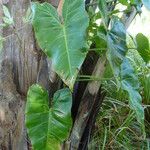
Philodendron gigas
Description
Source: leafsnapThe Philodendron Gigas is a rare velvet leaf plant with very large drop leaves. As it develops the veins become more prominent and the leaves become very large. Philodendron gigas is a species of flowering plant in the family Araceae. It is endemic to Panama, first described in 1997.In the wild, this plant can grow up to 65 feet tall with leaves reaching lengths of 3-4 feet! Indoors, however, it will grow to around 8-10 feet, with leaves reaching around a foot in length. Philodendron Gigas purify the air, reduce stress, and help us get a good night's sleep.
💡 Tree philodendrons are tropical foliage plants known for their large, thick, and lustrous green leaves. Their sturdy petioles add to their robust appearance. These plants have a high ornamental value and exude vitality.
Care Guide
💧 Water Every 3-7 days
Philodendron gigas, originally from the undergrowth of tropical rainforests, thrives in conditions of high humidity and requires consistent moisture without becoming waterlogged. To keep its foliage lush, it benefits from weekly watering. Indoors, it flourishes best in an environment that mimics its warm, humid native habitat.
☀️ Light Full shade
Philodendron gigas is native to the understory of tropical forests, does well in full shade with occasional dappled sunlight, and can adapt to settings with minimal direct sunlight.
🌡️ Temperature 20–37.8°C
Philodendron gigas comes from tropical areas where the climate is generally warm and humid. As a result, it is adapted to high temperatures and humidity. It does not tolerate sudden temperature changes and prefers a stable thermal environment, so it is important to avoid temperature fluctuations indoors. It typically cannot withstand cold and requires warmer temperatures to grow. If the surrounding temperature falls too low, the plant may stop growing or even die.
💨 Humidity
🪴 Soil 5-6
🌱 Fertilizer
Proper feeding is essential for Philodendron gigas's health and appearance. Fertilize Philodendron gigas in summer, applying it monthly throughout the season. Nutrients power growth and help maintain the plant's parts. Fertilization boosts Philodendron gigas's flowering display, ensuring the best blooms.
🪴 Pot & Repot Once a year
Repot Philodendron gigas in spring or summer once temperatures are warm, choosing a pot slightly larger with good drainage. Water thoroughly after repotting and place the plant in bright, indirect light. Consider installing a moss pole to support the plant as it grows.
✂️ Pruning
Philodendron gigas is known for its large, heart-shaped leaves and rapid growth. To maintain its shape and promote good air circulation, it's important to prune the plant in early spring. Remove any dead leaves and trim back overgrown stems. Be sure to use clean, sharp tools when pruning to ensure the plant remains healthy and vigorous. Proper pruning is essential for the care of Philodendron gigas.
🌿 Propagating
🐛 Diseases & pets
☠️ Toxicity
It is advisable to place this plant out of reach from pets and little children, since Philodendron Gigas are toxic when consumed.
Characteristics
- Plant Type
- Vine, Herb
- Life Cycle
- Perennial
- Genus
- Philodendron
- Family
- Araceae
- Hardiness Zone
- 10-12
- Mature Height
- 2.13 m to 3.05 m
- Mature Spread
- 1.52 m to 2.13 m
- Leaf Color
- Dark Green, Forest Green
- Leaf Type
- Semi-evergreen
- Flower Color
- Yellow, Green
- Flower Size
- 15.24 cm to 20.32 cm
- Bloom Time
- All year round
- Planting Time
- Spring, Summer, Autumn
- Harvest Time
- All year round
- Native Area
- Panama