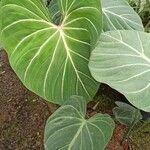
Philodendron gloriosum
Leri
Description
Source: leafsnapPhilodendron gloriosum is a species of plant in the family Araceae, genus Philodendron. It is a crawling, terrestrial plant, native to Colombia whose foliage is characterized by a cordate (heart-shaped) and velutinous surface, pink margins, and pale green, white, or pinkish veins.
💡 Tree philodendrons are tropical foliage plants known for their large, thick, and lustrous green leaves. Their sturdy petioles add to their robust appearance. These plants have a high ornamental value and exude vitality.
🌳 Philodendron gloriosum is a common choice for tropical terrariums and vivariums, valued for its large, heart-shaped leaves that provide cover and replicate the natural habitats of various reptiles and amphibians. Although often recognized for its decorative value, using philodendron gloriosum in these controlled settings underscores its role in creating a biotopic environment that is visually appealing and also helps support the wellbeing of captive species by simulating their native surroundings.
Care Guide
💧 Water Every 3-5 days
Philodendron gloriosum thrives in humid, moisture-rich environments similar to tropical rainforests. It prefers consistently moist soil and requires weekly watering, although it does show some tolerance to drought. As an evergreen plant, philodendron gloriosum flourishes indoors, especially in higher humidity, which allows it to maintain its lush foliage all year round.
How should I water my Philodendron gloriosum?
Here are some easy ways to water your Philodendron gloriosum plant. If you have a small pot indoors, you can simply take it to your kitchen sink and use the faucet to add water. Hold the pot and stop watering once you see water running through the drainage holes. Avoid doing this in winter or cold climates as the cold water can harm the roots. If your tap water has high levels of fluorine, chlorine, or salts, consider using rainwater or lake water instead. Alternatively, you can also water the plant overhead or directly into the soil using a watering can, hose, or any other watering tool you prefer.
What should I do if I give my Philodendron gloriosum too much or too little water?
If you realize that your Philodendron gloriosum is not getting enough water, the first thing to do is to water it thoroughly until excess water drains from the container. If you are growing it outside, water it until the soil is completely moist. On the other hand, if you notice that your Philodendron gloriosum is getting too much water, start by reducing your watering schedule. It's also important to consider the soil and container it is in. If the soil or container doesn't allow for proper drainage, your plant will likely be overwatered again. To fix this, transfer the plant to looser soil or a container with larger drainage holes or a more porous material. Additionally, check the location of the plant. If it's in a corner or poorly ventilated area, it's recommended to move it near a window or a door to improve air circulation. Keeping your plants in a well-ventilated location can help prevent overwatering to some extent.
How often do I need to water my Philodendron gloriosum?
The Philodendron gloriosum does not need constant moisture in its soil. Instead, it's best to let the soil dry out between waterings. If you're growing this plant in a container, you can tell when to water it by checking how dry the soil is. For example, if the top half of the soil in your container is dry, it's time to add water. You can test this by inserting your fingers or a stick into the soil, or by using a soil moisture meter. If you're growing the Philodendron gloriosum outdoors, you can plan to water it once every other week, as long as it hasn't rained recently.
How much water does my Philodendron gloriosum require?
To water your Philodendron gloriosum, wait until the top half of the soil is dry. Then, add enough water to make the soil moist again. The amount of water you need depends on the size of your plant and container. For a small plant in a small to medium-sized container, one to two cups of water should be enough. Larger plants will need more water. You can check if the soil is moist enough by sticking your finger or a trowel into it. Another option is to water until you see excess water draining from the bottom of the container.
How can I know if I'm giving enough water to my Philodendron gloriosum plant?
Both overwatering and underwatering are harmful to the health of your Philodendron gloriosum, but they display different symptoms. When your plant is not getting enough water, its leaves may turn yellow and the leaf margins may become brown and brittle. On the other hand, if you overwater your plant, you may notice that its leaves have both yellow and brown marks. Overwatering can also lead to diseases like root rot, which may have visible effects on your plant. However, by familiarizing yourself with the signs of both overwatering and underwatering, you can effectively address these issues.
☀️ Light Partial sun
Philodendron gloriosum prefers moderate sunlight and should not be exposed to intensely strong rays. It comes from habitats such as forest understories where it grows under filtered light. Too much sun can cause leaf burn, while too little light can inhibit its growth.
What are the sunlight requirements for Philodendron gloriosum?
Philodendron gloriosum thrives in conditions with moderate sun exposure, ideally receiving about 3-6 hours of sunlight daily, along with indirect sunlight throughout the day. It's vital to watch how sunlight moves through your garden to find a spot that offers a perfect balance of light and shade, mimicking the plant's natural habitat in forest understories, where it benefits from filtered sunlight. Excessive sunlight can cause leaf burn, while insufficient light might stunt the plant's growth.
How does artificial lighting benefit indoor Philodendron gloriosum, and what are the best practices?
When natural sunlight is not enough, especially in winter or darker spaces, artificial lighting can significantly promote faster and healthier growth of Philodendron gloriosum indoors. LED lights are excellent for indoor plants as they can provide necessary wavelengths of light. The recommended artificial light intensity varies: 30-50W/sq ft for full sun plants, 20-30W/sq ft for partial sun plants, and 10-20W/sq ft for full shade plants. The light source should be placed 12-36 inches above the plant and kept on for 8-12 hours per day to mimic natural daylight conditions effectively.
What are the common symptoms of improper lighting for Philodendron gloriosum?
Improper lighting can cause a range of symptoms in Philodendron gloriosum: Smaller new leaves, leggy or sparse growth, premature leaf drop, halted or no new growth, lighter-colored or irregularly patterned new leaves due to chlorosis, sunscald resulting in pale or necrotic patches on leaves, leaf curling as a defense against excessive sunlight, wilting from heightened transpiration, and leaf scorching, indicated by brown, crispy leaf edges. These symptoms can signal either too much or too little light exposure.
What are some effective solutions for addressing Philodendron gloriosum's lighting issues?
To address lighting issues for Philodendron gloriosum, gradually increase light exposure by moving the plant to sunnier spots weekly until it receives 3-6 hours of direct sunlight daily. For indoor plants, consider using desk or ceiling lamps for at least 8 hours daily or invest in professional grow lights for sufficient lighting. Outdoors, avoiding sudden changes in light intensity is vital to prevent sunburn. Minimize obstructions by pruning or transplanting to better-lit areas during the plant's dormant period, aiming for locations with ample sunlight and good drainage. Remember, while plants suffering from light deficiency may not recover damaged parts, new growth can still flourish under improved conditions.
🌡️ Temperature 20–37.8°C
Philodendron gloriosum comes from habitats where temperatures are generally between 68 and 100°F (20 to 38℃). It performs best in these warmer conditions. If temperatures drop unexpectedly, wrap or insulate the plant to preserve the required warmth.
What is the ideal temperature range for Philodendron gloriosum?
Philodendron gloriosum is a plant that is native to warmer climates and thrives in temperatures ranging from 68 to 100°F (20 to 38°C). It is extremely heat-loving, and exposure to cold temperatures can harm the plant. If growing Philodendron gloriosum outdoors, it is recommended to bring it indoors during the autumn to protect it from unexpected temperature drops. The plant should be kept in a place near a bright window but away from heaters to avoid excessive dryness. Maintaining temperatures above 20°C during winter supports healthy growth, while temperatures approaching 10°C or lower are detrimental.
How should you care for Philodendron gloriosum in low temperatures?
Philodendron gloriosum prefers warm temperatures and is not tolerant of low temperatures, thriving best above 20°C. During winter, it is crucial to keep the temperature above 10°C. If the temperature falls below 5°C, the leaves might lighten in color, and after frost damage, they could turn brown or black, with symptoms including wilting and drooping. To care for the plant in low temperatures, trim off the frost-damaged parts and move the plant to a warm environment indoors immediately for protection. Place it near a south-facing window for ample sunlight, but ensure it is not too close to heaters or air conditioning vents, which can cause excessive dryness.
What should you do if Philodendron gloriosum is exposed to high temperatures?
During the summer, it's important to ensure that the temperature around Philodendron gloriosum does not exceed 100°F (38°C). Exposure to temperatures above 109°F (43°C) can lighten the color of the leaves and make the plant more susceptible to sunburn. To mitigate damage from high temperatures, trim away sunburned and dried-up parts of the plant. Move the plant to a shaded location to protect it from the harsh midday and afternoon sun. Additionally, water the plant in the morning and evening to maintain soil moisture and mitigate the effects of high temperatures.
💨 Humidity
🪴 Soil 5-6
🌱 Fertilizer
Philodendron gloriosum needs the most fertilizer during its active growth period, which takes place mainly in spring, summer, and early fall. Fertilizing supplies essential nutrients that the soil may lack, supporting healthy root and stem growth as well as attractive foliage, which is a distinguishing feature of this plant.
Why should I put fertilizer on my Philodendron gloriosum?
Plants, including the Philodendron gloriosum, need soil nutrients for their growth. However, it's not always guaranteed that the soil has all the necessary nutrients. Fertilization and soil amendments help ensure that your garden plants have both the basic nutrients they need and the specific nutrients required for their growth. For the Philodendron gloriosum, fertilizer is necessary for healthy root and stem development throughout the growing season. Fertilization also helps the plant produce beautiful leaves, which are its main ornamental feature.
When should I put fertilizer on my Philodendron gloriosum?
During the active growth phase of a Philodendron gloriosum, which usually occurs in spring, summer, and early fall, it requires the highest amount of fertilizer. After winter, you should feed it every two to four weeks until fall. In fall, gradually decrease the frequency of fertilization until you stop entirely in preparation for the less active growth period in winter.
When is not a good time to fertilize my Philodendron gloriosum?
For most of the year, including spring, summer, and fall, it's important to regularly feed your Philodendron gloriosum. However, if you accidentally over-fertilize or make a mistake with fertilizing, causing fertilizer burn or any other issue, you should fix that before resuming regular feeding. The only exception is during winter, when the plant goes into a dormant phase, especially if it's kept indoors in a cold area. Feeding the plant during this dormant phase is unnecessary and harmful, as it can lead to fertilizer burn.
What kind of fertilizer does my Philodendron gloriosum require?
When fertilizing a Philodendron gloriosum, it is important to use a specific blend of nutrients in relatively low amounts. The ideal fertilizer will have an N-P-K ratio of 3-1-2. However, a general-purpose fertilizer with an even blend of nutrients can also be effective in some cases. It is still important to ensure that the ratio number representing the volume of each nutrient is 10 or lower, even when using a balanced fertilizer. You can choose between a granular or liquid-based fertilizer. If you opt for a liquid-based fertilizer, it is generally recommended to dilute the strength by half. While there are not many drawbacks to using granular fertilizer, it is usually more practical to use liquid fertilizer, especially if you water your Philodendron gloriosum at the same time.
How should I apply fertilizer to my Philodendron gloriosum?
When fertilizing your Philodendron gloriosum, it's important to follow the instructions provided with the fertilizer. In most cases, it's best to apply the fertilizer just before or while watering the soil to avoid damaging the plant's roots. If you're using a slow-release granular fertilizer, sprinkle it on the soil and immediately water it. For liquid-based fertilizers, dilute them with water, apply to the soil, and then provide additional water. It's especially important to dilute the fertilizer by at least half during spring and fall when the plant's growth is increasing or decreasing.
🪴 Pot & Repot Once a year
Repot Philodendron gloriosum in spring or summer once it's warm enough, using a pot that's slightly bigger and has good drainage. Water thoroughly after repotting, and position the plant in bright, indirect light. Think about adding a moss pole to support the plant as it grows.
✂️ Pruning
To maintain the optimal health of your Philodendron gloriosum, it's important to prune it between early and late spring. Start by removing any yellowing leaves and trimming leggy stems, which helps encourage a bushier growth. Make sure to clean your tools before pruning to prevent the spread of disease. Be careful not to over-prune, as this can stress the plant. Proper pruning not only improves the plant's appearance but also promotes better air circulation and reduces the risk of pests.
🌿 Propagating
🐛 Diseases & pets
☠️ Toxicity
Characteristics
- Plant Type
- Herb
- Life Cycle
- Perennial
- Genus
- Philodendron
- Family
- Araceae
- Hardiness Zone
- 11-12
- Mature Height
- 91 cm
- Mature Spread
- 91 cm
- Leaf Color
- White, Green, Pink
- Leaf Type
- Evergreen
- Flower Color
- White, Cream
- Flower Size
- 10.16 cm to 15.24 cm
- Bloom Time
- All year round
- Planting Time
- Spring, Summer, Autumn
- Harvest Time
- All year round
- Native Area
- Colombia