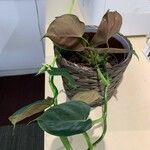
Philodendron lupinum
Description
Source: leafsnapPhilodendron lupinum is a magnificent shapeshifting plant as it matures. The rounded leaves turn lustrous and become creased, reaching up to 20-inches in size.
Care Guide
💧 Water Every 3-5 days
These plants like a moderate amount of soil moisture. Water whenever the top inch of soil has dried out. Both overwatering and underwatering can cause the leaves to droop, so gauge when it’s time to water by the soil dryness and not necessarily the leaves. Philodendrons don’t do well sitting in soggy soil, as this can lead to root rot. The non-climbing varieties tend to have a little more drought tolerance than the vining species.
☀️ Light Partial sun
Philodendron lupinum naturally occurs in habitats like forest understories and rocky areas where it receives natural shade. It favors partial sun but can accommodate both full sun and full shade, demonstrating its versatile, hardy nature.
🌡️ Temperature 20–37.8°C
Philodendron lupinum comes from tropical areas where the climate is usually warm and humid. Consequently, it is adapted to high temperatures and humidity. It dislikes sudden temperature changes and prefers a consistent thermal environment, so avoiding indoor temperature fluctuations is important. It generally cannot tolerate cold and needs warmer conditions for growth. If the temperature falls too low, the plant may stop growing or even die.
💨 Humidity
🪴 Soil 6-7
🌱 Fertilizer
Philodendron lupinum needs the most fertilizer during its active growth period, which occurs mainly in spring, summer, and early fall. Fertilization supplies essential nutrients that the soil may lack, supporting healthy root and stem development and preserving the attractive foliage that is a key characteristic of this plant.
🪴 Pot & Repot Once a year
Repot Philodendron lupinum in spring or summer once temperatures are warm enough, choosing a slightly larger pot with good drainage. After repotting, water thoroughly and place the plant in bright, indirect light. Consider installing a moss pole to support the plant as it grows.
✂️ Pruning
🌿 Propagating
🐛 Diseases & pets
☠️ Toxicity
Philodendron leaves and stems are high in calcium oxalate. This can be toxic to both people and animals when eaten.
Characteristics
- Plant Type
- Herb, Vine
- Life Cycle
- Perennial
- Genus
- Philodendron
- Family
- Araceae
- Hardiness Zone
- 10-12
- Mature Height
- 61 cm to 91 cm
- Mature Spread
- 61 cm to 91 cm
- Leaf Color
- Dark Green, Forest Green
- Leaf Type
- Evergreen
- Flower Size
- 10.16 cm to 15.24 cm
- Bloom Time
- All year round
- Planting Time
- Spring, Summer, Autumn
- Harvest Time
- All year round
- Native Area
- Brazil