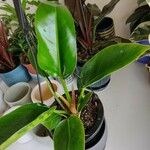
Philodendron martianum
Philodendron Green Congo · Pacová · Philodendron Moonlight
Description
Source: leafsnapPhilodendron martianum, commonly known as the "Green Velvet Philodendron," is a tropical plant native to South America. Belonging to the Araceae family, it is often grown indoors for its attractive foliage and ease of care. This plant boasts large, heart-shaped leaves that are dark green with a velvety texture. The leaves can reach up to 12 inches in length and 8 inches in width, making it a striking addition to any indoor setting. Philodendron martianum thrives in bright, indirect light and well-draining soil. While it can tolerate low light conditions, its growth may slow, and it may produce fewer leaves. Regular watering is essential; the soil should be kept moist but not waterlogged. Propagation can be achieved through stem cuttings or by dividing mature plants during repotting. With proper care, this tropical beauty can flourish indoors for many years, adding a touch of lush greenery to any space.
💡 Tree philodendrons are tropical foliage plants known for their large, thick, and lustrous green leaves. Their sturdy petioles add to their robust appearance. These plants have a high ornamental value and exude vitality.
🌳 Because of its lush, dense foliage and distinctive appearance, philodendron Fat Boy is becoming more sought after by interior designers. Known for adapting well to indoor settings, it functions not only as a decorative plant but also enhances the ambience of urban living spaces. Beyond its ornamental role, philodendron Fat Boy purifies indoor air by removing harmful substances like formaldehyde, helping create a healthier interior environment. Its use for these lesser-known benefits is increasingly popular among urban dwellers looking for a touch of nature.
Care Guide
💧 Water Every 7 days
Philodendron Fat Boy, a plant native to the Brazilian rainforests, thrives in high humidity and consistent moisture. It needs to be watered weekly and does well indoors in environments that resemble its natural habitat. Being an evergreen, it requires sufficient humidity to keep its leaves vibrant throughout the year.
How should I water my Philodendron Fat Boy plant?
To supply your Philodendron Fat Boy with water, you have several options. If your plant is in a small indoor pot, you can take it to the kitchen sink and use the faucet to water it. Hold the pot in your hands and stop watering when you see water coming out of the drainage holes. However, avoid using cold water during winter or in cold climates as it can harm the roots. If your tap water has high levels of fluorine, chlorine, or salts, consider using rainwater or lake water instead. Alternatively, you can water the plant overhead or directly into the soil using a watering can, hose, or any other tool of your choice.
What do I need to do if I give my Philodendron Fat Boy too much or too little water?
To remedy an underwatered Philodendron Fat Boy, start by watering deeply until excess water drains out. If the plant is grown outside, water until the soil is completely moist. On the other hand, if you're overwatering the plant, reduce your watering schedule and improve drainage by using looser soils or a container with larger drainage holes. Also, consider the plant's location. If it's in a corner, move it to a window or near a door for better ventilation. Ensuring well-ventilated spaces can help minimize overwatering.
How frequently should I water my Philodendron Fat Boy?
The Philodendron Fat Boy does not need consistent watering. Instead, it's best to let the soil dry out between waterings. If you have this plant in a container, you can determine when to water it by checking how dry the soil is. If the top half of the soil is dry, it's time to water. You can feel this by inserting your fingers or a stick into the soil, or by using a soil moisture meter. If you have the Philodendron Fat Boy outdoors, you can plan to water it about once every other week, unless it has recently rained.
How much water does my Philodendron Fat Boy require?
To water your Philodendron Fat Boy, wait until the top half of the soil is dry. Then, add enough water to make the soil moist again. The amount of water needed depends on the size of your plant and its container. For a small Philodendron in a small or medium-sized container, one to two cups should be enough. Larger plants will require more water. You can check if the soil is moist enough by sticking your finger or a trowel into it. Alternatively, you can water until you see excess water draining from the bottom holes of the container.
How do I know if I'm giving enough water to my Philodendron Fat Boy?
Both overwatering and underwatering can harm the health of your Philodendron Fat Boy. However, these issues have distinguishable symptoms. When your Philodendron Fat Boy lacks water, its leaves may turn yellow or its leaf margins may become brown and brittle. On the other hand, if it is being overwatered, you may notice both yellow and brown marks on the leaves simultaneously. Overwatering can also lead to diseases like root rot, which may be visible on the plant. But if you familiarize yourself with the signs of overwatering and underwatering, you can successfully address both problems.
☀️ Light Full shade
Philodendron Fat Boy does well in low-light environments and can tolerate some sun, reflecting its natural conditions beneath the forest canopy. Too much sun can scorch the leaves, while too little light may slow its growth. It does not need different light levels at different stages of growth.
What are the sunlight requirements for Philodendron Fat Boy?
Philodendron Fat Boy requires specific sunlight conditions to thrive, mimicking its natural habitat under the forest canopy. It thrives in low light conditions and can endure somewhat sunlit situations, but excessive sun exposure can cause leaf damage. Different growth stages of the plant do not require changes in light exposure. For optimal growth, the plant should be in full shade, meaning it gets less than 3 hours of direct sunlight per day, or partial sun, receiving about 3-6 hours of sunlight. Be mindful of how sunlight moves through your garden to choose spots that offer a perfect balance of light and shade, ensuring the happiness and health of your plants.
How can artificial lighting be used for Philodendron Fat Boy?
Artificial lighting can be crucial for the growth of Philodendron Fat Boy, especially when natural sunlight is insufficient. Indoor plants require adequate lighting for optimal growth. During winter or in less sunny spaces, artificial lights, such as LED lights, can be used to provide the specific wavelengths of light that plants need. The amount of artificial light needed varies by plant type: full sun plants need 30-50W/sq ft, partial sun plants need 20-30W/sq ft, and full shade plants need 10-20W/sq ft. The light source should be placed 12-36 inches above the plant to mimic natural sunlight, and most plants will need 8-12 hours of light per day.
What are the signs of light deficiency in Philodendron Fat Boy?
Signs of light deficiency in Philodendron Fat Boy include small leaves, where new growth may be smaller in size compared to older leaves; leggy or sparse growth, indicating the plant is stretching out and appearing weak; faster leaf drop, as the plant sheds older leaves to conserve resources; slower or no new growth, showing the plant is in survival mode; and lighter-colored new leaves, which may indicate insufficient sunlight and lack of chlorophyll. Additionally, excessive sunlight can cause symptoms like chlorosis, where leaves lose their green color, sunscald, leaf curling, wilting, and leaf scorching.
How can I address insufficient or excessive sunlight exposure for Philodendron Fat Boy?
To address insufficient sunlight for indoor Philodendron Fat Boy plants, move them to locations where they can receive ample filtered light, including brief periods of direct morning sunlight, ideally 1-2 meters away from a window. If moving the plant isn't feasible, consider using a desk or ceiling lamp for at least 8 hours daily, or invest in professional plant grow lights. For outdoor plants, gradually move them to sunnier locations each week to avoid sunburn. Reduce obstructions to sunlight by pruning or moving plants as needed. Note that parts of the plant affected by insufficient sunlight may not recover fully, but new growth should be healthy once light exposure is optimized.
🌡️ Temperature 20–41.1°C
Philodendron Fat Boy comes from tropical areas where the climate is usually warm and humid. Accordingly, it is well suited to high temperatures and humidity. It dislikes abrupt temperature shifts and prefers a steady thermal environment, so avoiding temperature fluctuations indoors is important. It generally does not tolerate cold and needs warmer conditions to grow. If the surrounding temperature falls too low, the plant may stop growing or even die.
What is the name of the plant?
The plant is known as Philodendron Fat Boy. Its botanical name is Philodendron martianum.
💨 Humidity normal (40-60%)
This plant will thrive in moderate humidity, which is probably the level in your home. However, misting it a few times a week can be very beneficial. Make sure the room has good ventilation.
🪴 Soil 6-7
🌱 Fertilizer
Proper fertilization is vital for the Philodendron Fat Boy's health and appearance. Fertilize the Philodendron Fat Boy during the summer, repeating the application monthly throughout the season. Nutrients provide energy for growth and help maintain the plant's components. Fertilization enhances the Philodendron Fat Boy's flower display, ensuring the best blooms.
🪴 Pot & Repot Once a year
Repot Philodendron Fat Boy in spring or summer once it's warm enough, choosing a slightly larger pot with good drainage. Water thoroughly after repotting and place it in bright, indirect light. Consider adding a moss pole for support as the plant grows.
✂️ Pruning
To promote healthy growth and a fuller appearance, it's important to regularly prune your Philodendron 'Fat Boy' from early to late spring. Remove any yellowing leaves and leggy stems to improve air circulation around the plant. Be sure to use clean, sharp tools to minimize stress and reduce the risk of infection, which will enhance the plant's overall health.
🌿 Propagating
🐛 Diseases & pets
☠️ Toxicity
Characteristics
- Plant Type
- Herb
- Life Cycle
- Perennial
- Genus
- Philodendron
- Family
- Araceae
- Hardiness Zone
- 10-12
- Mature Height
- 30 cm to 61 cm
- Mature Spread
- 61 cm to 91 cm
- Leaf Color
- Green
- Leaf Type
- Evergreen
- Flower Color
- White
- Flower Size
- 5.08 cm to 7.62 cm
- Bloom Time
- All year round
- Planting Time
- Summer
- Harvest Time
- All year round
- Native Area
- Brazil