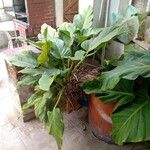
Philodendron melinonii
Wave of Love · ప్రేమ అల
Description
Source: leafsnapP. Melinonii stands out in terms of aesthetics because to its dark green leaves and distinct veins. The triangular-oblong leaves can grow up to 19 inches long. A thick petiole that might be coppery red to pale green in color supports them. Because the underside is often lighter than the top, the leaf lets in a little bit more light despite its thickness. The fibrous, dark base of the plant. Epiphytes of P. Melinonii can be discovered in the wild. On tree tops, it spreads out like a crown. With short internodes that give them a bushy appearance, these rosettes stand 6 feet tall.
Care Guide
💧 Water Every 3-5 days
Philodendrons require a moderate level of soil moisture to thrive. Therefore, watering them when the top 1 inch of soil has dried out is recommended. Rather than relying solely on the appearance of the leaves, it is best to assess the dryness of the earth to determine when watering is needed. Both overwatering and underwatering can result in drooping leaves, so it is essential to strike a balance. Soggy soil is detrimental to philodendrons as it can lead to root rot. Therefore, it is crucial to avoid leaving the plant in waterlogged soil. Adequate drainage is necessary to prevent excessive moisture accumulation. You can achieve this by ensuring the pot has drainage holes and removing excess water from the saucer or tray.
☀️ Light Partial sun
Philodendron melinonii originates from habitats like forest understories and rocky locales, where natural shade is common. It prefers partial sun but can acclimate to full sun or full shade, illustrating its versatility and hardiness.
🌡️ Temperature 20–37.8°C
Philodendron melinonii comes from tropical areas where the climate is generally warm and humid. As a result, it is adapted to high heat and moisture. It is sensitive to sudden temperature shifts and prefers a steady thermal environment, so indoor temperature fluctuations should be avoided. It typically does not tolerate cold and needs warmer conditions to grow; if the surrounding temperature falls too low, the plant may stop growing or even die.
💨 Humidity
🪴 Soil 5-6
🌱 Fertilizer
Appropriate fertilization is essential for the health and appearance of Philodendron melinonii. Fertilize it in summer, repeating the application monthly throughout the season. Nutrients provide for growth and the upkeep of the plant’s parts. Feeding the plant boosts its flower display, ensuring the best blooms.
🪴 Pot & Repot Once a year
Repot Philodendron melinonii in spring or summer once it’s warm enough, choosing a slightly larger pot with good drainage. Water thoroughly after repotting, and position it in a spot with bright, indirect light. Consider installing a moss pole to support the plant as it grows.
✂️ Pruning
Use pruning shears or simply pinch the tips of the vines if your Giant Melononii is the vining variety. This fast trimming technique will tidy the plant up and promote bushier, healthier growth. The point on a stem where a new leaf or stem grows is called a leaf node, and you should always clip or pinch growth just above it.
🌿 Propagating
🐛 Diseases & pets
☠️ Toxicity
The Melinonii has calcium oxalate crystals that are insoluble, like all philodendrons do. This irritant is present in numerous Araceae plants and, if consumed, can have undesirable adverse effects. As a result, the plant is regarded as having a mild-moderate level of toxicity. These calcium oxalate crystals will irritate the tongue and throat while chewing or biting a philodendron.
Characteristics
- Plant Type
- Herb
- Life Cycle
- Perennial
- Genus
- Philodendron
- Family
- Araceae
- Hardiness Zone
- 10-12
- Mature Height
- 0.91 m to 2.13 m
- Mature Spread
- 0.91 m to 1.52 m
- Leaf Color
- Dark Green, Forest Green
- Leaf Type
- Evergreen
- Flower Size
- 10.16 cm to 15.24 cm
- Bloom Time
- All year round
- Planting Time
- Spring, Summer, Autumn
- Harvest Time
- All year round
- Native Area
- Guyana, Venezuela, Brazil