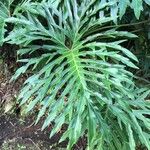
Philodendron selloum
Philodendron
Description
Source: leafsnapPhilodendron selloum, commonly known as the tree philodendron, is a favored houseplant native to South America. It belongs to the Araceae family and is easily recognizable by its large, glossy green leaves, which can grow up to 3 feet long and 2 feet wide. While this plant can reach heights of up to 10 feet in its natural habitat, it typically grows to be between 3 to 6 feet tall indoors. Philodendron selloum thrives in bright, indirect light but can also tolerate low light conditions. It requires well-draining soil and should be watered when the top inch of soil feels dry. Overwatering or allowing the plant to sit in water for extended periods can cause root rot. This plant is also renowned for its air-purifying properties, effectively removing harmful toxins from indoor air such as formaldehyde, benzene, and trichloroethylene. You can propagate Philodendron selloum through stem cuttings or by dividing mature plants during repotting. Overall, Philodendron selloum makes an excellent addition to any indoor space due to its attractive foliage and easy care requirements.
💡 Tree philodendrons are tropical foliage plants known for their large, thick, and lustrous green leaves. Their sturdy petioles add to their robust appearance. These plants have a high ornamental value and exude vitality.
Care Guide
💧 Water Every 7 days
The Split-leaf Philodendron, which originates from tropical rainforests, thrives in high humidity. To keep it healthy, it should be watered once a week. Although usually kept as an indoor plant, it benefits from a humid environment during its active growing season to mimic its natural habitat.
☀️ Light Partial sun
The Split-leaf Philodendron originates from habitats like forest underlayers or stony regions, where it typically encounters natural shading. The plant thrives most optimally under partially sunny conditions, but it's also capable of adjusting to either entirely shaded or fully sunlit situations, thereby reflecting its resilient and adaptable characteristics.
🌡️ Temperature 20–37.8°C
The Split-leaf Philodendron is a native of the tropics, where conditions are generally hot and moist. Therefore, it has evolved to thrive in environments with high heat and humidity. It doesn't respond well to abrupt shifts in temperature and likes a consistent thermal setting, so it's essential to prevent major temperature swings indoors. It usually cannot withstand chilly conditions and needs warmer temperatures to grow. If the ambient temperature falls excessively low, the plant may halt its growth or even perish.
💨 Humidity
🪴 Soil 6-7
🌱 Fertilizer
The optimal period to apply fertilizer to a Split-leaf Philodendron is during the early spring season when it starts to awaken from its dormant state. This acts as a catalyst for overall growth and budding of flowers. The process of fertilization escalates the growth of leaves, stems, and branches, and encourages the production of large, lively, and enduring flowers. Additionally, it plays a role in transporting nutrients from roots to the flowers, thus enhancing the plant's wellness and ability to resist diseases.
🪴 Pot & Repot
✂️ Pruning
The Split-leaf Philodendron benefits from occasional pruning, particularly in early spring, to remove dead leaves and promote new growth. Regular pruning helps control the plant's size, enhances its appearance, and improves air circulation, which reduces the risk of fungal infections. Always use clean, sharp tools to ensure the plant's optimal health.
🌿 Propagating
🐛 Diseases & pets
☠️ Toxicity
Philodendron leaves and stems are high in calcium oxalate. This can be toxic to both people and animals when eaten.
Characteristics
- Plant Type
- Shrub
- Life Cycle
- Perennial
- Genus
- Philodendron
- Family
- Araceae
- Hardiness Zone
- 10-12
- Mature Height
- 0.91 m to 1.52 m
- Mature Spread
- 1.52 m to 2.13 m
- Leaf Color
- Dark Green, Forest Green
- Leaf Type
- Evergreen
- Flower Size
- 15.24 cm to 20.32 cm
- Bloom Time
- Late spring, Summer, Early fall, Mid fall
- Planting Time
- Summer, Autumn
- Harvest Time
- Mid summer, Late summer, Fall, Early winter