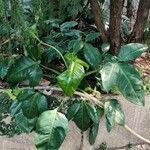
Philodendron tripartitum
Description
Source: wikipedia (CC BY-SA)Philodendron tripartitum is a species of flowering plant in the family Araceae. Some authorities continue to recognize Philodendron fenzlii as a valid species. It is native to southern Mexico, Central America, Jamaica, Colombia, Ecuador, Venezuela, and northern Brazil. A hemiepiphyte, it is typically found in the wet tropics at elevations from 0 to 1,300 m, and in cultivation it is considered "very aggressive."
💡 Tree philodendrons are tropical foliage plants known for their large, thick, and lustrous green leaves. Their sturdy petioles add to their robust appearance. These plants have a high ornamental value and exude vitality.
Care Guide
💧 Water
Philodendron tripartitum flourishes in humid environments and needs consistent moisture along with well-draining soil. To avoid oversaturation of the roots, water it weekly. This plant is best grown indoors, where humidity levels can be easily regulated. With its evergreen vibrancy, Philodendron tripartitum makes an excellent houseplant, adding a touch of lush greenery to any living space.
☀️ Light Full shade
The philodendron tripartitum grows best when kept out of direct sunlight, favoring areas with low light. While it can tolerate spots with filtered sunlight, it is healthiest in darker conditions. Its native habitats, which typically lack strong sunlight, reflect these preferences. Excessive light can cause leaf burn, whereas too little light may impede growth.
🌡️ Temperature 20–35°C
Philodendron tripartitum comes from tropical areas, where the weather is generally warm and humid. Therefore it is well suited to elevated temperatures and humidity. It does not tolerate abrupt temperature shifts and favors a consistent thermal environment, so preventing temperature changes indoors is important. It typically cannot withstand cold conditions and needs warmer temperatures to grow. If the surrounding temperature falls too low, the plant may stop growing or even perish.
💨 Humidity
🪴 Soil 5-6
🌱 Fertilizer
The best time to fertilize a Philodendron tripartitum is in early spring, as it awakens from dormancy. This stimulates overall growth and flower development. Fertilization improves the foliage, stems, and branches, and encourages flowers that are large, vibrant, and long-lasting. It helps transport nutrients from the roots to the blooms and enhances the plant's health and disease resistance.
🪴 Pot & Repot Once a year
Repot Philodendron tripartitum in spring or summer when temperatures are warm enough, using a slightly larger pot with good drainage. Water well after repotting and place the plant in a bright spot with indirect light. Consider installing a moss pole to support the plant as it grows.
✂️ Pruning
To promote fuller growth, prune your Philodendron tripartitum in early spring by removing dead leaves and leggy stems. Make sure to use clean tools and avoid cutting more than one-third of the plant. Effective pruning improves air circulation and light penetration, helping your Philodendron tripartitum stay healthy and visually appealing.
🌿 Propagating
🐛 Diseases & pets
☠️ Toxicity
Characteristics
- Plant Type
- Vine
- Life Cycle
- Perennial
- Genus
- Philodendron
- Family
- Araceae
- Hardiness Zone
- 9-10
- Mature Height
- 1.83 m
- Mature Spread
- 61 cm to 91 cm
- Leaf Color
- Green
- Leaf Type
- Evergreen
- Flower Color
- White
- Flower Size
- 10.16 cm to 15.24 cm
- Bloom Time
- All year round
- Planting Time
- Spring, Summer, Autumn
- Harvest Time
- All year round
- Native Area
- Colombia, Belize, Honduras, Mexico, Guatemala, Venezuela, Brazil, El Salvador, Nicaragua, Ecuador, Costa Rica, Panama, Jamaica