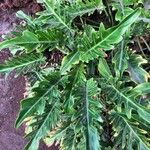
Philodendron xanadu
فیلوندرون برگ انجیری · Philodendron Winterbourn · Xanadu · Zigzag plant · Guaimbé
Description
Source: leafsnapPhilodendron xanadu is a popular ornamental plant from the Araceae family, native to Brazil and Paraguay. This tropical plant boasts glossy, dark green leaves that are deeply lobed and uniquely shaped, reminiscent of an elephant's ear. The leaves grow upright from the base of the stem, forming a dense rosette-like structure. One of the key attractions of Philodendron xanadu is its easy care and low maintenance, making it an excellent choice for both indoor and outdoor gardening. While it prefers bright, indirect light, it can also tolerate low-light conditions. The plant thrives in well-draining soil and requires regular watering, although it can withstand periods of drought. It is crucial to avoid overwatering, as this can cause root rot. In addition to its aesthetic appeal, Philodendron xanadu has air-purifying properties, effectively removing harmful toxins such as formaldehyde, benzene, and trichloroethylene from indoor air. Overall, Philodendron xanadu is an attractive ornamental houseplant with unique foliage that enhances any space. Its ability to purify indoor air also provides health benefits, making it a valuable addition to your home or garden.
🌳 Xanadu occupies a distinct niche in horticulture and is especially popular with urban landscape architects. Its role in improving urban climates and supporting human health is highly valued. Its resilience to a variety of climates, combined with its modest footprint, makes Xanadu a preferred species. Additionally, it brings a lively touch of green to any setting.
🎭 Romantic and lyrical
Care Guide
💧 Water Every 7 days
Xanadu thrives in its native tropical environment, preferring high humidity and consistently moist soil. Although it can tolerate moderate drought, it grows best when watered weekly. Regular misting can further improve its foliage and overall health, making it an excellent choice for indoor growth as an evergreen plant.
How should I water my Xanadu plant in the best way?
There are multiple ways to water your Xanadu plant effectively. If your Xanadu is in a small indoor pot, you can simply bring it to the kitchen sink and use the faucet to add water. Hold the pot and stop watering when you see water flowing through the drainage holes. Avoid doing this during winter or in cold climates as it can harm the plant's roots. In most cases, using tap water is fine for watering your Xanadu. However, if your local tap water has high levels of fluorine, chlorine, or salts, it's best to consider using rainwater or lake water. Additionally, you can water your Xanadu by overhead watering or directly watering into the soil using a watering can, hose, or any other suitable tool.
What should I do if I give my Xanadu plant too much or too little water?
If you realize that your Xanadu plant is not getting enough water, the first step to fix this is to give it a good watering. Make sure to water deeply, allowing excess water to drain from the container's hole, or saturate the soil if the plant is grown outside. On the other hand, if you notice that your Xanadu is getting too much water, start by adjusting your watering schedule and reducing the amount of water you give. Additionally, consider the type of soil and the container that your Xanadu is in. If the soil or container is preventing proper drainage, your plant may continue to be overwatered. To solve this, transfer your plant to looser soil and a container with larger drainage holes or a more porous material. Also, check the location of the plant. If it is in a cramped space, it is recommended to move it to a more ventilated spot like near a window or door. Proper ventilation can help prevent overwatering to some extent.
How many times should I water my Xanadu plant?
The Xanadu plant does not need constant soil moisture. In fact, it is better to let the soil dry out between waterings. If you have the Xanadu in a container, you can check if it needs water by feeling the dryness of the top half of the soil or using a moisture meter. For outdoor Xanadu plants, you can water them approximately once every other week, unless it has recently rained.
How much water does my Xanadu require?
To water your Xanadu, wait until the top layer of soil is dry. Then, add enough water to make the soil moist again. The amount of water needed depends on the size of your plant and container. For a small Xanadu in a small to medium-sized container, one to two cups of water should be enough. For larger plants, you'll need more water. To make sure the soil is sufficiently moist, you can stick your finger or a trowel into the soil to feel its moisture level. Another option is to water until you see excess water draining from the holes at the bottom of the container.
How do I know if I am giving enough water to my Xanadu plant?
Both overwatering and underwatering are detrimental to the health of your Xanadu plant. However, it's important to note that they have distinct signs and effects. When your Xanadu plant doesn't receive enough water, its leaves may turn yellow. In addition, underwatering can result in brown and brittle leaf margins. On the other hand, overwatering your Xanadu plant may show simultaneous yellow and brown marks on its leaves. This excessive water can also lead to diseases such as root rot, some of which may be visible on the plant. By familiarizing yourself with the signs of overwatering and underwatering, you have a good chance of correcting both issues.
☀️ Light Partial sun
The xanadu prefers moderate sunlight but can tolerate both plentiful and limited light. In its native surroundings it inhabits places where sun and shade alternate, which gives it a flexible tolerance for light. Too much sun can cause leaf burn, while too little may result in stunted growth.
What are the sunlight requirements for the Xanadu plant?
The Xanadu plant desires moderate sunlight exposure, thriving in environments that offer a mix of sun and shade throughout the day. It can adapt to varying light conditions, from abundant to scarce light. The plant typically enjoys partial sun, which is about 3-6 hours of sunlight daily, but it can also tolerate full sun or full shade scenarios, where it receives more than 6 hours of sunlight. However, it's crucial to observe the movement of sunlight in your garden to find an optimal location that ensures the plant's health without causing leaf burn from overexposure or stunted growth from underexposure.
How can artificial lighting benefit indoor Xanadu plants, and what are the best practices?
Indoor Xanadu plants benefit significantly from artificial lighting, especially in conditions where natural sunlight is insufficient, such as during winter or in dimly lit spaces. Artificial lights can promote faster and healthier growth. It's recommended to select LED lights, which can be customized to offer the specific wavelengths needed by the plants. The intensity needed varies, with full sun plants requiring 30-50W/sq ft, partial sun plants 20-30W/sq ft, and full shade plants 10-20W/sq ft. Positioning the light source 12-36 inches above the plant simulates natural sunlight best. Moreover, mimicking natural daylight hours, most plants will thrive with 8-12 hours of artificial light per day.
What are common symptoms of inappropriate light exposure in Xanadu plants?
Xanadu plants exhibit several symptoms when subjected to inadequate light conditions. These symptoms include lighter-colored new leaves indicating a lack of chlorophyll, leggy or sparse growth which makes the plant appear thin and weak, smaller than usual new leaf growth, and a noticeable reduction or halt in new growth, indicating the plant has entered survival mode. Conversely, symptoms of excessive light exposure include chlorosis, where leaves turn yellow due to chlorophyll breakdown, sunscald characterized by pale or necrotic areas on the plant, leaf curling as a defense mechanism against water loss, wilting from excessive moisture loss, and leaf scorching visible as brown, crispy patches on leaves. These conditions underline the importance of finding the right balance of sunlight exposure for your Xanadu plant.
What solutions can help manage the Xanadu plant's light exposure?
To manage light exposure for your Xanadu plant effectively, you can adopt several strategies based on the plant's location. Indoors, gradually increasing sunlight by moving the plant to sunnier spots each week until it gets 3-6 hours of direct light daily helps adaptation. For plants that are large or not easily movable, consider artificial lighting, keeping lamps on for at least 8 hours daily or utilizing professional plant grow lights. Outdoors, avoid sudden light intensity changes by gradually moving plants to sunnier locations each week to prevent sunburn. Reducing obstructions, such as pruning trees that block sunlight, or transplanting smaller plants to sunnier spots can also enhance light exposure. Note that affected plant parts may not recover, but new growth will be healthier with improved light conditions.
🌡️ Temperature 20–41.1°C
The xanadu prefers temperatures from 68 to 105 ℉ (20 to 41 ℃) in its native habitat, which is usually humid subtropical regions. It can tolerate temperatures as low as 50 ℉ (10 ℃) in winter if kept dry, but needs warmer conditions of 70 to 75 ℉ (21 to 24 ℃) in summer. Consider relocating it to a cooler spot during summer heat to avoid scorching.
What are the ideal growing conditions for Xanadu?
Xanadu thrives in temperatures between 68°F to 105°F (20°C to 41°C), typical of humid subtropical regions. It's a heat-loving plant and needs to be in warmer environments, with ideal summer temperatures ranging from 70°F to 75°F (21°C to 24°C). During summer, it may need to be moved to a cooler spot if the heat becomes too intense to avoid scorching. In winter, it can endure temperatures as low as 50°F (10°C) if the surrounding environment is kept dry. When autumn arrives, it's recommended to bring outdoor Xanadu plants indoors, placing them near a bright window while ensuring they are not too close to heaters to avoid damage. Keeping indoor temperatures above 50°F (10°C) in winter supports healthy growth, but any exposure to temperatures near or below this range can be harmful.
How should I care for my Xanadu in response to temperature changes?
In response to low temperatures, it's critical to keep Xanadu above 50°F (10°C), as the plant prefers warmer conditions. If the temperature falls too low, the leaves may lighten and, following frost, turn brown or black, showing signs of wilting and drooping. To combat this, trim the frost-damaged areas and relocate the plant to a warmer area indoors, preferably near a south-facing window for ample sunlight, while avoiding places near heaters or air vents that could cause dry air. During hot periods, specifically when temperatures climb above 105°F (41°C), leaf discolouration and susceptibility to sunburn can increase. Address this by trimming sunburned areas, moving the plant to a shaded spot during peak sun hours, and maintaining soil moisture with morning and evening waterings.
💨 Humidity normal (40-60%)
This plant will thrive in moderate humidity, which is probably the level in your home. However, misting it a few times a week can be very beneficial. Make sure the room has good ventilation.
🪴 Soil 5-7
🌱 Fertilizer
Xanadu needs the most fertilizer during its active growing period, which is mainly in spring, summer, and early fall. Fertilization supplies essential nutrients the soil may lack and supports healthy root and stem growth, as well as the attractive foliage that is a key characteristic of this plant.
Why should I put fertilizer on my Xanadu plant?
Plants, including the Xanadu, need soil nutrients to grow. However, it's not always guaranteed that the soil will have all the necessary nutrients. Fertilization and soil amendments help ensure that your garden plants have both the basic nutrients they need and the specific ones that are required for their growth. The Xanadu plant, in particular, needs fertilizer to support the healthy development of its roots and stems throughout the growing season. Fertilizing also contributes to the Xanadu's ornamental appeal by promoting the growth of beautiful leaves, which are a key feature of this plant.
When should I apply fertilizer to my Xanadu?
Xanadu plants require the highest amount of fertilizer during their active growth phase, which usually occurs in spring, summer, and early fall. As winter comes to an end, it is recommended to feed your Xanadu every two to four weeks until fall arrives. During the fall, you can gradually reduce the amount of fertilizer you provide as the plant's growth decreases. Finally, when winter arrives and the Xanadu has minimal growth, you should cease feeding it entirely.
When is it best not to fertilize my Xanadu plant?
For most of the year, including spring, summer, and most of the fall, it's important to regularly feed your Xanadu. However, there are exceptions. If you notice that your Xanadu has received too much fertilizer or if you have fertilized it incorrectly, causing fertilizer burn or other issues, you'll need to address these problems before continuing with regular feeding. The only time of year when you should not fertilize a Xanadu is during winter. If you have this plant indoors in a cold winter area, it will go into a dormant phase. Feeding the plant during this dormant phase is not necessary or beneficial for its growth, and it's likely to cause fertilizer burn.
Which fertilizer should I use for my Xanadu plant?
The fertilizer for a Xanadu contains a specific blend of nutrients, but each nutrient is present in low amounts. An ideal fertilizer has a ratio of 3 parts nitrogen (N), 1 part phosphorus (P), and 2 parts potassium (K). However, a general-purpose fertilizer with an even blend of nutrients can also work well in some cases. Even with a balanced fertilizer, the volume of each nutrient should be at 10 or lower. You can choose between granular or liquid-based fertilizer. If you opt for a liquid-based fertilizer, it's usually best to dilute the strength by half. While there are not many disadvantages to using granular fertilizer, it makes more sense to use liquid fertilizer, especially if you water your Xanadu while feeding it.
How can I feed or nourish my Xanadu plant?
When purchasing fertilizer for your Xanadu plant, it is important to follow the instructions provided. In most cases, it is recommended to fertilize just before or during watering to avoid damaging the plant's roots. If you choose a slow-release granular fertilizer, sprinkle it on the soil and water immediately afterward. For liquid-based fertilizers, dilute it with water, apply to the soil, and provide additional water. It is especially crucial to dilute the fertilizer by at least half during spring and fall when the plant's growth is increasing or decreasing respectively.
🪴 Pot & Repot Once a year
Repot Xanadu in spring or summer once it's warm enough, choosing a slightly larger pot with good drainage. Water thoroughly after repotting, and place it in bright, indirect light. Consider adding a moss pole for support as the plant grows.
✂️ Pruning
To encourage bushier growth and promote overall plant health, prune your Xanadu in the early to late spring. Begin by trimming away any dead leaves and cutting back overgrown stems, but be sure not to remove more than one-third of the plant at a time. This process will also improve air circulation and allow better light exposure.
🌿 Propagating
🐛 Diseases & pets
☠️ Toxicity
Characteristics
- Plant Type
- Herb
- Life Cycle
- Perennial
- Genus
- Philodendron
- Family
- Araceae
- Hardiness Zone
- 10-13
- Mature Height
- 0.49 m to 1.52 m
- Mature Spread
- 0.91 m to 1.52 m
- Leaf Color
- Green
- Leaf Type
- Evergreen
- Flower Color
- Red, Cream
- Bloom Time
- Summer, Early fall
- Planting Time
- Spring
- Harvest Time
- Late summer, Fall
- Native Area
- South America