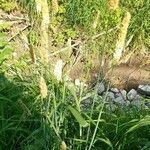
Phleum pratense
Timothy · Cat's-tail · Meadow cat's-tail · Timothy grass · Common cat's tail
Description
Source: leafsnapPhleum pratense, commonly known as Timothy grass, is a perennial grass species native to Europe and Asia. It has been widely introduced and naturalized in North America, where it is frequently used as forage for livestock. Typically reaching a height of 2 to 4 feet, Timothy grass features narrow leaves that are either flat or slightly rolled. The plant produces dense, cylindrical flower spikes that are 2 to 6 inches long and contain numerous small flowers. This grass prefers moist soils with good drainage but can tolerate drought conditions once established. It thrives in full sun but can also tolerate some shade. Beyond its primary use as a forage crop, Timothy grass serves several other purposes. It can help control erosion on slopes and along waterways, enhance wildlife habitats, and provide ornamental landscaping in meadows or naturalized areas. Overall, Phleum pratense is an important species both ecologically and economically. Its widespread use in agriculture, alongside its roles in soil stabilization and wildlife habitat enhancement, underscores its significance in providing essential ecosystem services.
🌳 Timothy is more than just another grass; it is an important forage crop widely grown for hay, silage, and pasture. Its high palatability and nutrient density—particularly its role as a significant source of protein—make it essential for improving the health and productivity of ruminant animals such as cattle and sheep. In addition to its common use for animal feed, timothy also aids apiculture by providing pollen for bees. Although its pollen is not a primary choice for honey production, it still supports the diet of these important pollinators during its flowering period.
Care Guide
💧 Water Every 3 days
Timothy grass comes from temperate regions and prefers consistent moisture levels. It grows best when watered weekly, but be careful to avoid waterlogging. When grown outdoors, it does well in temperate climates, as these typically have rainfall patterns that support its active growth during the wetter seasons.
What should I do if I give my Timothy plant too much or too little water?
Proper watering is crucial for the health and performance of this beautiful ornamental grass. When planted in the ground, watering issues can be fixed. However, in a container, Timothy can quickly die from too much or too little water. Insufficient watering can cause growth to stop, while overwatering can result in yellow leaves with brown tips. Underwatering can lead to drooping leaves, weak seed head production, and browned leaves. If you suspect improper watering, the first step is to determine whether the problem is too much or too little water. Stop watering immediately if there is an excess of water. Wait patiently for heavy soils to dry out, and once new growth appears, test the soil moisture to decide if more water is needed. If Timothy is receiving too little water, simply give it a deep drink and see if it revitalizes. In general, it is better to water deeply and infrequently, as this encourages deep root growth, making the grass more resistant to drought and water-related issues.
How many times should I water my Timothy?
The watering needs of Timothy grass will vary depending on its planting location. Generally, it is recommended to water this grass once a week. In hot climates, watering it once or twice a week during the summer may be necessary. In moderate climates, watering once every seven days or more may be sufficient. It's important to note that grass in containers usually requires more frequent watering than grasses planted in the ground. However, the location of the grass also plays a role. Grasses in shaded areas need to be watered less frequently compared to those planted in the ground. Only water Timothy grass when the soil is dry. To determine if the soil is dry, you can press your finger a couple of inches into the soil. For potted grass, you can weigh the grass or feel the pot's lightness to assess if it lacks water. Insufficient water may cause the grass blades to appear folded and thinner than usual. Although Timothy grass is drought-tolerant, regular deep waterings will result in beautiful color. Despite being able to withstand harsh and dry conditions, Timothy grass thrives best with consistent water. When first planted, it requires more frequent watering until it establishes deep roots. For Timothy grass in pots, the soil tends to dry out quickly, especially in hot and direct sun. It is recommended to test the soil every 3 to 4 days and water only when it feels dry. Timothy grass planted in the ground generally needs less watering, although this depends on the type of soil it is grown in. Clay soil holds water for longer periods and may feel dry at the surface while still retaining moisture below ground. Sandy soils that drain quickly will require more frequent watering.
What should I keep in mind when I water my Timothy plant in different seasons, climates, or during different stages of growth?
The rate of growth of your grasses can indicate if you are watering enough. Timothy grass tends to double in size during the hottest months of the year. So, if the weather is hot but the grass is not growing vigorously, you may need to adjust your watering schedule. In winter, you might only need to water once a month, but it's still important to check the soil for moisture. During the warmest months, the grass will need more water than usual. However, during winter and cooler months, the need for water will be much lower. Remember, it's crucial to let the soil dry out completely before watering Timothy grass.
☀️ Light Full sun
Timothy grows best in locations with open sunlight for most of the day, encouraging optimal growth. It can also tolerate areas with less but still substantial sun exposure. Excessive shade may impede its growth, while overexposure can pose a risk to the plant's health.
What are the sunlight requirements for Timothy (Phleum pratense)?
Timothy (Phleum pratense) thrives best in locations that offer full sun, defined as areas receiving above 6 hours of sunlight daily. It can also tolerate partial sun, where it gets about 3-6 hours of sunlight. The plant's growth is optimal with open exposure to sunlight for the majority of the day. However, it is equally important to watch how sunlight traverses through your garden, helping you select areas that ensure a balance of light and shade for plant happiness, as excessive shade or overexposure may negatively affect the plant's health.
What are the essentials for growing Timothy indoors and outdoors?
For optimal growth indoors, Timothy requires adequate lighting. In situations where natural sunlight is insufficient, such as in winter or less sunny spaces, artificial lights offer a practical solution. LED lights are preferred for their capacity to be customized to specific plant needs, with full sun plants requiring 30-50W/sq ft, partial sun plants requiring 20-30W/sq ft, and full shade plants needing 10-20W/sq ft of artificial light. The light source should be placed 12-36 inches above the plant to mimic natural sunlight for 8-12 hours per day.
What are the common symptoms of inadequate lighting on Timothy, and how can they be addressed?
Symptoms of inadequate lighting on Timothy include smaller new leaves, leggy or sparse growth, premature leaf drop, slower or ceased new growth, lighter-colored new leaves, chlorosis, sunscald, leaf curling, wilting, and leaf scorching. To address these, gradually increase sunlight exposure to at least 6 hours daily. For indoor plants, use a south-facing window or artificial light for at least 8 hours daily. Outdoor plants should be moved to sunnier spots gradually to avoid sunburn. Minimizing obstructions, such as pruning obstructive branches, or transplanting to sunnier locations with good drainage, can also help. Remember, parts of the plant damaged by insufficient sunlight may not recover, but new growth should be healthy after increasing light exposure.
🌡️ Temperature 0–32.2°C
The timothy plant is typically native to temperate regions where temperatures range from 32 to 50 ℉ (0 to 10 ℃). For optimal growth it prefers a temperature range of 32 to 90 ℉ (0 to 32 ℃). During the summer months it may benefit from some shade or protection from direct sunlight to avoid overheating.
What is the preferred temperature range for the growth of Timothy?
The timothy plant (Phleum pratense), a plant that grows natively in temperate regions, thrives in a temperature range between 32 to 90 °F (0 to 32 °C). While it can survive temperatures from 32 to 50 °F (0 to 10 °C) which are typical for its native environments, optimal growth is observed within this broader range. During the warmer months, it is beneficial for the plant to receive some shade or protection from direct sunlight to prevent the risks associated with overheating.
How does Timothy handle cold temperatures and what are the winter care recommendations?
Timothy is highly tolerant of cold temperatures and does not require special frost protection measures during the winter. To prepare for the first freeze of autumn, it is advised to water the plant generously. Ensuring the soil remains moist as it freezes helps to prevent drought and water scarcity for the plant throughout the winter and into early spring, supporting its resilience during colder periods.
What should be done if Timothy is exposed to temperatures below -35°C?
Though Timothy can tolerate extremely cold conditions, winter temperatures below -35°C may lead to problems. In such cold, the plant might not show immediate signs of distress, but a notable decrease in sprouting, or even a lack of sprouting, might occur when spring arrives. To address this, it is recommended to remove any parts of the plant that have failed to sprout in the spring, allowing it to recover and continue growing.
What are the solutions if Timothy experiences high temperatures?
Timothy's growth will halt if exposed to temperatures above 32°C, and it becomes prone to rot in such conditions. To mitigate damage from overly high temperatures, it is advisable to trim away any parts of the plant that are sunburned or dried-up. Additionally, moving the plant to a shaded location or employing a shade cloth to protect it from the midday and afternoon sun can be beneficial. To maintain moisture, water the plant in the morning and evening, especially during hot spells.
💨 Humidity
🪴 Soil 6-7
🌱 Fertilizer
Timothy needs extra nutrients to encourage healthy new growth. In spring, adding some compost around the plant’s base is an effective way to provide the nutrition it requires. Fertilizing supports vigorous growth and helps the plant withstand diseases and pests.
🪴 Pot & Repot
✂️ Pruning
🌿 Propagating
🐛 Diseases & pets
☠️ Toxicity
Characteristics
- Plant Type
- Grass
- Life Cycle
- Perennial
- Genus
- Phleum
- Family
- Poaceae
- Hardiness Zone
- 3-7
- Mature Height
- 0.49 m to 1.52 m
- Mature Spread
- 30 cm
- Leaf Color
- Green, Blue
- Leaf Type
- Deciduous
- Flower Color
- Purple
- Flower Size
- 0.76 cm to 1.27 cm
- Bloom Time
- Late spring, Early summer, Mid summer
- Planting Time
- Spring, Autumn
- Harvest Time
- Mid summer
- Native Area
- Turkey, Sweden, India, Austria, Slovakia, Pakistan, Slovenia, Morocco, Croatia, Belarus, Uzbekistan, Iraq, Germany, Iceland, Estonia, Romania, Latvia, Belgium, Moldova, Portugal, Netherlands, France, Tajikistan, Czech Republic, Bulgaria, Armenia, Poland, Greece, Ukraine, Serbia, Lebanon, Lithuania, Norway, Syria, Kyrgyzstan, Kazakhstan, Italy, Spain, Switzerland, Denmark, Mongolia, Finland, Iran, Albania, Ireland, United Kingdom, Hungary, Azerbaijan