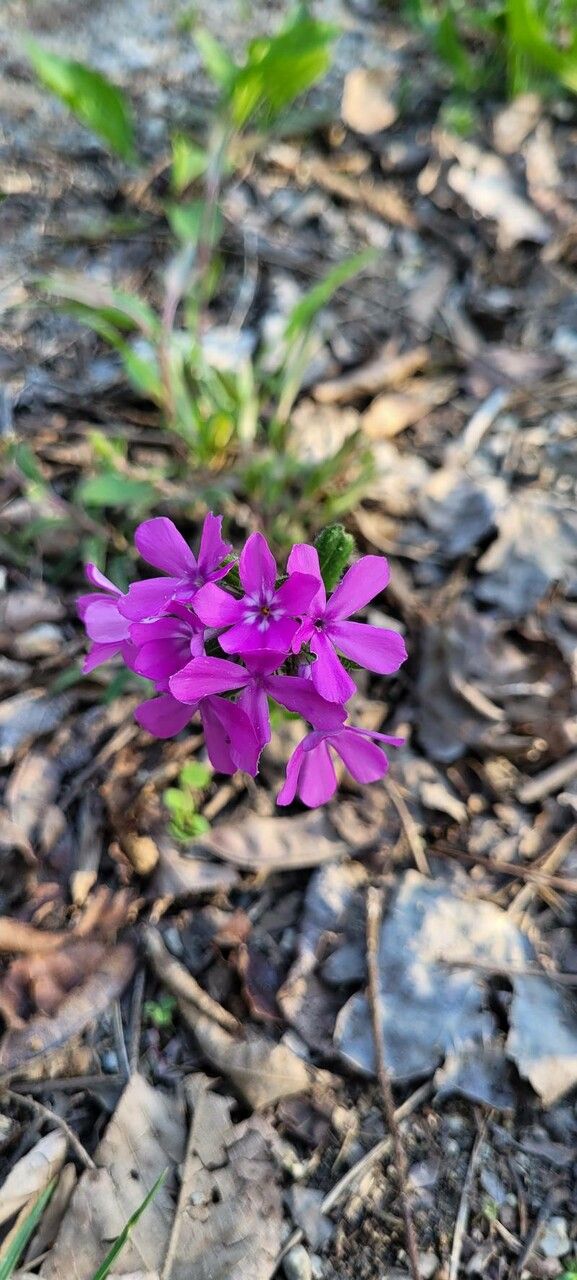
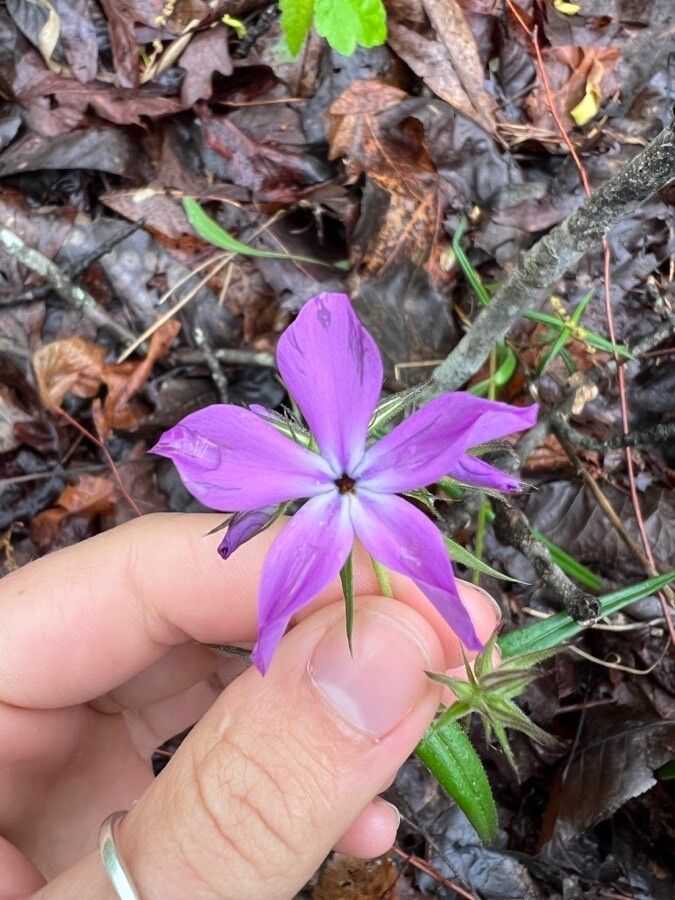
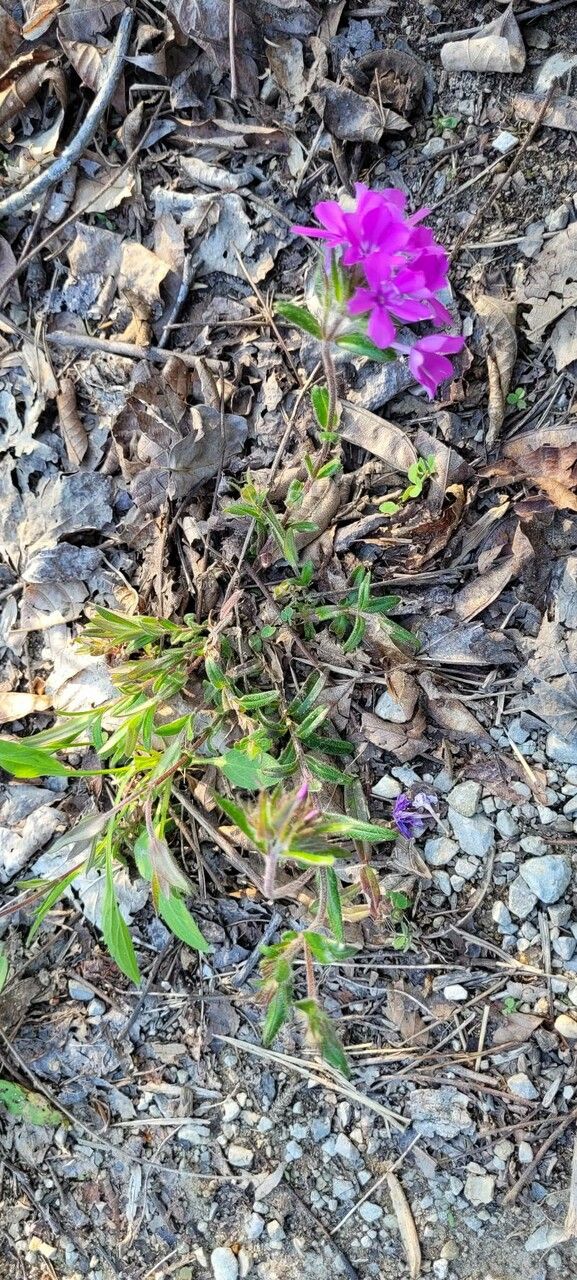
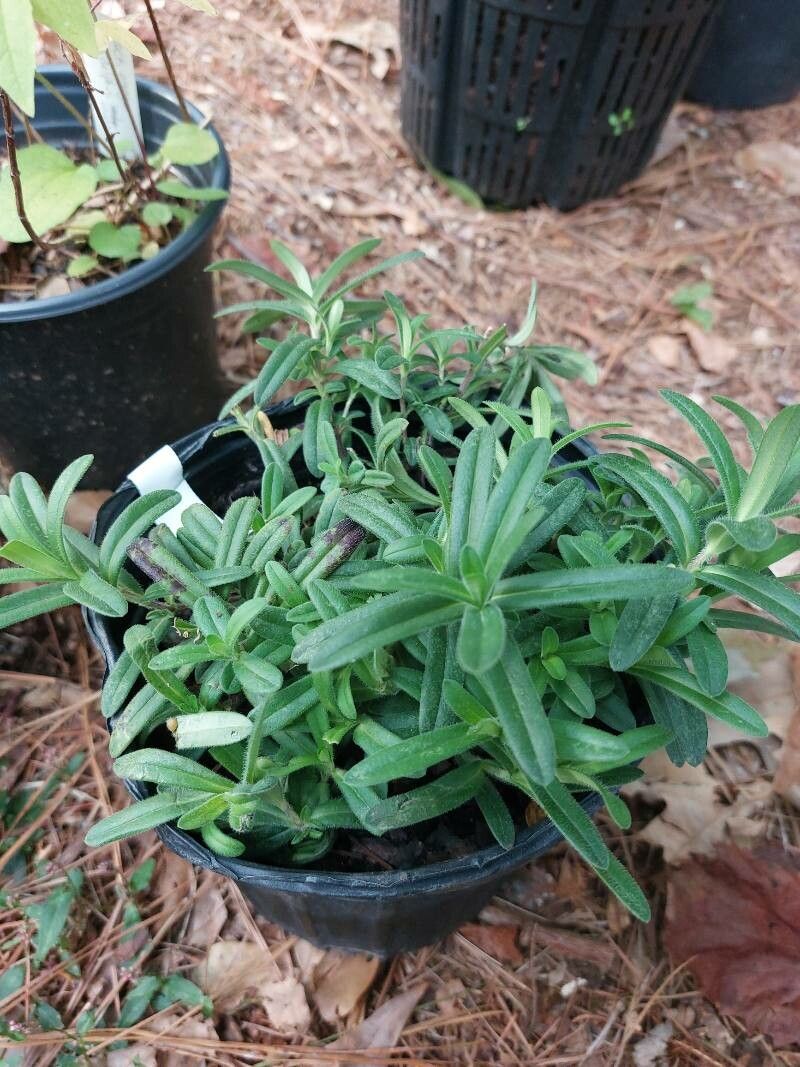
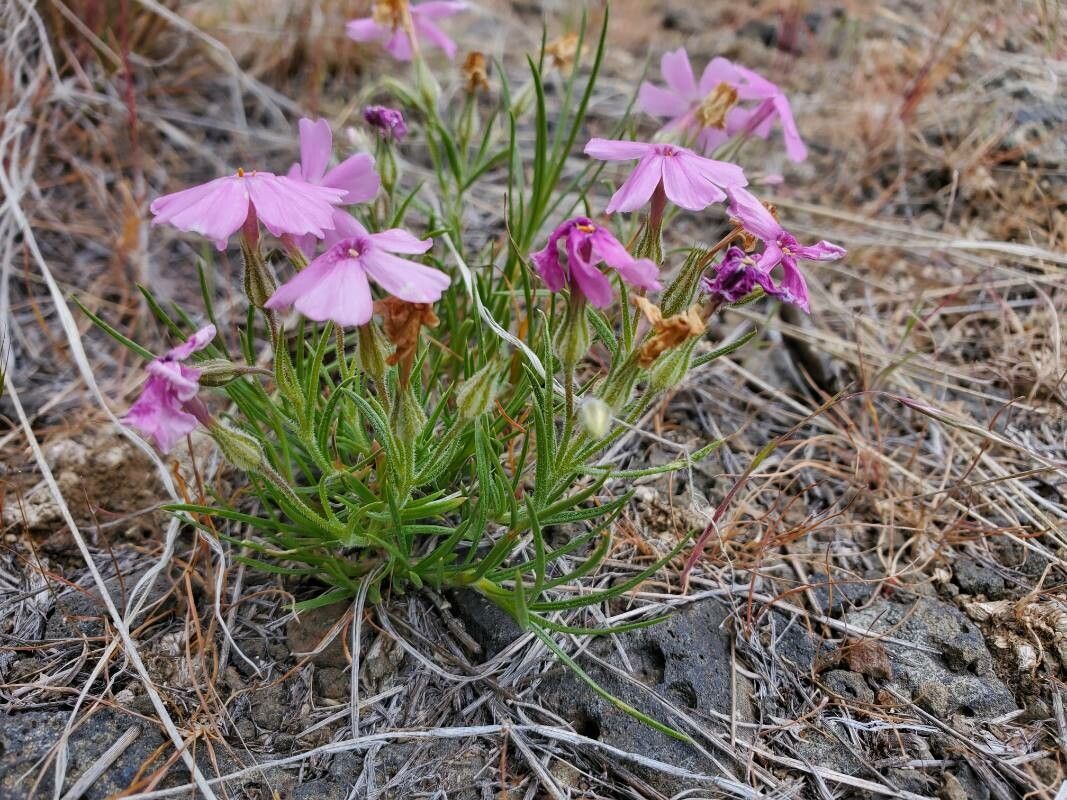
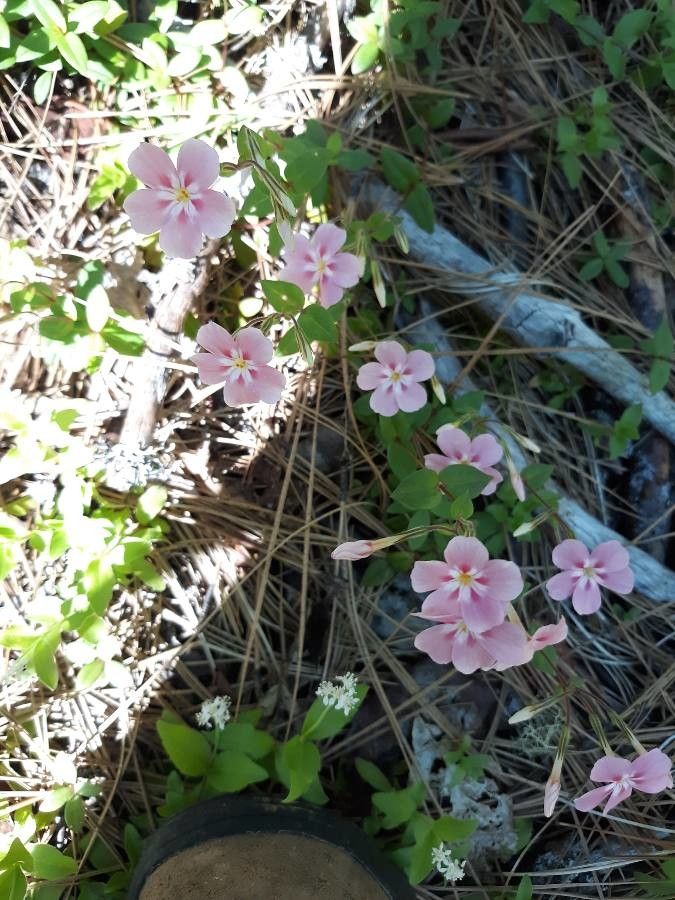
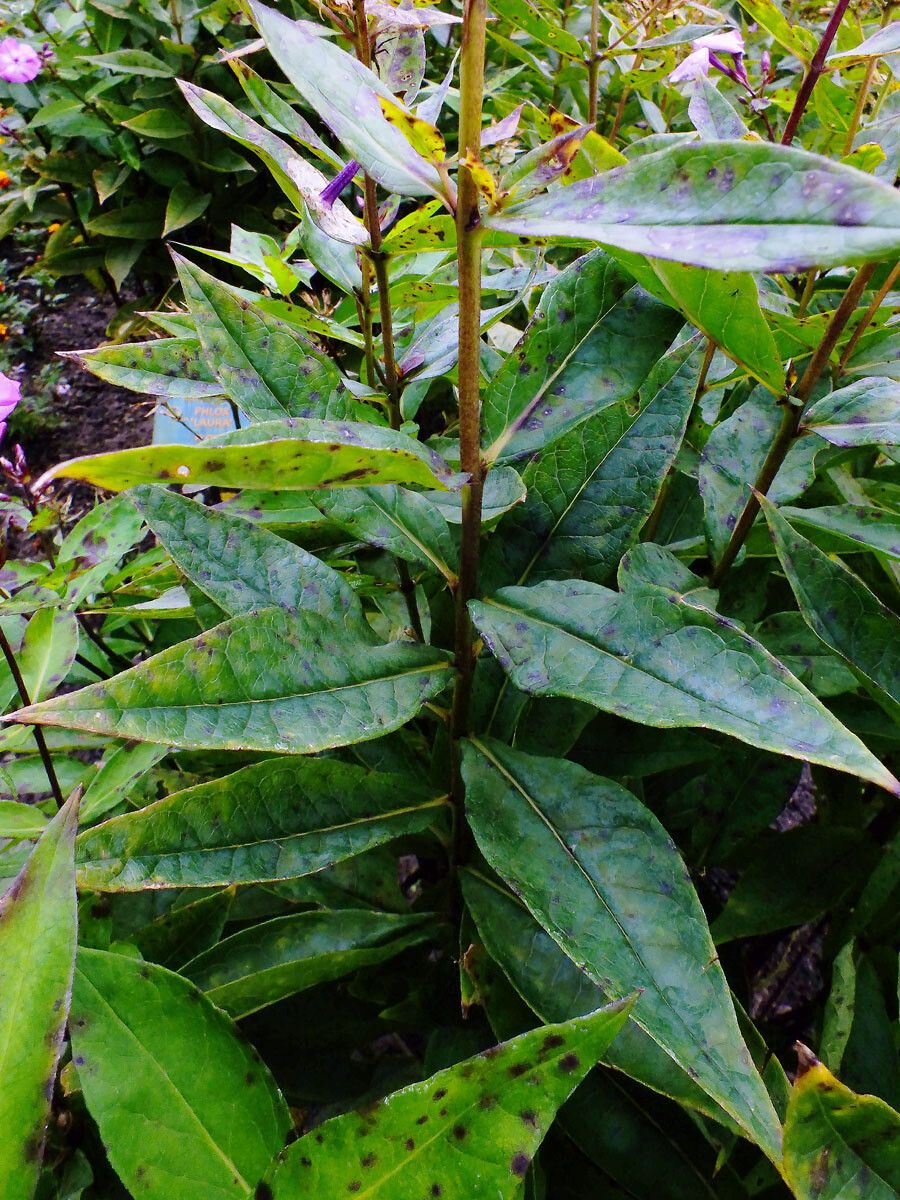
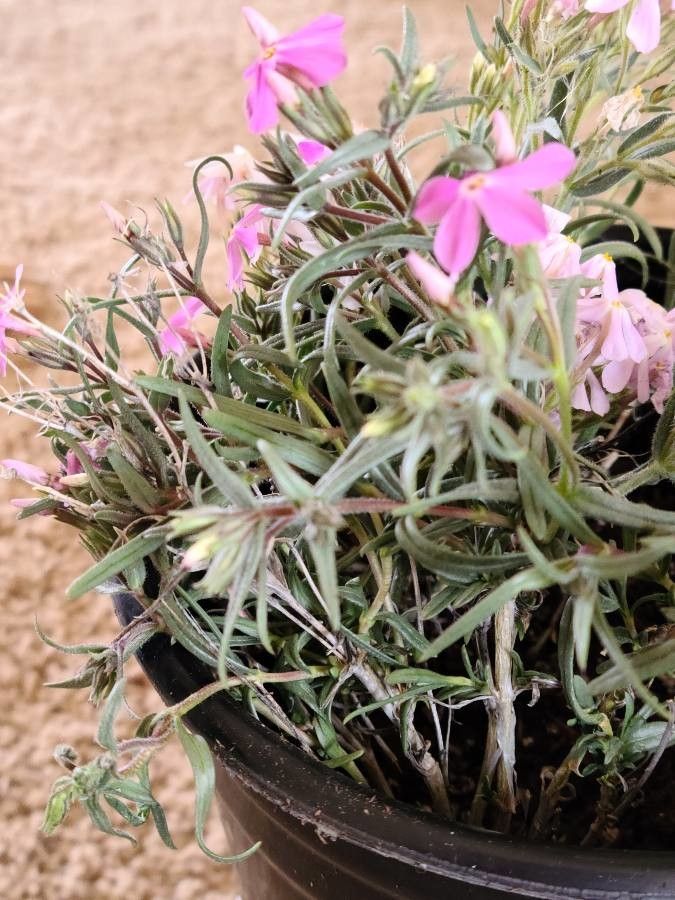
Phlox amoena, commonly known as creeping phlox, is a low-growing perennial plant native to North America. Typically reaching heights of 6-8 inches and spreading up to 2 feet wide, this plant produces small, fragrant flowers in shades of pink, purple, and white that bloom in early spring.
Creeping phlox prefers well-drained soil and full sun exposure, though it can tolerate partial shade. It serves as an excellent ground cover for rock gardens and makes a beautiful edging along pathways or borders.
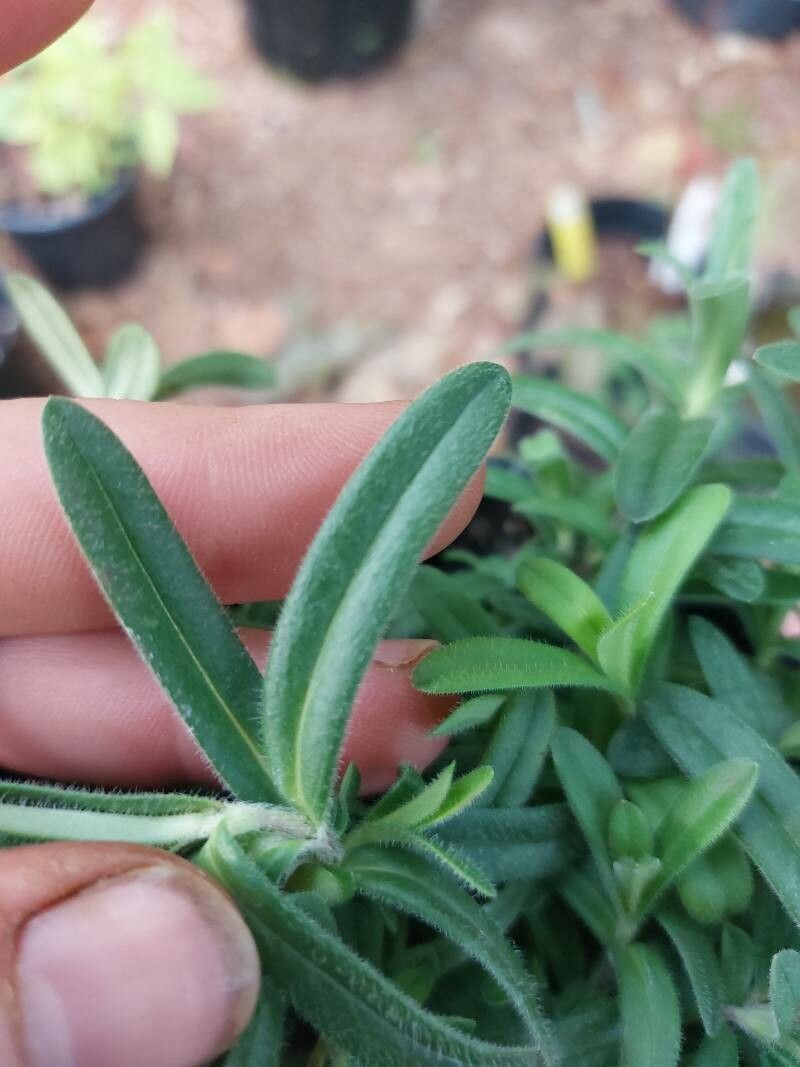
The foliage of Phlox amoena features small needle-like leaves that remain evergreen in warmer climates but might turn reddish-purple during the winter months. The plant requires minimal maintenance and can be easily propagated through division or stem cuttings.
Overall, Phlox amoena is a stunning addition to any garden, offering vibrant flowers and low-maintenance care.
Hairy phlox is fairly disease-resistant and typically not prone to illnesses. Nevertheless, it can be affected by pests and diseases present in its surroundings. Such infections are generally mild. Regarding care, the plant requires moderate maintenance. Regular pruning is needed to maintain an attractive appearance and healthy growth. Applying fertilizer can also encourage flowering. Hairy phlox is suitable for anyone with an outdoor area, such as a garden or patio, and does not demand extensive care experience. When grown indoors it may require more attentive care.
How to keep Phlox Amoena.
Light
Hairy phlox is a perennial, herbaceous species that favors sunny sites and originates from open habitats, commonly occurring in meadows and grasslands. It prefers full sun but can also tolerate partial sun.
Water
Hairy phlox thrives in moist environments and prefers consistent moisture without becoming waterlogged. While it can tolerate drought, it benefits from weekly watering. When grown outdoors, align its supplemental watering with its flowering cycle and the seasonal rainfall patterns to ensure optimal growth.
Temperature
Hairy phlox can tolerate a wide range of temperatures, but its distribution may still be restricted by different combinations of moisture and heat. It does best in warm summer conditions with sufficient rainfall or watering. Long stretches of cloudy, rainy weather, as well as prolonged high temperatures, can raise the chance of Hairy phlox dying. In winter, protecting the plant from cold can increase its likelihood of survival.
Fertilizer
The best time to fertilize a Hairy phlox is in early spring, when it’s leaving dormancy and beginning active growth. Fertilization supplies essential nutrients for healthy development. Although Hairy phlox has fairly low fertilizer requirements, applying fertilizer annually can improve its survival and encourage better, longer-lasting flowers.
Pruning
Pruning hairy phlox in the spring, from early to late, encourages healthy growth and boosts blooming. Trim away any dead stems and remove spent flowers to ensure continuous flowering. Regular pruning helps maintain a compact shape and prevents the plants from becoming leggy. Be sure to use clean, sharp tools and dispose of the pruned materials properly to reduce the risk of disease.
Botanical profile.
- Plant Type
- Herb
- Life Cycle
- Perennial
- Genus
- Phlox
- Family
- Polemoniaceae
- Hardiness Zone
- 6-8
- Mature Height
- 15 cm to 30 cm
- Mature Spread
- 30 cm to 46 cm
- Leaf Color
- Green, Dark Green
- Leaf Type
- Semi-evergreen
- Flower Color
- Pink, Lavender
- Flower Size
- 1.78 cm
- Bloom Time
- Early spring, Mid spring
- Planting Time
- Spring, Summer
- Harvest Time
- Late spring, Early summer
- Native Area
- Georgia
Other names.
Reader questions.
What are the sunlight requirements for plants?
Plants have varying sunlight requirements necessary for optimal growth. Full sun refers to locations receiving above 6 hours of sunlight, while partial sun describes spots getting about 3-6 hours of sunlight daily. It's essential to observe how sunlight moves through your garden to select the ideal locations that offer a harmonious balance of light and shade, ensuring your plants thrive.
What is Hairy Phlox?
Hairy Phlox, known botanically as Phlox amoena, does not have specific essentials, symptoms, or additional information provided. It is a type of plant that falls under the genus Phlox.
What essential conditions do Hairy phlox need?
Hairy phlox is a perennial herbaceous plant that loves sunlight and originates from open habitats such as meadows and grasslands. It thrives best in full sun conditions but can also manage well in partial sun. When natural sunlight is lacking, especially during less sunny seasons, artificial lighting can be a great solution. LEDs are recommended for indoor plants, requiring 30-50W/sq ft for full sun plants, 20-30W/sq ft for partial sun plants, and 10-20W/sq ft for full shade plants. The light should be placed 12-36 inches above the plant for 8-12 hours a day to simulate natural daylight hours effectively.
What are the symptoms of light deficiency in plants?
Hairy phlox shows several symptoms when experiencing light deficiency, including smaller new leaves, leggy or sparse growth, premature leaf drop, and slowed or halted growth. Inadequate light can also cause leaves to develop irregular color patterns or pale coloring due to a lack of chlorophyll and essential nutrients. Other symptoms include chlorosis, where leaves lose their green color, sunscald from intense sunlight exposure, leaf curling as a defense against overexposure, wilting due to increased water loss, and leaf scorching indicated by brown, dry, and crispy leaf edges.
What are the solutions for light deficiency in plants?
To combat light deficiency in indoor plants, gradually move them to sunnier spots, aiming for at least 6 hours of direct sunlight daily. Consider using a south-facing window and keeping curtains open during the day. If moving the plant isn't feasible, artificial light such as desk lamps or professional grow lights can provide additional illumination for at least 8 hours a day. For outdoor plants, gradual relocation to sunnier areas is key to preventing sunburn from sudden changes in light exposure. It may also be beneficial to prune trees or move smaller plants during their dormant period to areas with better sunlight and drainage, ensuring new growth is healthy and obstructions to sunlight are minimized.