Phoenix canariensis
Canary Island date palm · Canary Island palm · Canary Palm · Canary date palm · Pineapple Palm
Description
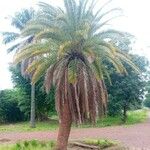
Source: leafsnapPhoenix canariensis, commonly known as the Canary Island date palm, is a large and majestic tree indigenous to the Canary Islands. Popular as an ornamental plant, it can reach heights of up to 20 meters and features a crown of large, feathery fronds. The tree's thick trunk is adorned with diamond-shaped leaf scars. The leaves of Phoenix canariensis are pinnate, meaning they consist of numerous leaflets arranged along a central stem. These dark green leaflets have sharp spines along their edges. The plant produces small, yellow flowers that grow in clusters on long stalks. These blooms eventually give way to small, black fruits that resemble dates, although they are not edible. Phoenix canariensis thrives in full sun or partial shade and well-drained soil. While it is drought-tolerant, it benefits from regular watering during dry periods. This palm tree has been widely cultivated for its ornamental value in gardens, parks, streetscapes, and public spaces worldwide. Its striking appearance and ability to tolerate urban pollution make it a popular choice. However, due to its significant size when fully grown, it may not be suitable for smaller gardens. Overall, Phoenix canariensis makes an impressive addition wherever it is planted, offering an exotic touch that adds character to any landscape.
💡 Originating from the Canary Islands, a small archipelago off the coast of Morocco, the Canary Island date palm is a highly desired palm tree in the United States. This tree is easily recognized by its thick, decorative trunk. The diamond-shaped patterns on the trunk are actually scars left behind after the leaf bases have rotted away.
🌳 The Canary Island date palm is widely valued for its ornamental appeal and its production of dates. Surprisingly, its sap is a primary ingredient used to make palm wine, a refreshing beverage. The seeds of the Canary Island date palm contain a considerable amount of oil that is suitable for biodiesel, making them an unconventional energy source. Additionally, these towering palms support an ecosystem by providing food and shelter to a variety of insects.
🎭 Sol
Care Guide
💧 Water Every 7 days
The Canary Island date palm, native to the Canary Islands, thrives in Mediterranean climates with moderate humidity. It requires watering every 1 to 2 weeks, maintaining a balance to keep the soil moist without over-saturating it. This palm is resilient to a range of temperatures but needs well-draining soil to prevent root rot during heavy rains.
☀️ Light Full sun
The Canary Island date palm thrives with a generous amount of sunlight each day to encourage healthy growth, though it can also tolerate situations with only moderate sun exposure. It originally developed in a habitat that received abundant daily sunlight. However, its health can decline if the light is either too intense or too limited.
What are the sunlight requirements for Canary island date palms?
Canary island date palms require a generous amount of daily sunlight to foster healthy growth, ideally thriving in full sun which is above 6 hours of sunlight daily, but they can also sustain moderate sun exposure, approximately 3-6 hours, known as partial sun. It's crucial to observe the movement of sunlight through your garden to find spots that offer a balance of light and shade, ensuring your plants grow happily and healthily.
How does artificial lighting benefit indoor Canary island date palms?
Indoor Canary island date palms benefit significantly from artificial lighting, especially when natural sunlight is insufficient, such as during winter or in less sunny spaces. Adequate artificial lighting promotes faster, healthier growth. LED lights are recommended because they can be customized to provide specific wavelengths needed by your plants. The intensity of the light (30-50W/sq ft for full sun plants, 20-30W/sq ft for partial sun, and 10-20W/sq ft for full shade plants), the distance (12-36 inches above the plant), and the duration (8-12 hours per day) should be adjusted to mimic natural sunlight conditions as closely as possible.
What are common symptoms of light deficiency in Canary island date palms?
Light deficiency in Canary island date palms is characterized by several symptoms including smaller new leaves, leggy or sparse growth, faster leaf drop, halted growth or no new growth, lighter-colored or yellow leaves indicating a lack of chlorophyll, and conditions such as chlorosis, sunscald, leaf curling, wilting, and leaf scorching. These symptoms suggest the plant is not receiving adequate sunlight necessary for its health and growth.
How can I address light deficiency in my Canary island date palm?
To combat light deficiency in Canary island date palms, gradually acclimate your plant to receive more sunlight, ideally up to 6 hours daily, by moving it closer to a south-facing window or by using artificial lighting for plants that are large or difficult to move. For outdoor plants, ensure gradual relocation to sunnier spots to prevent sunburn. Removing obstructions that block sunlight or even transplanting smaller plants to sunnier locations can also help. Keep in mind that while parts of the plant damaged by insufficient light may not recover, new growth will be healthy once proper light levels are restored.
🌡️ Temperature 20–37.8°C
The Canary Island date palm originates from areas with tropical and subtropical climates. It prefers temperatures between 68 and 100 ℉ (20 and 38 ℃). In winter it can withstand somewhat lower temperatures, but it is vulnerable to frost without protection. In the warmer months it requires regular watering to thrive.
What is the native climate of the Canary Island date palm?
The Canary Island date palm is native to regions that enjoy a tropical and subtropical climate. It thrives in temperatures ranging between 68 to 100°F (20 to 38°C). While it can tolerate slightly cooler temperatures during the winter season, it is important to protect it from frost to prevent damage. It's a heat-loving plant that requires regular watering in warmer months to maintain optimal growth. When temperatures dip, especially in autumn, it's advisable to bring it indoors, ensuring it's placed near a bright window but away from direct heat sources to keep it above 20°C for its well-being.
How does low temperature affect the Canary Island date palm and what are the solutions?
The Canary Island date palm prefers warm climates and doesn't fare well in cold temperatures, thriving best above 20°C. Exposure to temperatures below 0°C is harmful, and when temperatures fall below -5°C, the plant's leaves may discolor, turning light and eventually browning or blackening after frost damage. This can also lead to wilting and drooping. To mitigate frost damage, trim off the affected parts and move the plant to a warm indoor space. Positioning it near a south-facing window can ensure it gets enough sunlight, while keeping it away from heaters or air conditioning vents helps avoid air dryness.
What impact do high temperatures have on the Canary Island date palm and how can you protect it?
During the summer, it's critical to keep the Canary Island date palm's exposure below 38°C to prevent stress. Temperatures above 43°C can cause the leaves to lighten and increase the risk of sunburn. To address this, prune away sunburned and dried parts of the plant and relocate it to a spot with afternoon shade. Watering the plant during cooler times of the day, such as in the morning and evening, helps keep the soil appropriately moist and supports the palm's health.
💨 Humidity normal (40-60%)
This plant will thrive in moderate humidity, which is probably the level in your home. However, misting it a few times a week can be very beneficial. Make sure the room has good ventilation.
🪴 Soil 6-7
🌱 Fertilizer
Fertilize your Canary Island date palm in early spring to encourage healthy growth. Regular feeding boosts the plant’s overall health, leading to vigorous development, better tolerance of harsh conditions, and enhanced resistance to pests and diseases. Keep to a specific fertilization schedule to maintain deep-colored, vibrant foliage and a lush appearance.
🪴 Pot & Repot 1-2 years
When you repot a Canary Island date palm, choose a pot slightly larger with excellent drainage. Use a well-draining potting mix. Repot in spring, being careful not to damage the roots during the process. Place the palm at the same level it was in the old pot. Water thoroughly after repotting, and set it in a warm spot with bright, indirect sunlight. Avoid overwatering to prevent root rot.
✂️ Pruning
The Canary Island date palm, known for its feathery fronds, benefits from pruning in early spring to maintain its health and appearance. This practice helps prevent pests and encourages growth. It's important to use clean tools and wear protective gear during pruning, as the fronds have sharp edges.
🌿 Propagating
🐛 Diseases & pets
☠️ Toxicity
This plant is considered poisonous but is non-toxic to cats and dogs.
Characteristics
- Plant Type
- Palm
- Life Cycle
- Perennial
- Genus
- Phoenix
- Family
- Arecaceae
- Hardiness Zone
- 9-12
- Mature Height
- 10.06 m to 20.12 m
- Mature Spread
- 6.1 m to 11.89 m
- Leaf Color
- Green
- Leaf Type
- Evergreen
- Flower Color
- Yellow
- Flower Size
- 2.54 cm
- Bloom Time
- Early summer, Mid summer
- Planting Time
- Spring, Autumn
- Harvest Time
- Early spring, Mid spring, Mid summer, Late summer, Fall, Winter
- Native Area
- Canary Islands