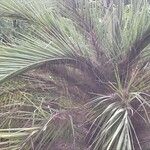
Phoenix sylvestris
Wild date palm · Date sugar palm · Indian date · Silver date palm · East Indian wine palm
Description
Source: leafsnapPhoenix sylvestris, commonly known as the wild date palm or silver date palm, is a species of flowering plant in the family Arecaceae. It is native to South Asia and Southeast Asia, found in countries such as India, Bangladesh, Myanmar, and Thailand. This plant typically grows up to 20 meters tall with a trunk diameter of up to 60 centimeters. Its leaves are pinnate, featuring numerous leaflets that are about 60 centimeters long. The flowers of Phoenix sylvestris are small and yellowish-white. Phoenix sylvestris is economically significant due to its fruit, which yields edible dates. These dates can be consumed fresh or dried for later use and possess medicinal properties, such as being used to treat constipation. The wild date palm prefers well-drained soils with ample sunlight but can also tolerate partial shade. While it is drought-tolerant, regular watering is essential during its early growth stages. Overall, Phoenix sylvestris serves both ornamental and economic purposes. It is an important species within its native range and is also cultivated worldwide for its attractive appearance. When matured into a full-grown tree, it showcases lush foliage that provides shade during the hot summer months while enhancing the beauty of its surroundings.
Care Guide
💧 Water Every 7 days
Originating from arid regions, the wild date palm is highly drought-tolerant and can thrive with minimal water. To mimic its natural environment, it should be watered weekly. As an outdoor plant in warmer climates, the wild date palm effectively stores water, making it an excellent choice for xeriscaping and supporting water conservation efforts.
☀️ Light Full sun
The wild date palm comes from open habitats like sunny meadows and forest edges that provide abundant light. It performs best in full sun but can also tolerate partial sun, adjusting well to a range of light conditions.
What are the sunlight requirements for a Wild date palm (Phoenix sylvestris)?
Wild date palm (Phoenix sylvestris) thrives in areas where it can receive ample sunlight. It requires 'Full sun' conditions, which means it should be placed in spots that receive above 6 hours of sunlight daily. However, it can also tolerate 'Partial sun' environments, where it would get about 3-6 hours of sunlight per day. It's important to observe how sunlight moves through your garden to ensure you choose spots that provide the right balance of light and shade for your plants, ensuring their happiness and health. This careful placement helps in mimicking the natural conditions the Wild date palm prefers, promoting its growth and vitality.
🌡️ Temperature 20–37.8°C
The wild date palm is native to regions with temperatures from 68 to 100 °F (20 to 38 °C). It flourishes in heat but can tolerate slight drops below that range. Seasonal care for its well-being may include protective measures during colder periods.
What is the native environment of the Wild date palm?
The Wild date palm, scientifically known as Phoenix sylvestris, is native to environments that have temperatures ranging from 68 to 100 °F (20 to 38 °C). This plant is particularly well-adapted to thrive in heat, which makes it suitable for warm climates. However, it is capable of tolerating minor dips in temperature below this range, although protective measures may be necessary during colder periods to ensure its well-being.
💨 Humidity normal (40-60%)
This plant will thrive in moderate humidity, which is probably the level in your home. However, misting it a few times a week can be very beneficial. Make sure the room has good ventilation.
🪴 Soil 6-7
🌱 Fertilizer
Use organic fertilizers (for example, fish emulsion or compost) rather than chemical fertilizers for Wild date palm. Supply higher levels of nitrogen and phosphorus to young plants in spring. Work compost or fertilizer into the soil both before and after planting. For mature palms, apply a balanced fertilizer or one tailored to any specific deficiency in spring. Nutrient shortages lead to small leaves, stunted branches, yellow or bronze foliage, acidic fruits, early fruit drop, and fruit splitting.
🪴 Pot & Repot
✂️ Pruning
The wild date palm is a tropical plant with feathery leaves and a sturdy trunk. For optimal growth and to minimize disease risk, prune the palm in early spring to remove any damaged fronds. Be sure to make clean cuts close to the trunk using sterilized tools to prevent infections.
🌿 Propagating
🐛 Diseases & pets
☠️ Toxicity
Characteristics
- Plant Type
- Tree
- Life Cycle
- Perennial
- Genus
- Phoenix
- Family
- Arecaceae
- Hardiness Zone
- 9-11
- Mature Height
- 3.96 m to 14.94 m
- Mature Spread
- 3.05 m to 4.57 m
- Leaf Color
- Green
- Leaf Type
- Evergreen
- Flower Color
- Yellow
- Flower Size
- 5.08 cm to 7.62 cm
- Bloom Time
- Spring, Summer
- Planting Time
- Spring, Summer
- Harvest Time
- Fall, Winter
- Native Area
- Nepal, Pakistan, Bangladesh, India