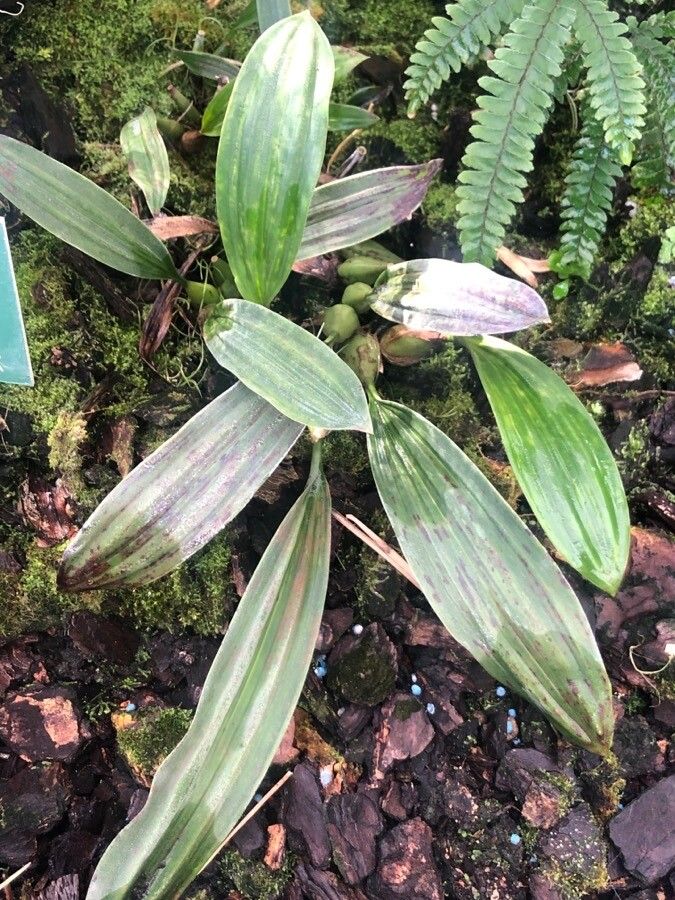
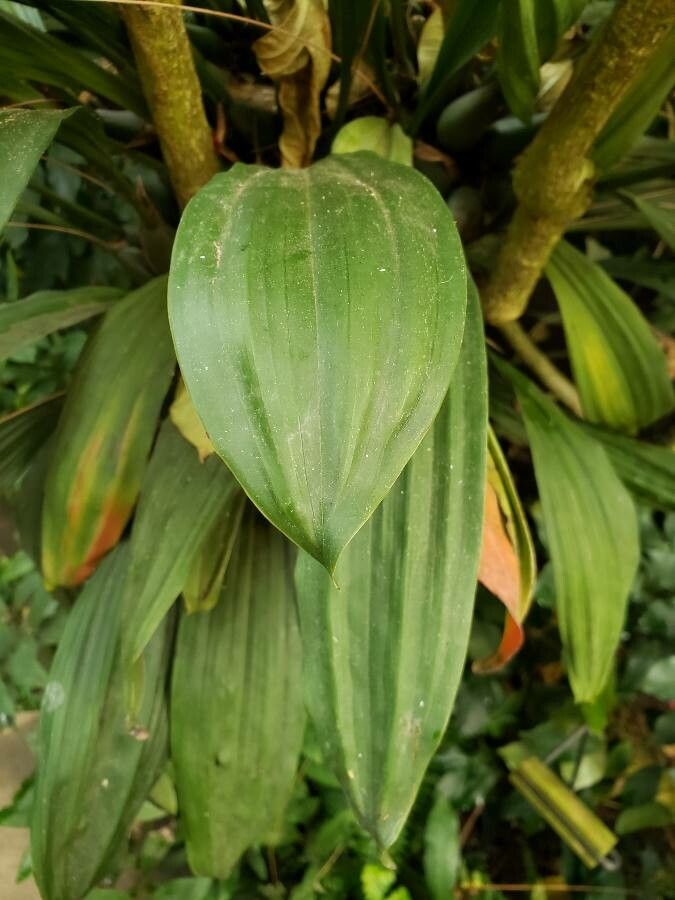
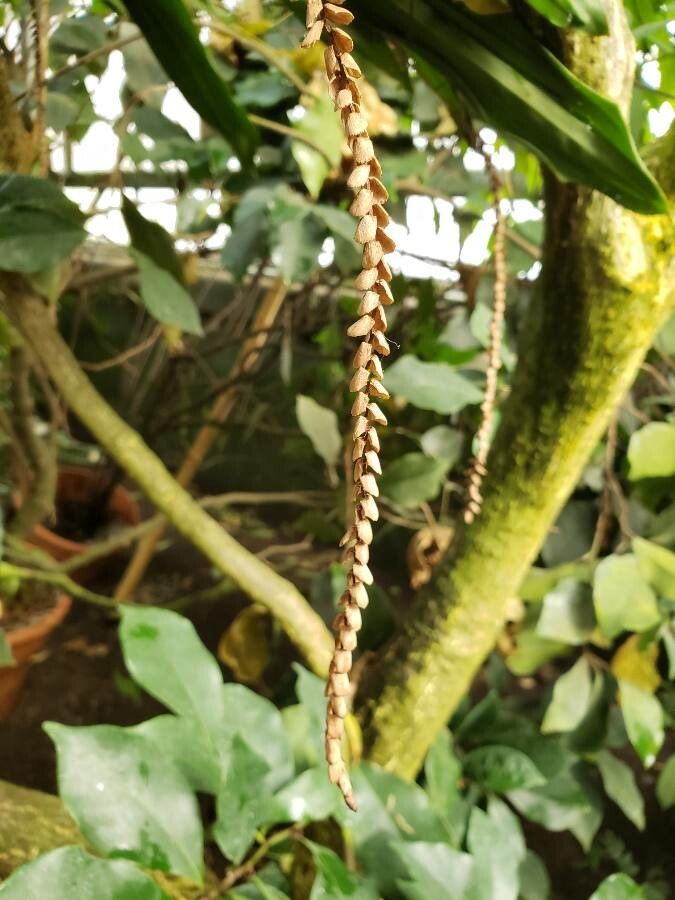
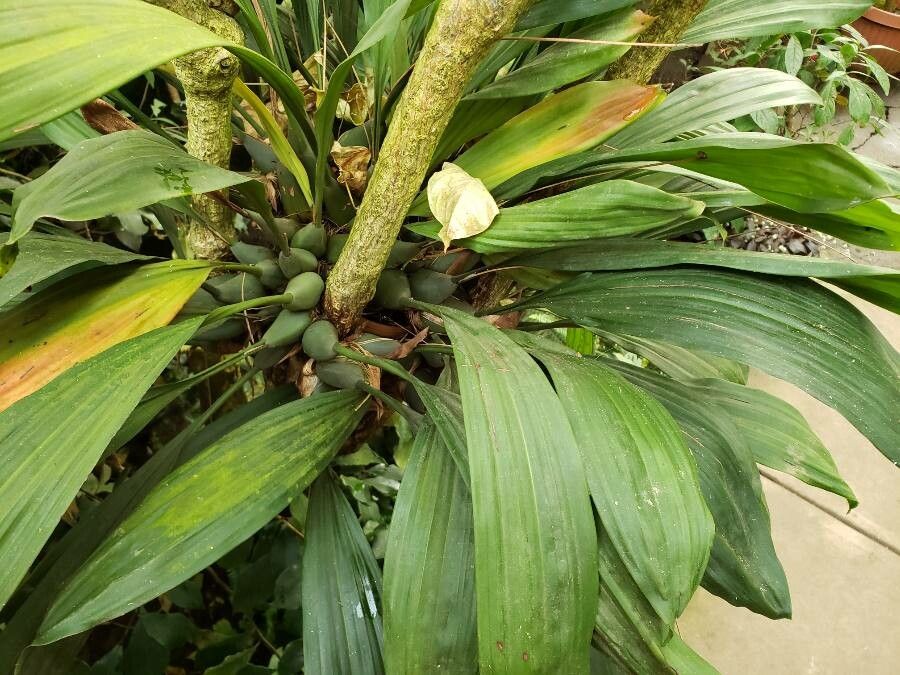
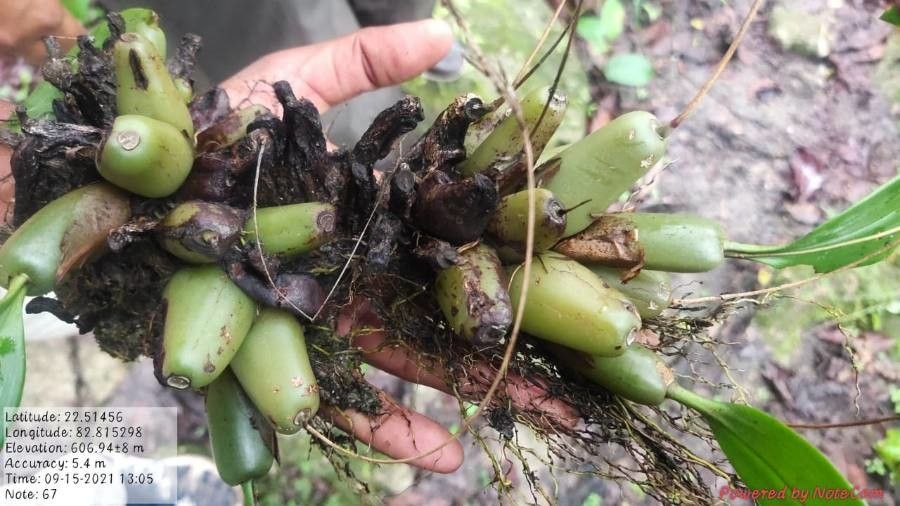
Pholidota imbricata, commonly known as the common rattlesnake orchid or necklace orchid, is a plant in the orchid family and is a clump-forming epiphyte or lithophyte with crowded pseudobulbs. Each pseudobulb has a single pleated, leathery leaf and up to sixty white, cream-coloured or greenish, cup-shaped flowers in two ranks along a wiry flowering stem. There is a large, papery bract at the base of each flower. This species is native to areas from tropical and subtropical Asia to the southwest Pacific.
Necklace orchid is generally resistant to disease and faces relatively few insect pests. Its care is considered difficult because it needs high humidity along with good ventilation and a low presence of harmful pathogens. Too much watering can cause root rot. Although anyone can grow Necklace orchid, keeping it healthy and encouraging it to flower again requires more growing experience.
How to keep Pholidota Imbricata.
Light
The necklace orchid naturally occurs in habitats like forest understories and rocky areas, where it grows in natural shade. It prefers partial sunlight but can tolerate full sun or deep shade, showing its adaptable and hardy character.
Water
The necklace orchid, which originates from tropical Asia, thrives in humid environments and prefers consistent moisture. Although it has some tolerance for drought, it flourishes best with balanced humidity and regular watering. It is recommended to water the plant twice a week. Often grown indoors, the necklace orchid benefits from regulated humidity, which enhances both its growth and flowering potential.
Temperature
The necklace orchid does well in warm conditions. It prefers moderately high temperatures, but not overly hot and humid ones. Sunlight helps warm the plant and encourages flowering. However, long periods of direct sun in summer can cause sunburn, so the amount of light it receives should be controlled during that season. The plant typically does not tolerate cold well, so it needs adequate protection and warmer temperatures in winter to avoid freezing.
Fertilizer
Proper fertilization is essential for the health and appearance of the Necklace orchid. Fertilize the Necklace orchid in summer, applying it once a month throughout the season. Nutrients provide the energy for growth and help maintain the plant's parts. Fertilizing improves the Necklace orchid's flower display, ensuring the best blooms.
Pruning
For optimal growth, the necklace orchid benefits from proper pruning, which is best performed between early and late spring. Concentrate on removing dead stems and trimming excess growth to enhance airflow, minimize the risk of disease, and promote blooming. Additionally, ensure your tools are sterilized to prevent infections and maintain the plant's health.
Pot & Repot
When repotting a Necklace orchid, pick a pot that is only slightly larger and has good drainage, preferably a clear orchid pot. Use a well-draining, orchid-specific potting mix that includes bark or moss. Carefully clean the roots and cut away any that are dead or rotting. Repot after the plant has finished flowering, usually in spring or fall, water thoroughly, and keep it in bright, indirect light. Once repotted, avoid disturbing the roots.
Botanical profile.
- Plant Type
- Herb
- Life Cycle
- Perennial
- Genus
- Pholidota
- Family
- Orchidaceae
- Hardiness Zone
- 10-12
- Mature Height
- 25 cm
- Mature Spread
- 20 cm to 40 cm
- Leaf Color
- Green
- Leaf Type
- Deciduous
- Flower Color
- White
- Flower Size
- 0.51 cm to 0.76 cm
- Bloom Time
- Summer
- Planting Time
- Spring, Summer
- Harvest Time
- Late summer, Early fall, Mid fall
Other names.
Reader questions.
What is the Necklace Orchid?
The Necklace Orchid, known botanically as Pholidota imbricata, is a distinctive plant. It doesn't have detailed information provided on its essentials or symptoms related to its care or characteristics in the data.