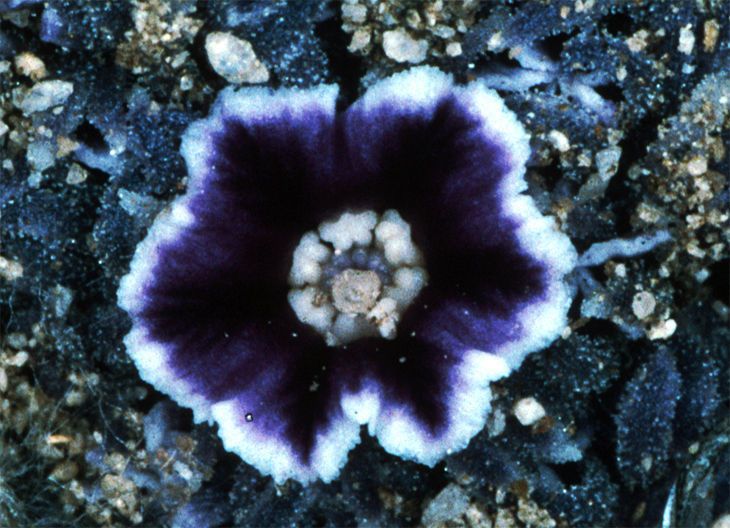
Pholisma sonorae, commonly known as sandfood or desert truffle, is a parasitic plant belonging to the family Orobanchaceae. Native to the Sonoran Desert in North America, it thrives in sandy soils. The plant features a distinctive appearance with a fleshy, tuberous stem that grows underground and small white flowers that emerge above ground during the summer.
Sandfood has a symbiotic relationship with its host plants, drawing nutrients from their roots. Lacking chlorophyll, it cannot perform photosynthesis like other plants to produce its own food.
The tuberous stem of Pholisma sonorae has been used by Native Americans for medicinal purposes, such as treating respiratory ailments and skin infections. Although the desert truffle is edible, it is not commonly consumed due to its strong taste.
Pholisma sonorae plays a crucial role in maintaining the ecological balance of arid regions by providing food for animals such as rodents, rabbits, and insects that either feed on it or use it for shelter.
Despite its unique characteristics and unusual appearance, Pholisma sonorae remains relatively unknown outside of scientific circles due to its limited distribution in the Sonoran Desert region of North America.
Sand food has moderate disease resistance but is more sensitive to humidity and excessive watering. It becomes more prone to disease if it lacks light and is overwatered. In terms of care, Sand food is drought-tolerant and can withstand extended periods without watering. It needs little fertilizer and only occasional pruning. This makes it appropriate for people of all experience levels, especially those who prefer to spend less time on plant care and who may occasionally be away from home for long stretches. It’s a suitable option for anyone who does not want to devote much time to maintenance but still wants an easy-to-care-for plant.
How to keep Pholisma Sonorae.
Light
Originating in arid regions, Sand food does best in full sun, its native habitat marked by intense sunlight and little shade. It can also tolerate partial sun, giving it some flexibility in its growth.
Humidity
This plant prefers dry conditions, so don't mist it. However, watering it less often can also thrive in higher humidity.
Temperature
Sand food does best in warm conditions and requires relatively high temperatures during the growing season to stimulate growth and metabolism. It prefers abundant sunlight, suitable moisture levels, and good air circulation. However, it can be damaged by very low temperatures and by overwatering. It is also important to maintain balance and avoid excessively high temperatures and overly dry conditions.
Fertilizer
For Sand food, light doses of fertilizer once or twice a year during the growing season are enough. Avoid fertilizing in winter or summer when it is dormant. Reduce the amount of fertilizer for repotted plants and wait a couple of months after repotting before applying fertilizer. Fertilizing supports healthy growth and encourages blooms.
Botanical profile.
- Plant Type
- Herb, Succulent
- Life Cycle
- Perennial
- Genus
- Pholisma
- Family
- Boraginaceae
- Hardiness Zone
- 8-11
- Mature Height
- 10 cm to 30 cm
- Mature Spread
- 10 cm to 20 cm
- Leaf Color
- Sandy Brown
- Leaf Type
- Deciduous
- Flower Color
- Purple
- Flower Size
- 1.02 cm to 2.03 cm
- Bloom Time
- Mid spring, Late spring
- Planting Time
- Spring, Summer, Autumn
- Harvest Time
- Early summer, Mid summer
- Native Area
- Mexico