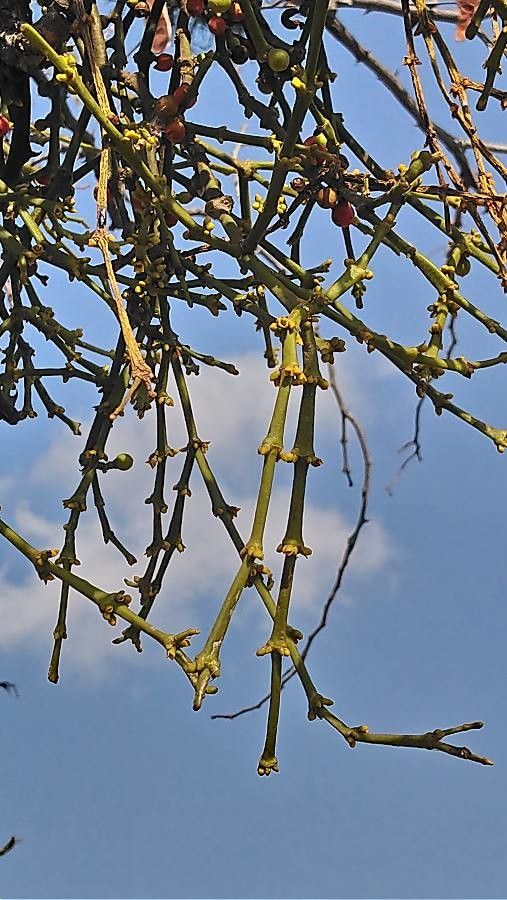
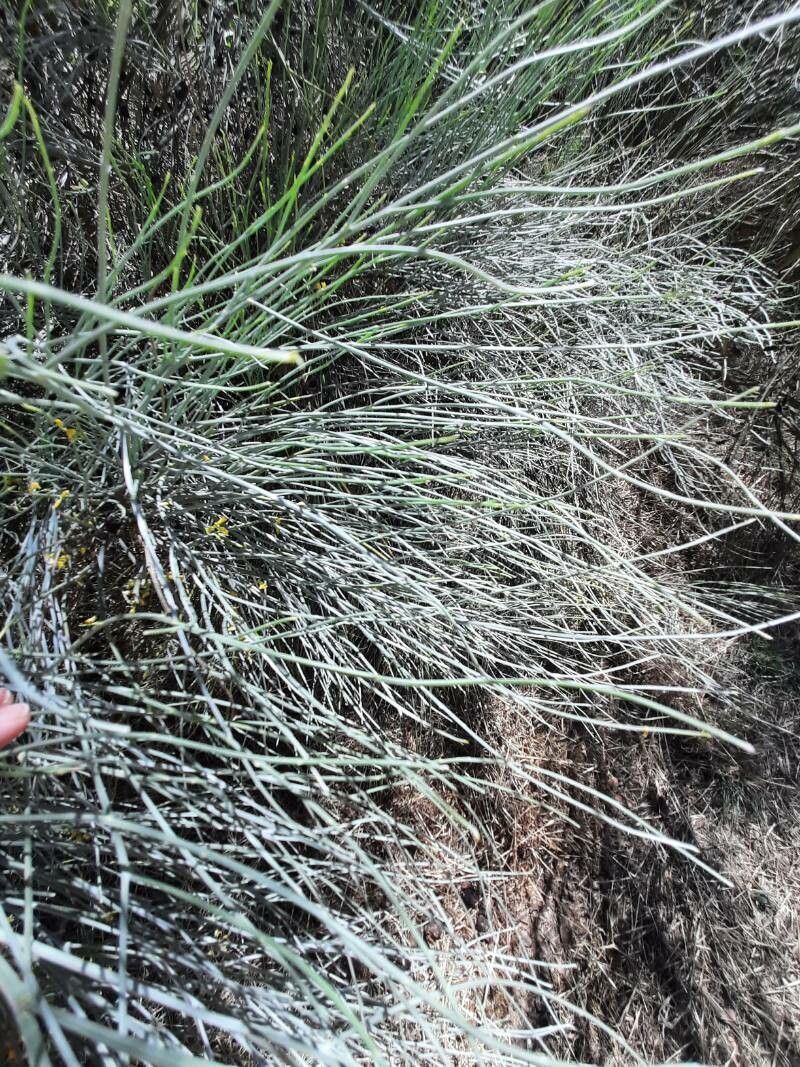
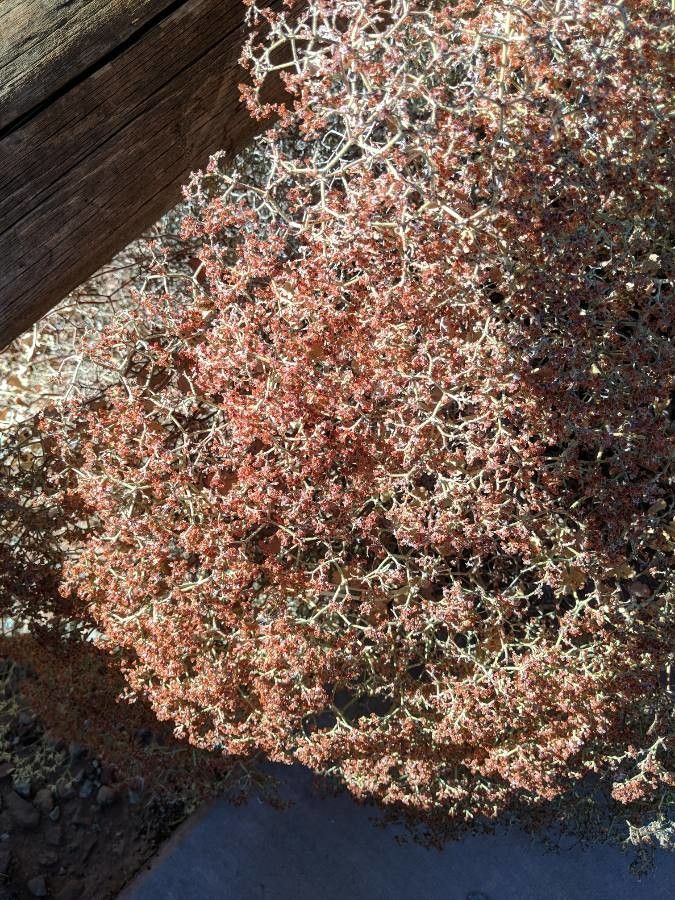
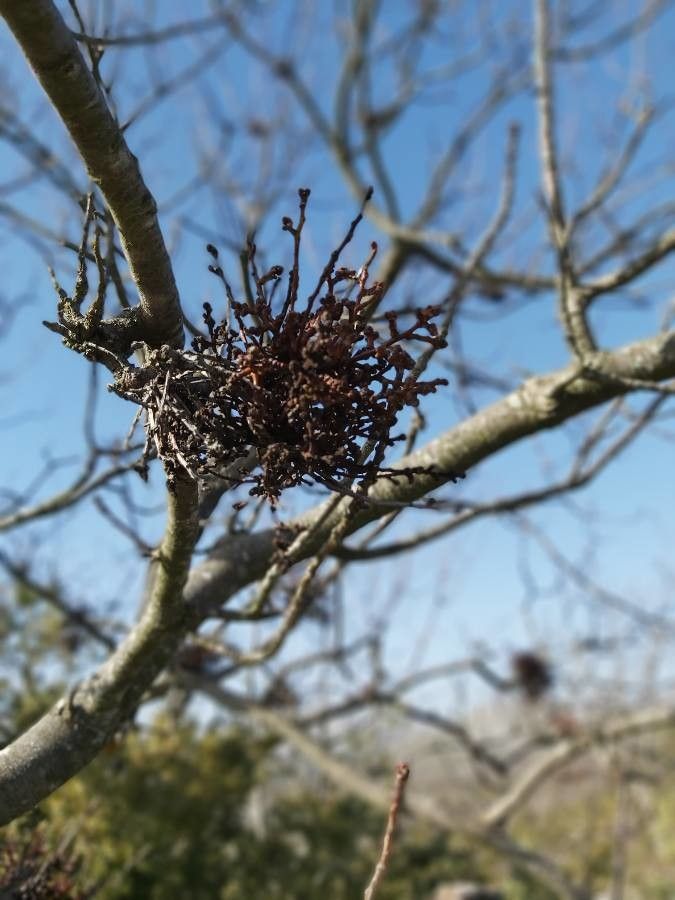
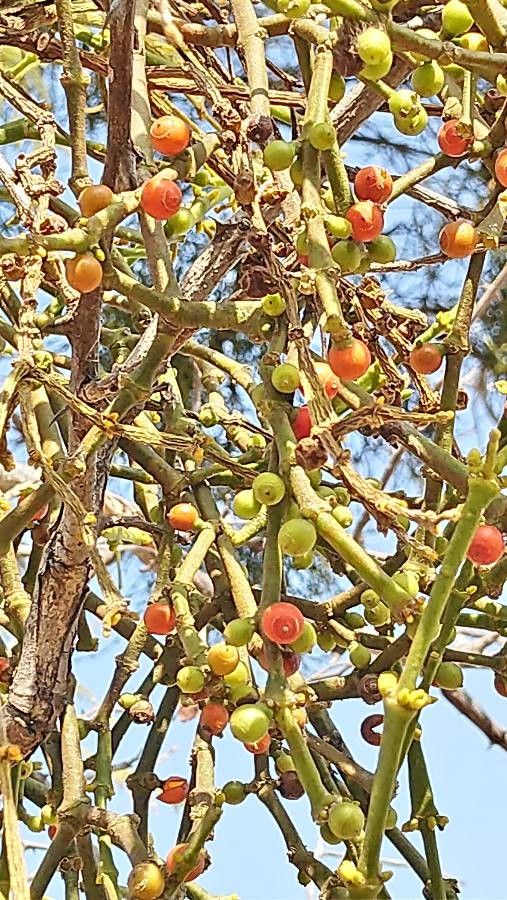
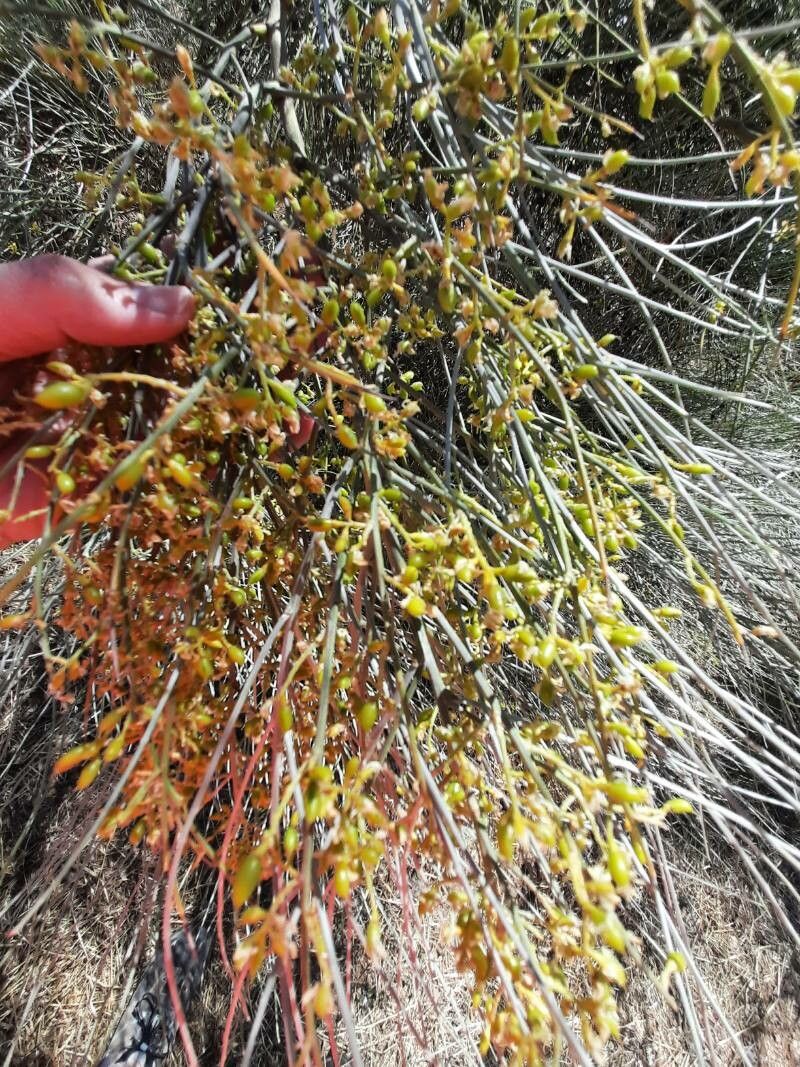
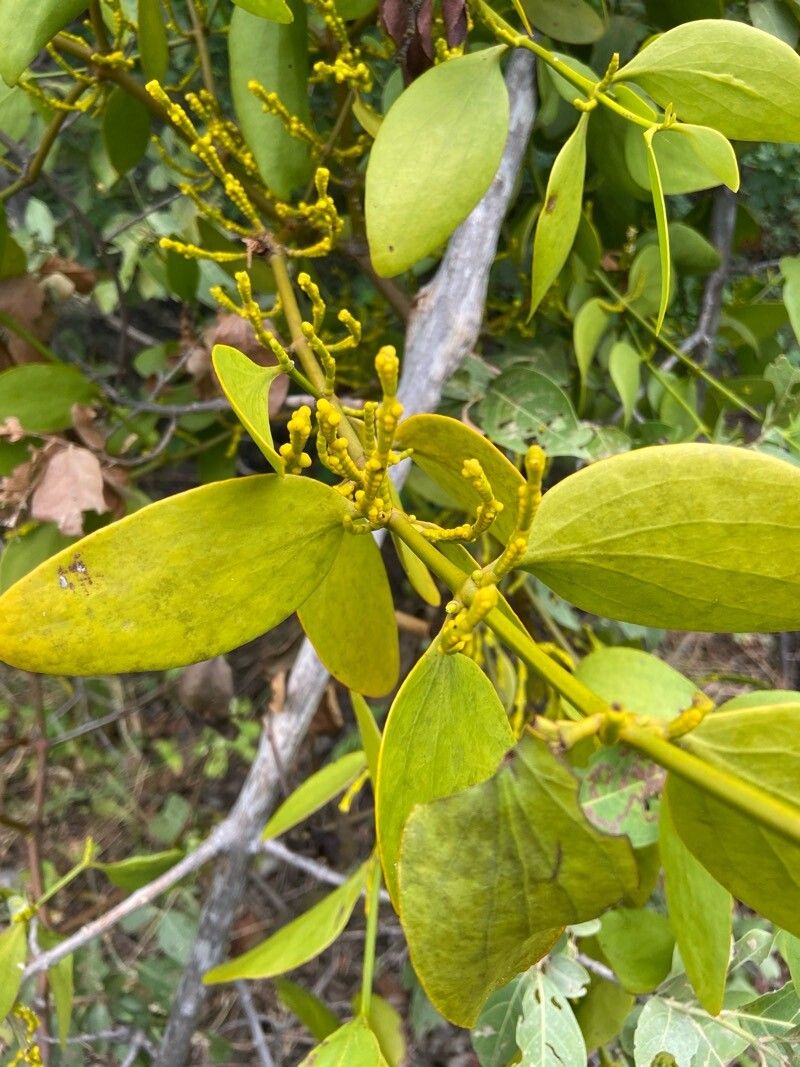
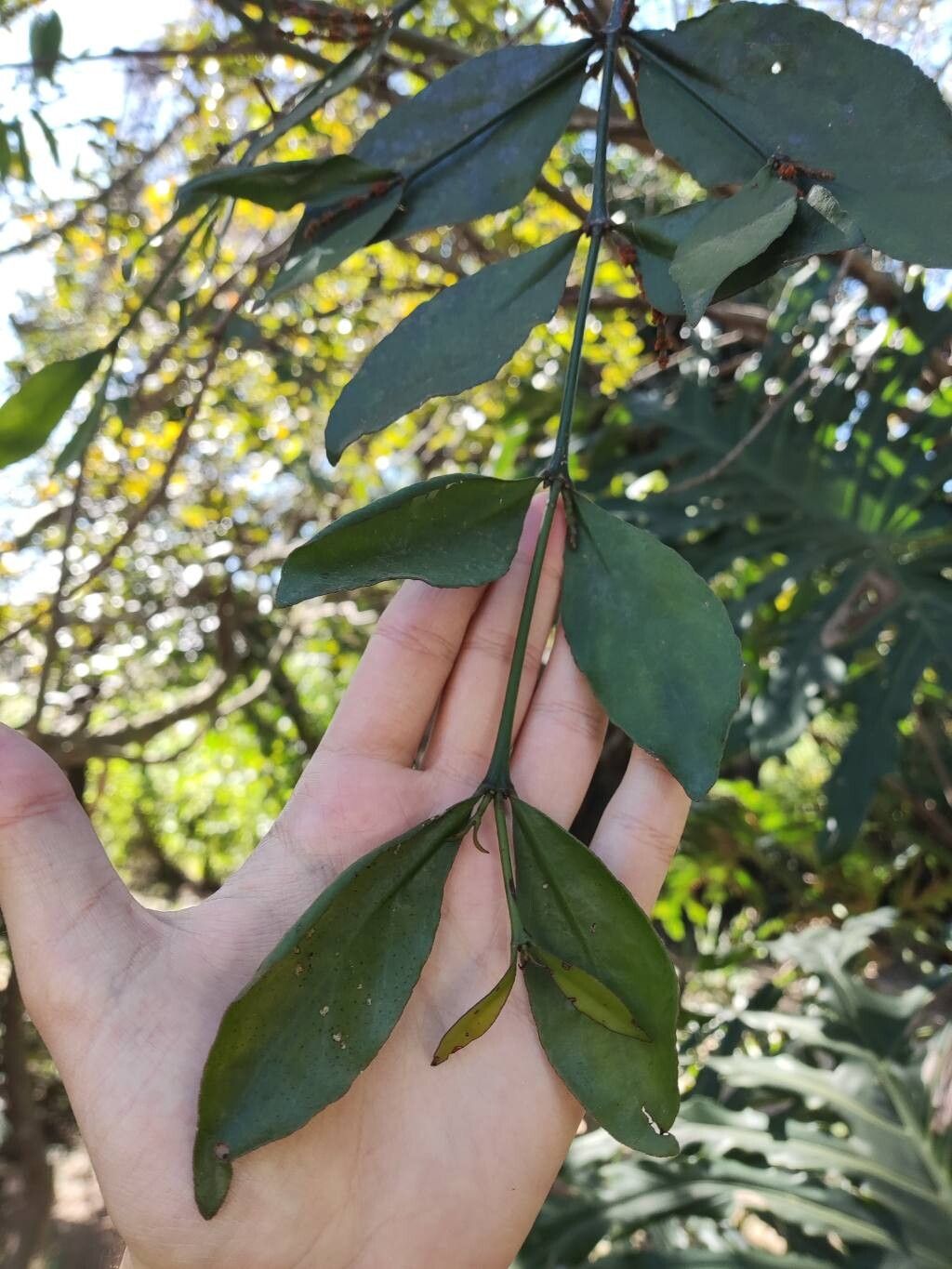
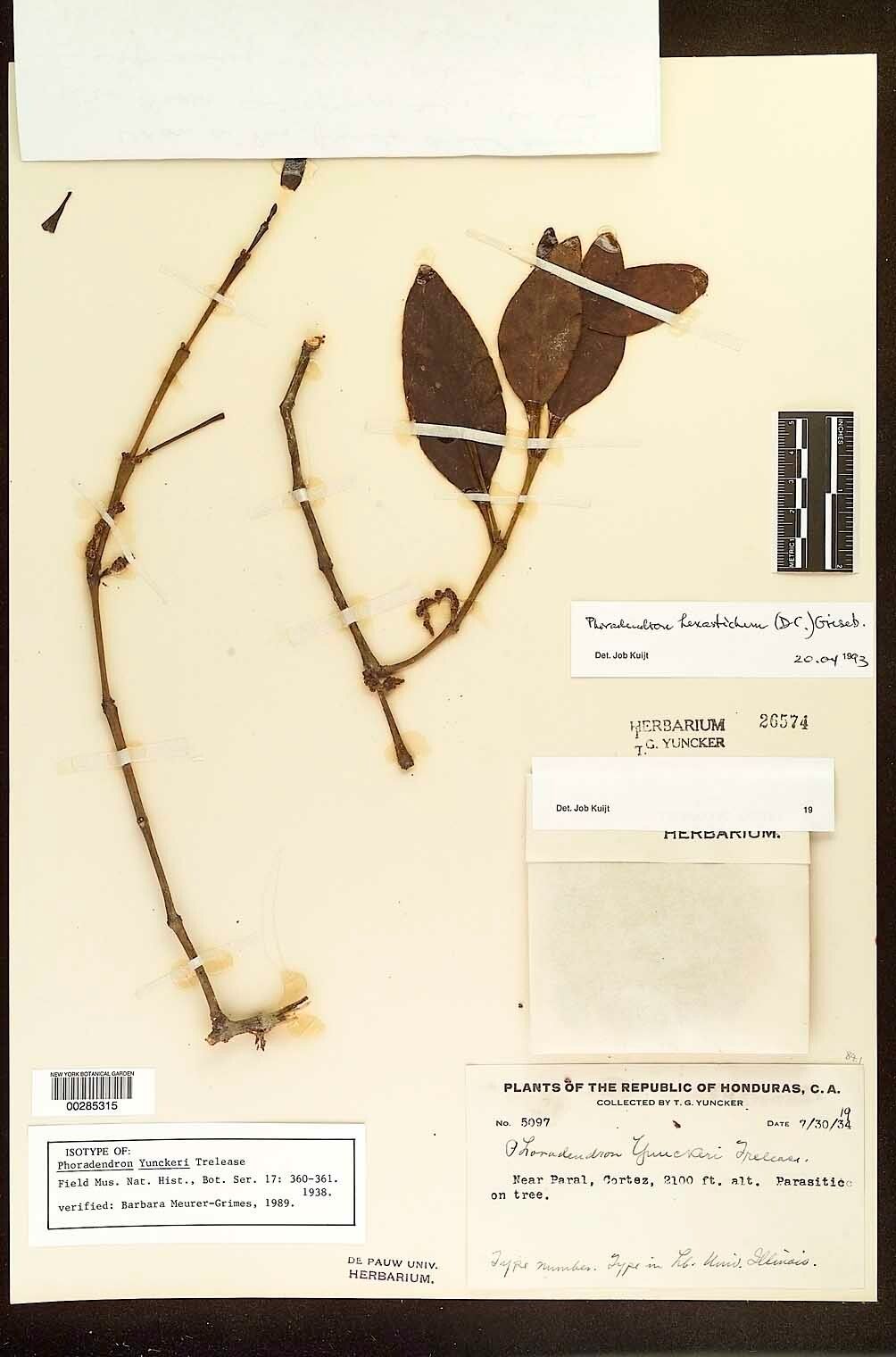
Phoradendron californicum, the desert mistletoe or mesquite mistletoe, is a hemiparasitic plant native to southern California, Nevada, Arizona, Sonora, Sinaloa and Baja California. It can be found in the Mojave and Sonoran Deserts at elevations of up to 1400 m (4600 feet).The mistletoe is a leafless plant that attaches to host plants, often leguminous woody desert trees such as Cercidium and Prosopis. Desert mistletoe takes water and minerals from its host plants but it does its own photosynthesis, making it a hemiparasite. During the winter it produces inconspicuous, fragrant flowers. Female desert mistletoe plants produce red to clear berries that are eaten by the phainopepla (Phainopepla nitens), a silky flycatcher, which then spreads the seeds. Phainopeplas cannot digest the seed of desert mistletoe, so the birds disperse the seeds when they defecate or wipe their bills.
Desert Mistletoe is resistant to disease and generally not susceptible to problems. Carewise, this plant is fairly low-maintenance. Planted outdoors it needs only minimal watering, and larger specimens typically do not require pruning. Smaller plants, however, should be trimmed after they have finished blooming. Desert Mistletoe is suitable for anyone who has outdoor space, such as a garden or deck, and does not demand a great deal of care experience.
How to keep Phoradendron Californicum.
Light
Desert Mistletoe is native to open habitats, such as sunny meadows and forest edges, which offer abundant light. It thrives in Full Sun but can also tolerate Partial Sun, adapting well to different sunlight conditions.
Water
Desert Mistletoe is perfectly adapted to arid environments, as it requires very little water and exhibits excellent drought tolerance. For optimal growth, it should be watered every 2 to 3 weeks. The plant thrives on infrequent rainfall and can even absorb water from nearby plants, which enhances its ability to survive in harsh, dry climates.
Temperature
Desert Mistletoe is native to habitats where temperatures range from 59 to 100 °F (15 to 38 ℃). It grows best within this temperature range, so adjusting conditions to maintain it across seasons might be beneficial.
Fertilizer
To encourage healthy growth, fertilize your Desert Mistletoe in early spring. Regular feeding improves overall health, producing vigorous growth, greater resilience in harsh conditions, and enhanced resistance to pests and diseases. Keep to a specific fertilization schedule for your Desert Mistletoe to ensure foliage that is vibrant, deeply colored, and lush in appearance.
Pruning
Desert Mistletoe is a dense, parasitic plant. To manage its growth and maintain the health of the host tree, it's best to prune it early in the spring. Make sure to remove entire clumps of mistletoe to prevent it from growing back, while being careful not to cut any branches of the host tree. Additionally, clean your tools between cuts to prevent the spread of disease and promote a healthier environment.
Botanical profile.
- Plant Type
- Shrub
- Life Cycle
- Perennial
- Genus
- Phoradendron
- Family
- Santalaceae
- Hardiness Zone
- 8-11
- Mature Height
- 0.1 m to 2.13 m
- Mature Spread
- 30 cm to 61 cm
- Leaf Color
- Olive Drab
- Leaf Type
- Semi-evergreen
- Flower Color
- Yellow, Green
- Flower Size
- 0.10 cm to 0.20 cm
- Bloom Time
- Mid winter, Late winter, Early spring
- Planting Time
- Spring, Summer, Autumn
- Harvest Time
- Mid spring, Late spring, Early summer, Mid summer
- Native Area
- Mexico
Other names.
Reader questions.
How do I water my Desert Mistletoe in the best way?
Here are some tips to ensure proper watering for your plants: - Place a garden hose at the base of the plant to promote root development. Avoid directly spraying the leaves. - If your plants are outdoors and exposed to direct sunlight, keep in mind that the leaves may need more water. - Consider using bubblers to moisten the roots of each plant. Soaker hoses can also be used to cover the entire garden or bed, especially when adding or removing plants, to ensure deep root growth. - After watering, make sure to drain any excess water and allow the soil to dry before the next watering. - Water at ground level to prevent the spread of diseases. - On sunny days, it can be beneficial to spray the entire bush with water. - Whether your plants are potted or in the ground, keep in mind that Desert Mistletoe prefers deep watering rather than light sprinkling.
What are the sunlight requirements for Desert Mistletoe?
Desert Mistletoe, known botanically as Phoradendron californicum, thrives in environments with ample sunlight. It requires full sun, which means it needs more than 6 hours of sunlight daily to flourish. However, it can also tolerate partial sun conditions, requiring about 3-6 hours of sunlight. It's important to observe the movement of sunlight in your garden to choose spots that offer the right balance of light and shade, ensuring the plant's happiness and health.
What is the ideal temperature range for Desert Mistletoe growth?
Desert Mistletoe, known botanically as Phoradendron californicum, thrives in environments with temperature ranges between 59 to 100°F (15 to 38°C). This range is optimal for its growth, indicating that adjusting temperatures to fit this range during different seasons might enhance its well-being. Although Desert Mistletoe exhibits some cold tolerance and generally does not require additional measures for temperatures above -5°C, precautions should be taken if temperatures are expected to fall below this threshold.
What should I do if I give Desert Mistletoe too much or too little water?
An overwatered Desert Mistletoe can exhibit yellowing, wilting, and drooping leaves, as well as dull and unhealthy appearance with mushy stems. It's important to adjust your watering schedule when you notice these signs. On the other hand, wilting can also indicate under watering, where leaves become crispy and dry. If the soil is dry and watering alone is not enough, give the plant a thorough watering. Despite sufficient water, the Desert Mistletoe may still have dry and yellow leaves for a few days due to root damage. Once it returns to normal, the yellowing will stop. Indoor Desert Mistletoe care involves checking moisture levels regularly and avoiding overwatering. Black spots on the leaves indicate overwatering, in which case you should allow the soil to dry out by abstaining from watering for a few days. Overwatering can lead to root rot, so it's advisable to transfer the plant to a different pot if you observe discolored and slimy roots. Always take measures to prevent root rot and avoid excessively soggy soil. When planting the Desert Mistletoe outdoors, make sure to dig a bit deeper. If you find the soil too dry, it may indicate underwatering, and proper watering is necessary for the plant's recovery.
How does artificial lighting support Desert Mistletoe's growth indoors?
Indoor plants, including Desert Mistletoe, need adequate lighting to grow optimally, especially when natural sunlight is insufficient. During winter or in less sunny spaces, artificial lighting can be a vital solution. LED lights are recommended because they can be adjusted to provide specific wavelengths needed by plants. Full sun plants require 30-50W/sq ft of artificial light, whereas partial sun plants need 20-30W/sq ft. The artificial light source should be placed 12-36 inches above the plant to mimic natural sunlight and be kept on for 8-12 hours per day to support healthy growth.
How does Desert Mistletoe react to low temperatures, and what are the solutions?
Desert Mistletoe has a moderate tolerance to low temperatures, performing best when the temperature remains above 15°C. In winter, ensuring the temperature stays above -5°C is crucial. If temperatures drop below -10°C, the plant's leaves may begin to droop; while mild effects can be reversible, severe cases may lead to wilting and leaf fall. The recommended solution for cold damage includes trimming off frost-affected parts and wrapping the plant with protective materials like non-woven fabric or cloth. Erecting a wind barrier can also shield the plant from cold winds.
How often do I need to water my Desert Mistletoe?
The Desert Mistletoe prefers deep watering, especially if it is planted in pots. When watering, it is best to soak them in a gallon of water each time. Since the water storage in pots is limited, the soil tends to dry out quickly. In colder regions, watering is necessary every 3 to 5 days. It is best to water the plant early in the morning when the soil is dry, both indoors and outdoors. To determine when to water, check the soil. If the top 2-3 inches of soil is dry, it is time for a full watering. During hot days, it may be necessary to check the soil moisture daily as the heat can dry out the pot's soil quickly. If you have a garden, it is also important to irrigate the soil. In hot climates, watering once a week is recommended. Only water when about 2 to 3 inches of soil is too dry, indoors or outdoors. Take into consideration the amount of rainfall on the plants and avoid adding water to prevent root rot. Desert Mistletoe typically grows during spring and fall. If the plants are outdoors, adding mulch 3 to 4 inches deep can help conserve water. Sandy soil requires more frequent watering, as it tends to drain faster. On the other hand, clay soil needs less frequent watering, with intervals of 2-3 days to allow the plant to dry out and avoid root rot. You can track your watering schedule by marking the date on a calendar. If you notice the plant's leaves drooping, it may be a sign that you need to water it sooner.
What are the important symptoms to look for in Desert Mistletoe when it's not getting enough light?
When Desert Mistletoe doesn't receive enough light, it may exhibit several symptoms indicating light deficiency. These include smaller new leaves compared to older ones, leggy or sparse growth, faster leaf drop, slower or halted new growth, and lighter-colored new leaves. These symptoms suggest the plant is struggling to photosynthesize and grow due to insufficient sunlight. Moreover, conditions like chlorosis, sunscald, leaf curling, wilting, and leaf scorching can occur due to excessive sunlight or sudden shifts in light exposure, indicating the need for a balanced light environment.
What should be done if Desert Mistletoe is exposed to high temperatures?
Desert Mistletoe should ideally be kept below 38°C during the summer months. Exposure to temperatures exceeding 43°C can result in lighter leaf color, dry and withered leaf tips, curled leaves, and increased susceptibility to sunburn. To mitigate damage from high temperatures, trim away sunburned and dried-up parts, move the plant to a shaded area or use shade cloth to protect it from intense midday and afternoon sun. Adequate watering in the morning and evening is crucial to maintain soil moisture and support the plant under such conditions.
How much water should I give my Desert Mistletoe?
The Desert Mistletoe typically requires a gallon of water on a regular basis. For potted plants, water them deeply until the water starts dripping from the bottom of the pot. Then, wait for the soil to dry before watering again. To determine the amount of water given to your plant in a week, you can use a water calculator or a moisture meter. During the flowering period, it is important to provide plenty of water, but make sure the moisture evaporates afterwards to avoid root rot. If the Desert Mistletoe is planted outdoors and receives sufficient rainfall, additional watering may not be necessary. However, when the Desert Mistletoe is young or newly planted, it should receive 1-2 inches of rain per week. As it grows, it can rely solely on rainfall. Only when the weather is extremely hot or there is no rainfall for 2-3 weeks should the Desert Mistletoe be given a full watering during the cooler parts of the day to prevent damage from high heat. Extra watering will be needed during prolonged dry periods.
What solutions can address light deficiency or excessive sunlight exposure in Desert Mistletoe?
To address light deficiency in Desert Mistletoe, gradually move plants to sunnier locations each week until they receive at least 6 hours of direct sunlight daily. For indoor plants, consider using artificial light if relocation isn't feasible, keeping a lamp on for at least 8 hours daily. When dealing with outdoor plants or ground-planted specimens, also move them gradually to avoid sunburn, and consider transplanting smaller plants during their dormant period to sunnier spots. If trees block sunlight, pruning branches can help. Note that parts of the plant already affected by insufficient light may not recover, but new growth after adjusting light exposure should be healthy.
Should I water my Desert Mistletoe more or less depending on the time of year or the weather?
The Desert Mistletoe prefers to be outdoors and relies on rainwater for hydration, only needing additional watering during persistent dry spells. During the spring and fall growing seasons, the soil should be kept moist but not overly wet, with alternating dry and moist conditions being beneficial for its growth. In the summer, hot weather and lack of rainfall can cause water to evaporate quickly, requiring more frequent watering to keep the plant moist. Typically, less water is needed during the winter when the plant goes dormant and loses its leaves. Using a well-draining soil mixture like terracotta can help water evaporate faster during this period. Once the Desert Mistletoe begins to leaf out in the spring, watering can be stopped as it relies on fall and winter rains during its dormant period. When cultivating the plant, good drainage is essential, especially during winter, as the plant dislikes excessive water. In pots, where root growth is limited, regular watering is necessary, especially in summer. Deep watering once or twice a week, depending on the weather, is recommended, avoiding shallow sprinkles that only wet the leaves and encourage fungal growth. Even in dormancy, the plant should not be allowed to dry out completely in the fall or winter. Overwatering, however, should also be avoided as it can lead to root rot and plant death. Applying mulch can help reduce stress, conserve water, and support healthy blooming.