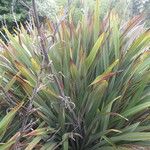
Phormium colensoi
Mountain flax
Description
Source: leafsnapPhormium colensoi (syn. Phormium cookianum – but see below), also called mountain flax, or wharariki in Māori, is a perennial plant that is endemic to New Zealand. The greenish, yellow or orange flowers are followed by twisted seed pods. It is less common than the other Phormium species, P. tenax or harakeke. Mountain flax is also called whararipi, whatariki, mangaeka, kōrari tuauru (Williams 1971), wauraki (Bell 1890 sic.), coastal flax, hill flax and lesser New Zealand flax.
Care Guide
💧 Water
Mountain flax, which comes from rocky terrains, is a drought-tolerant plant that thrives with minimal watering, ideally just once a week. It is typically grown outdoors, where it prefers well-draining soil and benefits from natural rainfall. This aligns well with its hardy nature.
☀️ Light Full sun
Mountain flax does best in full, unfiltered sunlight all day, though it can tolerate moderate shade. In its native habitat the plant experiences these light conditions, which support its growth and health. Too much or too little sunlight can harm the plant’s vitality.
What are the sunlight requirements for Mountain Flax?
Mountain Flax, or Phormium colensoi, requires full sun, meaning it should receive above 6 hours of sunlight, but it can also thrive in partial sun, which is about 3-6 hours of sunlight. It's vital to observe how sunlight moves through your garden and choose locations that offer a balance of light and shade to ensure the plants remain healthy.
What are the essentials for growing Mountain Flax successfully?
To grow Mountain Flax successfully, it's essential to expose it to unfiltered sunlight throughout the day, although it can tolerate moderate shades. Its native habitat supports such exposure levels, which is crucial for its growth and health. Both over-exposure and under-exposure to sunlight can harm the plant's vitality. When natural sunlight is insufficient, especially during winter or in less sunny spaces, artificial lighting can be a viable alternative. LED lights are recommended as they can be tailored to provide the specific wavelengths needed by the plants. Full sun plants require 30-50W/sq ft, partial sun plants 20-30W/sq ft, and full shade plants 10-20W/sq ft of artificial light. The lights should be placed 12-36 inches above the plants, mimicking natural sunlight for 8-12 hours per day.
What are the symptoms of inadequate lighting for Mountain Flax?
Symptoms of inadequate lighting in Mountain Flax include smaller new leaves compared to previous ones, leggy or sparse growth that results in a thin and stretched appearance, faster leaf drop to conserve resources, delayed or halted growth as the plant enters survival mode, lighter-colored new leaves indicating a lack of chlorophyll, chlorosis where leaves lose their green color and turn yellow, sunscald evident by pale or necrotic areas on plant tissue, leaf curling as a defense mechanism to reduce water loss, wilting due to increased transpiration, and leaf scorching showcased by brown, dry edges on leaves.
How can you address lighting issues for Mountain Flax?
To address lighting issues for Mountain Flax, first move plants gradually to sunnier locations to get at least 6 hours of direct sunlight daily, utilizing south-facing windows for indoor plants. Use artificial light for large plants or those that cannot be easily moved, keeping a lamp on for at least 8 hours daily, or invest in professional grow lights. Outdoors, adjust the plant's location incrementally to prevent sunburn. Reduce sunlight obstructions by pruning trees or other barriers. For smaller plants, consider transplanting during the dormant period to a spot with ample sunlight and good drainage. Note that damaged parts of the plant might not recover, but new growth should be healthy after adjusting light exposure.
🌡️ Temperature 15–37.8°C
Mountain flax originates in temperate regions and grows best when temperatures are between 59 and 100°F (15 and 38°C). Because seasons change, small adjustments may be needed to keep temperatures within this range.
What is the native climate for Mountain flax?
Mountain flax, also known by its botanical name Phormium colensoi, is native to temperate climates. It thrives best in temperatures ranging from 59 to 100°F (15 to 38°C). This plant can handle a variety of conditions but may require minor adjustments with seasonal changes to maintain this optimal temperature range. It possesses some cold tolerance, generally not needing extra protection if temperatures stay above -5°C. However, precautionary cold protection measures should be taken, such as wrapping the plant in materials like plastic film or fabric, if temperatures are expected to drop below this threshold. It's important to remove these coverings once temperatures rise again to ensure the plant's health.
How does Mountain flax react to low temperatures?
Mountain flax has a moderate tolerance to cold, performing best when the temperature remains above 15°C. It generally withstands winter conditions as long as temperatures don't fall below -5°C. However, if the temperature drops below -10°C, the plant's leaves may begin to droop. In mild frost scenarios, Mountain flax can recover, but severe cold may cause leaf wilt and eventual leaf drop. To protect Mountain flax from low temperatures, frost-damaged parts should be trimmed off. Before the plant is exposed to cold again, it's advised to wrap it with non-woven fabric or cloth and build a wind barrier to shield it from cold winds.
How does Mountain flax respond to high temperatures?
During the summer, it's important to ensure that Mountain flax does not endure temperatures above 38°C. Exposure to temperatures over 43°C can lead to symptoms such as lighter leaf color, dry and withered leaf tips, curled leaves, and increased susceptibility to sunburn. To mitigate damage from high temperatures, sunburned and dried parts of the plant should be trimmed away. Relocating the plant to a shaded area during the peak midday and afternoon sun, or using a shade cloth, can help prevent further damage. Additionally, watering the plant in the morning and evening will help keep the soil moist and support the plant's health in high heat conditions.
💨 Humidity
🪴 Soil 6-7
🌱 Fertilizer
Usually one spring application of fertilizer is enough for Mountain flax, though extra feedings can maximize growth. Feed roughly every four to six weeks. Fertilizing improves the leaves' appearance and function, helping maintain even color and a healthy texture. It also promotes root growth and nutrient uptake for the plant's long-term health.
🪴 Pot & Repot
✂️ Pruning
Mountain flax is characterized by its striking, sword-shaped leaves. To maintain its health and appearance, it's important to prune the plant in early spring. This helps remove damaged foliage and encourages new growth. Additionally, trimming any untidy leaves helps maintain the plant's shape and prevents disease. Regular pruning also enhances air circulation and light penetration, which are crucial for the plant's well-being. Be sure to use clean, sharp tools and adhere to local guidelines for best practices.
🌿 Propagating
🐛 Diseases & pets
☠️ Toxicity
Characteristics
- Plant Type
- Herb
- Life Cycle
- Perennial
- Genus
- Phormium
- Family
- Asphodelaceae
- Hardiness Zone
- 8-11
- Mature Height
- 2.13 m
- Mature Spread
- 91 cm
- Leaf Color
- Green, Yellow, Red
- Leaf Type
- Evergreen
- Flower Color
- Yellow, Green, Orange
- Flower Size
- 2.54 cm to 5.08 cm
- Bloom Time
- Early summer, Mid summer
- Planting Time
- Summer, Autumn
- Harvest Time
- Late summer, Early fall, Mid fall