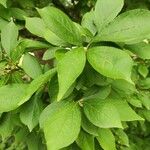
Photinia villosa
Oriental photinia
Description
Source: leafsnapPhotinia villosa is an evergreen shrub belonging to the Rosaceae family. Native to China, this plant can grow up to 6 meters in height. It features a dense, bushy habit with glossy, dark green leaves that are oval-shaped and serrated at the edges. The leaves are also covered in fine hairs, giving them a velvety texture. In the spring, Photinia villosa produces clusters of small white flowers, which are followed by red berries come autumn. These berries provide food for birds and other wildlife. Commonly used as an ornamental plant due to its attractive foliage and flowers, Photinia villosa can be grown as a hedge or a specimen plant in gardens or parks. For optimal growth, the plant prefers well-drained soil and thrives in full sun or partial shade. It also requires regular watering during dry periods. Overall, Photinia villosa is a charming evergreen shrub that enhances any garden landscape with its ornamental beauty while simultaneously providing food for wildlife.
Care Guide
💧 Water Every 7 days
The Oriental photinia grows best in moderate climates with steady moisture levels. It prefers soil that remains consistently moist without becoming waterlogged. After it is well-established, it can tolerate periods of moderate drought. Water the plant every 1-2 weeks, allowing the soil to partially dry between waterings. To help retain moisture and protect the plant against temperature fluctuations, apply a layer of mulch around its base.
☀️ Light Full sun
Oriental photinia is native to open habitats, such as sunlit meadows and the edges of forests, which offer abundant light. It flourishes in full sun but can also tolerate partial sun, adapting well to various light conditions.
What are the sunlight requirements for Oriental photinia?
Oriental photinia, or Photinia villosa, thrives best when it receives the appropriate amount of sunlight. The plant requires full sun, which means it needs more than 6 hours of sunlight per day, to flourish. However, it can also tolerate partial sun, which is about 3-6 hours of sunlight per day. It's important to observe how sunlight moves through your garden throughout the day. Selecting locations that offer a good balance of light and shade will ensure your Oriental photinia plants are happy and healthy. Remember, the right amount of sunlight is crucial for the plant's growth and well-being.
🌡️ Temperature 5–32.2°C
Oriental photinia is highly adaptable to a variety of climates, from blistering summers to frosty winters. Nevertheless, it has a preferred temperature range for proper growth. When temperatures rise too far, the plant can experience heat and humidity stress that may lead to its death. In places where temperatures approach the lower limit of its cold tolerance, insulating measures should be taken to protect it.
What is Oriental Photinia?
Oriental Photinia, scientifically known as Photinia villosa, is a plant species with no additional provided details such as its essential characteristics or symptoms if any exist.
💨 Humidity
🪴 Soil 6-7
🌱 Fertilizer
The timing of fertilizing Oriental photinia is important. Apply fertilizer in early spring and continue monthly through early summer. Fertilizer encourages attractive blooms and supplies energy during both dormant and active growth periods.
🪴 Pot & Repot
✂️ Pruning
The Oriental photinia is a deciduous shrub known for its vibrant red fruits and glossy leaves. To maintain its shape, enhance growth, and promote fruiting, it's best to prune the plant in late winter. This is also the ideal time to remove dead wood and improve air circulation, which helps minimize stress during the plant's dormancy period.
🌿 Propagating
🐛 Diseases & pets
☠️ Toxicity
Characteristics
- Plant Type
- Tree, Shrub
- Life Cycle
- Perennial
- Genus
- Photinia
- Family
- Rosaceae
- Hardiness Zone
- 4-8
- Mature Height
- 2.44 m to 4.57 m
- Mature Spread
- 3.96 m
- Leaf Color
- Red, Green, Orange
- Leaf Type
- Evergreen
- Flower Color
- White
- Flower Size
- 2.54 cm to 7.62 cm
- Bloom Time
- Mid spring, Late spring
- Planting Time
- Spring, Summer, Autumn
- Harvest Time
- Late summer, Early fall, Mid fall