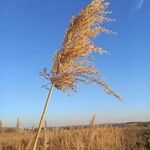
Phragmites australis
گیاه نی · کَلَم · Reed grass · Phragmites · Ditch reed
Description
Source: leafsnapPhragmites australis, known as the common reed, is a species of plant. It is a broadly distributed wetland grass that can grow up to 20 feet (6 metres) tall.
🌳 Common reed offers unused potential beyond its occurrence in wetlands. It could help tackle multiple problems, especially as a biofuel source because its stems can be processed into ethanol or biogas. It can also take up toxic heavy metals through its roots, assisting in pollution cleanup.
🎭 Security
Care Guide
💧 Water Twice per week
The common reed thrives in wetlands, where it requires high moisture levels and humid conditions. It is also tolerant of flooding. To mimic its natural habitat, it should be watered twice a week. Typically found outdoors, the common reed benefits from rainwater as an additional source of hydration.
☀️ Light Full sun
The common reed needs a substantial amount of light each day for best growth, though it can survive with lower levels of sunlight. Excessive sun exposure may cause some signs of drying, yet its preference for open sites in the wild indicates it has a relatively high tolerance for sunlight. Insufficient light can inhibit its growth.
What are the sunlight requirements for common reed (Phragmites australis)?
The common reed (Phragmites australis) thrives in environments that offer a considerable amount of daily sunlight for optimal growth, showcasing a high sunlight tolerance as observed in its natural open habitats. Although it can manage under milder sunlight conditions and withstand signs of desiccation due to excessive sun exposure, optimal growth is achieved with substantial sunlight. It is important to note that insufficient light may hinder the plant's growth, emphasizing the necessity of carefully selecting planting locations that provide a balance of light and shade.
How should artificial lighting be used for indoor common reeds?
For indoor common reeds, where natural sunlight might not be sufficient, especially during winter or in less sunlit areas, artificial lighting becomes crucial for maintaining optimal growth. LED lights are recommended due to their customizable light wavelengths. Full sun plants require 30-50W per square foot, partial sun plants 20-30W per square foot, and full shade plants need 10-20W per square foot of artificial light. The light source should be placed 12-36 inches above the plant, simulating natural sunlight as closely as possible, and kept on for 8-12 hours daily to match the plant's needs.
What signs indicate a common reed is getting insufficient light?
Common reed exhibits several symptoms when it suffers from inadequate light, including the development of smaller new leaves compared to mature ones, leggy or sparse growth due to longer spaces between leaves or stems, faster leaf drop as a survival strategy under low light conditions, halted growth indicating the plant's entry into a survival mode, pale new leaves suggesting a lack of chlorophyll and nutrients, and symptoms of excessive sunlight exposure like chlorosis, sunscald, leaf curling, wilting, and leaf scorching. These symptoms highlight the plant's struggle in insufficient light and its vulnerability to both under and overexposure to sunlight.
How can you address lighting issues for common reeds both indoors and outdoors?
Addressing lighting issues for common reeds involves strategic measures to ensure adequate sunlight exposure. Indoors, it's advised to gradually move the plant to sunnier locations, aiming for at least 6 hours of direct sunlight daily. Utilizing a south-facing window for maximum sunlight exposure and considering artificial grow lights for additional support is beneficial. Outdoors, plants should be transitioned gradually to sunnier spots to avoid sunburn, acknowledging that damaged parts may not recover, but new growth will be healthier. Additionally, reducing obstructions such as pruning trees to allow more sunlight and transplanting smaller plants during the dormant season to sunnier locations are effective ground measures.
🌡️ Temperature 0–35°C
The common reed is a plant whose native growth environment's temperature requirements allow it to thrive across a broad range, from 0 to 35 ℃ (32 to 95 ℉). Although it favors warm conditions, it can adapt to colder winter temperatures by entering dormancy. In the hot summer months, occasional deep watering may help it cope with the heat.
What are the temperature requirements for the Common Reed (Phragmites australis)?
The Common Reed (Phragmites australis) can grow in a wide range of temperatures, from as low as 0°C (32°F) to as high as 35°C (95°F). It is adaptable and can go dormant in colder winter temperatures, while during hot summer months, it may require occasional deep watering to cope with the heat. The plant displays strong cold resistance, and typically does not need special frost protection measures unless winter temperatures are anticipated to drop below -35°C. In such extreme cases, providing cold protection by covering the plant with soil or straw is advisable. Additionally, it's recommended to water the plant abundantly before the first freeze in autumn to ensure the soil stays moist and prevents winter drought.
How does low temperature affect Common Reed, and what are the solutions?
Common Reed is cold-tolerant and thrives best in temperatures above 0°C. However, during winter it should be kept above -30°C to avoid damage. When temperatures fall below -35°C, the plant may not show noticeable changes during winter, but there can be a decrease in sprouting or even no sprouting at all during spring. The solution for spring is to remove any parts of the plant that have failed to sprout, ensuring the health and continued growth of the plant.
What are the effects of high temperatures on Common Reed, and how can they be mitigated?
During summer, Common Reed should ideally be kept below 35°C. When temperatures exceed 41°C, the plant may exhibit signs of stress such as leaves becoming lighter in color, prone to curling, susceptibility to sunburn, and in severe cases, wilting and drying out. To mitigate these effects, trim away sunburned and dried-up parts of the plant. It may also be beneficial to move the plant to a shaded location or use a shade cloth to protect it from the midday and afternoon sun. Additionally, watering the plant in the morning and evening can help keep the soil moist and reduce heat stress.
💨 Humidity high (>60%)
This plant needs special care because it loves high humidity levels of 60-80% or more. The best way to achieve this is by placing a humidifier near the plant. Daily misting is also essential! Make sure the room has good ventilation.
🪴 Soil
🌱 Fertilizer
Apply liquid fertilizer or slow release fertilizer once in 15 days. Always fertilizer the plants during the morning hours when the temperature is low. But, many weed species don't like nitrogen in the soil. So, when your dirt lacks proper nutrient levels, weeds will grow. Therefore, a nitrogen-rich fertilizer program will simultaneously kill weeds.
🪴 Pot & Repot
✂️ Pruning
🌿 Propagating
🐛 Diseases & pets
☠️ Toxicity
Phragmites australis has no toxic effects reported.
Characteristics
- Plant Type
- Grass
- Life Cycle
- Perennial
- Genus
- Phragmites
- Family
- Poaceae
- Hardiness Zone
- 3-10
- Mature Height
- 0.91 m to 3.05 m
- Mature Spread
- 3.05 m
- Leaf Color
- Green, Blue, Brown
- Leaf Type
- Deciduous
- Flower Color
- Purple, Brown
- Flower Size
- 10.16 cm
- Bloom Time
- Mid summer
- Planting Time
- Autumn
- Harvest Time
- Mid summer, Late summer, Fall, Winter
- Native Area
- Sri Lanka, Libya, Belize, India, Turkey, Sweden, United Arab Emirates, Mexico, Guatemala, Slovakia, Montenegro, Pakistan, Dominican Republic, Nigeria, Slovenia, Croatia, Morocco, Guinea-Bissau, Belarus, Benin, Germany, Jordan, Indonesia, Haiti, Cameroon, Mozambique, Koppen, Ethiopia, Romania, Suriname, Latvia, Belgium, Netherlands, Portugal, Saudi Arabia, Tunisia, Honduras, Peru, Philippines, Bulgaria, Bangladesh, Laos, Cyprus, Turkmenistan, Panama, Ukraine, Chad, China, Colombia, Afghanistan, Lebanon, Syria, Kyrgyzstan, Kazakhstan, Italy, Japan, Mongolia, Finland, Bosnia and Herzegovina, El Salvador, Senegal, Eswatini, Iran, Ecuador, Azerbaijan, Kuwait, Gambia, Costa Rica, Somalia, Egypt, Angola, Austria, Lesotho, Malaysia, Namibia, Eritrea, Yemen, Kenya, Niger, Jamaica, Zimbabwe, Uzbekistan, Russia, Uruguay, Iraq, Argentina, Venezuela, Estonia, Brazil, Oman, South Korea, Qatar, Botswana, France, Nepal, Congo, Tajikistan, Georgia, Czech Republic, South Africa, Sudan, Mauritania, Armenia, Poland, Zambia, Greece, North Macedonia, Serbia, Lithuania, Norway, Bahamas, Hungary, Spain, Switzerland, Bolivia, Vietnam, Denmark, Israel, Guyana, Nicaragua, Singapore, Albania, Ireland, United Kingdom, Algeria, Thailand