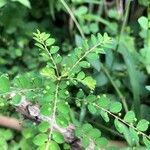
Phyllanthus niruri
Niruri · Gale of the wind · Seed-under-leaf · Soronipon · Stonebreaker
Description
Source: leafsnapPhyllanthus niruri is a widespread tropical plant commonly found in coastal areas, known by the common names gale of the wind, stonebreaker or seed-under-leaf. It is in the genus Phyllanthus of the family Phyllanthaceae.
Care Guide
💧 Water
Gale of the Wind flourishes in moist, tropical environments, where it needs regular hydration. While it can tolerate drought to some extent, it prefers humid conditions and should be watered weekly. The herb's growth is heavily influenced by rainfall patterns, which affect its water cycle and overall health.
How should I water my Gale of the wind plant?
There are several ways to water Gale of the wind. You can use a garden hose with a spray nozzle, a watering can, or any other common watering tool. This plant is not too picky about the type of water it receives, whether it's rainwater, tap water, or filtered water. It's best to avoid watering from overhead, as this can damage the leaves and flowers and may cause disease. Setting up a drip irrigation system is often the most effective way to water Gale of the wind, as it provides even and direct watering to the soil. If you have a container-grown Gale of the wind, you can use a cup, watering can, or tap water to directly water the soil.
What do I need to do if I give too much or too little water to my Gale of the wind plant?
The solution for underwatering Gale of the wind is simple: when you see that your plant needs more water, just start watering it regularly. Overwatering, on the other hand, can be more serious if not caught early. When Gale of the wind is overwatered, it can get diseases that cause it to decline and die. To prevent this, choose a suitable location with plenty of sunlight to dry the soil and good drainage to avoid waterlogging. If you overwater a potted Gale of the wind, consider repotting it using loose soil and a pot with proper drainage.
How much water does my Gale of the wind need and how often?
Gale of the wind needs regular watering throughout the growing season. In the spring, water this plant about once per week. As it gets warmer, you may need to increase watering to two to three times per week. However, be careful not to exceed this rate as it can harm the plant. Regardless of watering frequency, make sure the soil remains moist but not wet. Watering Gale of the wind in a pot is slightly different. The soil in a pot can heat up and dry out faster than ground soil, so you may need to water container-grown plants a few times per week. In contrast, in-ground plants only need watering once per week.
How much water does my wind machine need?
There are a few different ways to determine how much water to give your Gale of the wind plant. One method is to feel the soil for moisture and water until the first six inches are moist. Another approach is to use a set measurement, such as about two gallons per week, taking into account the temperature and soil dryness. However, following strict guidelines may result in overwatering if the plant requires less water. For container-grown Gale of the wind plants, a different method is needed. You should water enough to moisten all dry layers of soil. To check for moisture, simply stick your finger in the soil. Additionally, you can water until you see a slight trickle of excess water coming out of the pot's drainage holes.
Am I giving enough water to my Gale of the wind plant?
Avoiding overwatering your Gale of the wind can be challenging due to its specific needs. While these plants need to be watered weekly to ensure the deep roots receive enough moisture, they are also prone to root rot and browning if overwatered. Underwatering is less of a concern as these plants can withstand periods without supplemental watering, but they may start wilting and develop dry leaves if left without water for too long.
☀️ Light Full sun
Gale of the wind comes from bright, open environments where it does best in full sun. It can tolerate partial sun but favors direct sunlight for optimal growth. This plant, which can be annual or biennial, is known for its sun-loving nature.
What are the sunlight requirements for Gale of the Wind?
Gale of the Wind, known botanically as Phyllanthus niruri, thrives in environments where it can enjoy full sun, defined as receiving above 6 hours of sunlight daily. It can also tolerate partial sun, which means it gets about 3-6 hours of sunlight. It's crucial to observe how sunlight moves through your garden to find spots that offer the right balance of light and shade, ensuring your plants grow happily and healthily.
How can I supplement natural sunlight for indoor plants?
For indoor plants, when natural sunlight is insufficient, especially during winter or in less sunny spaces, artificial lighting is a practical solution to support their growth. LED lights are a favored option since they can be tailored to provide specific wavelengths needed by plants. Full sun plants require an artificial light intensity of 30-50W/sq ft, partial sun plants need 20-30W/sq ft, and full shade plants need 10-20W/sq ft. Ensure the light source is placed 12-36 inches above the plant to mimic natural sunlight conditions adequately and run the artificial light for about 8-12 hours a day to simulate the natural length of daylight hours.
What symptoms indicate light deficiency in Gale of the Wind when grown indoors?
When Gale of the Wind is grown indoors under inadequate light, it may show several symptoms of light deficiency such as smaller new leaves, leggy or sparse growth, faster leaf drop, slower or no new growth at all, and lighter-colored new leaves. These symptoms suggest that the plant is struggling with insufficient sunlight, which is crucial for its health and growth.
What are some common symptoms of excessive sunlight exposure in plants?
Excessive sunlight exposure can lead to several adverse symptoms in plants, including chlorosis (leaves losing their green color), sunscald, which appears as pale or necrotic areas on the plant, leaf curling as a defense mechanism to minimize water loss, wilting, and leaf scorching characterized by brown, dry, and crispy leaf edges. These conditions reflect the plant's struggle with too much sunlight, affecting its ability to photosynthesize and maintain overall health.
What solutions can mitigate the effects of insufficient or excessive light exposure for Gale of the Wind?
To mitigate the effects of insufficient light, gradually move your plants to a sunnier location, ensuring at least 6 hours of direct sunlight daily or use artificial light if the plant is not easily movable, with a recommended exposure of at least 8 hours daily. For outdoor plants, avoid sudden changes in light intensity to prevent sunburn. If the environment blocks too much sunlight, consider pruning obstacles or transplanting to a brighter location. While parts of the plant affected by insufficient sunlight might not recover, new growth will be healthy after adjusting light levels.
🌡️ Temperature 5–37.8°C
Gale of the wind comes from temperate environments and typically requires temperatures from 68 to 100 °F (20 to 38 ℃). It achieves optimal growth within that range. Seasonal adjustments can be made accordingly to maintain its preferred temperature.
What is the native environment and temperature requirement for Gale of the wind?
Gale of the wind, scientifically known as Phyllanthus niruri, thrives in temperate environments. Its typical temperature range for optimal growth is between 68 to 100°F (20 to 38°C). This range allows for the plant to show optimal growth, and seasonal adjustments may need to be made to keep within this preferred temperature range.
How does Gale of the wind handle cold temperatures and what measures should be taken in extreme cold?
Gale of the wind possesses strong cold resistance, making special frost protection measures usually unnecessary during winter. However, if temperatures are expected to drop below -25°C, cold protection becomes important. This can be achieved by covering the plant with soil or straw. Additionally, watering the plant abundantly before the first freeze in autumn is recommended to ensure the soil remains moist and enters a frozen state, which helps prevent drought and water scarcity for the plant during winter and early spring.
What are the implications of low temperatures for Gale of the wind and what solutions are recommended?
Gale of the wind is notably cold-tolerant, thriving best when temperatures remain above 20°C. During winter, it is important to maintain temperatures above 0°C. Exposure to temperatures below -25°C might not show immediate visible changes during winter but could lead to decreased sprouting or no sprouting during the following spring. The recommended solution for any parts of the plant that fail to sprout in spring is to remove them.
How should Gale of the wind be cared for during high temperature conditions?
In the summer months, it is critical to keep Gale of the wind's environment below 38°C. If temperatures soar above 43°C, the plant may display symptoms such as light-colored leaves, prone to curling, susceptibility to sunburn, and in severe cases, wilting and dryness. To mitigate these issues, trim away sunburned and dried-up parts of the plant, relocate it to a shadier location, or use a shade cloth to protect it from the harsh midday and afternoon sun. Additionally, watering the plant in the morning and evening will help keep the soil moist and support the plant's well-being.
💨 Humidity
🪴 Soil 6-7
🌱 Fertilizer
Gale of the wind responds well to regular, light applications of fertilizer to encourage healthy leaf growth. You should feed Gale of the wind about once a month during the summer. Nitrogen is important for foliage, and adding nitrogen-rich sources helps Gale of the wind thrive.
🪴 Pot & Repot
✂️ Pruning
"To ensure the Gale of the Wind plant thrives, it's best to prune it regularly, ideally from early to late spring. Pruning helps by removing dead branches, thinning out crowded areas to improve air circulation, and controlling the plant's size. This not only enhances flowering and fruiting but also promotes vigor and prevents disease."
🌿 Propagating
🐛 Diseases & pets
☠️ Toxicity
Characteristics
- Plant Type
- Herb
- Life Cycle
- Annual
- Genus
- Phyllanthus
- Family
- Phyllanthaceae
- Hardiness Zone
- 5-11
- Mature Height
- 61 cm
- Mature Spread
- 61 cm
- Leaf Color
- Green
- Leaf Type
- Deciduous
- Flower Color
- White
- Flower Size
- 0.20 cm to 0.25 cm
- Bloom Time
- Late spring, Summer, Early fall, Mid fall
- Planting Time
- Spring, Summer, Autumn
- Harvest Time
- Mid summer, Late summer, Fall