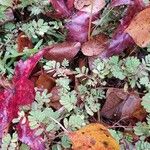
Phyllanthus urinaria
Chamber bitter · Common leafflower · Gale of wind · Ye xia zhu · Leafflower
Description
Source: leafsnapPhyllanthus urinaria, also known as chamber bitter or gripeweed, is a small annual herb belonging to the Phyllanthaceae family. Native to tropical regions of Asia, it has spread worldwide due to its medicinal properties. The plant can grow up to 50 cm in height and features small green leaves arranged alternately on the stem. For centuries, Phyllanthus urinaria has been utilized in traditional medicine for its anti-inflammatory, antiviral, and diuretic properties. It is commonly used to treat urinary tract infections, kidney stones, and liver diseases, including hepatitis B and C. The plant contains several active compounds, such as lignans (phyllanthin), flavonoids (quercetin), and alkaloids (phyllanthurine), as well as tannins, which contribute to its medicinal properties. Besides its medicinal uses, Phyllanthus urinaria also acts as a natural insecticide against pests like mosquitoes, making it a valuable plant in agriculture. Overall, Phyllanthus urinaria is a beneficial herb with numerous health advantages. It can be incorporated into daily life through supplements or herbal teas.
💡 A mother and her son lived together to keep each other company. The son traveled far to earn a living for both of them. Meanwhile, the mother would wait day and night at the spot where they had last parted. Overcome with sadness, she often burst into tears. As time passed, weeds began to grow in that spot, bearing fruit shaped like teardrops. She believed these were a sign that her son missed her too.
🌳 Chamber bitter is recognized for its ability to grow in metal-contaminated soils, making it a candidate for phytoremediation. Researchers have examined the plant's capacity to absorb and withstand heavy metals, which could be employed to clean polluted environments without relying on chemical treatments. This trait is particularly important given the growing concern about soil contamination worldwide.
🎭 Numerous sons and numerous blessings
Care Guide
💧 Water Every 7 days
Chamber bitter, a plant that originates from tropical regions, thrives in environments with consistent moisture and regular watering, ideally receiving water on a weekly basis. This herbaceous plant grows best outdoors, where its growth cycle depends on the availability of water and warm temperatures. It benefits from the natural rainfall found in its native habitat.
How should I water my Chamber bitter plant?
To water Chamber bitter, you have several options for watering tools: a garden hose with a spray nozzle, a watering can, or any common watering tool. Chamber bitter is not too picky about its water source and can survive on rainwater, tap water, or filtered water. However, it's best to avoid watering this plant from above as it can harm the leaves, flowers, and potentially lead to disease. Instead, setting up a drip irrigation system is often the most effective way to water Chamber bitter. These systems evenly apply water directly to the soil. For a Chamber bitter grown in a container, you can use a cup, watering can, or tap to water it by directly applying water to the soil.
What should I do if I give my Chamber bitter plant too much or too little water?
To remedy underwatering Chamber bitter, simply increase the frequency of watering when you notice the plant lacks moisture. Overwatering, on the other hand, can be more problematic, potentially leading to diseases and the plant's decline. To prevent this, it's important to choose a suitable location for growing, with ample sunlight to help dry the soil and good drainage to prevent water from pooling. If your potted Chamber bitter is overwatered, consider transferring it to a new pot with better drainage, using loose soils that drain efficiently.
How frequently should I water my Chamber bitter plant?
Chamber bitter needs regular watering throughout its growing season. In the spring, water it once a week. As the season progresses and gets hotter, you may need to water it two to three times a week. It's important not to water it too much, as that can harm the plant. Regardless of how often you water, make sure the soil is moist but not wet. Watering Chamber bitter in a pot is slightly different. Potted plants tend to dry out faster, so you'll need to water them more frequently. Generally, water a potted Chamber bitter a few times a week, compared to just once a week for one planted in the ground.
How much water does my Chamber bitter plant need?
Determining the appropriate amount of water for your Chamber bitter can be done in a few different ways. Some gardeners rely on their senses to determine the moisture level of the soil, suggesting that you should water until the first six inches of soil feel moist. Another approach is to use a specific measurement. Typically, Chamber bitter requires about two gallons of water per week, depending on factors such as temperature and soil dryness. However, adhering strictly to this guideline may result in overwatering if your plant requires less water. When growing Chamber bitter in a container, a different method is needed. It is recommended to water until all layers of soil have dried and then moisten them adequately. To check for moisture, simply insert your finger into the soil. Alternatively, you can water the soil until you see a slight trickle of excess water coming out of the drainage holes of the pot.
How do I know if I am giving enough water to my Chamber bitter plant?
Avoiding overwatering your Chamber bitter can be challenging due to their deep roots that require weekly soil moistening. However, Chamber bitter is prone to root rot and browning if overwatered. Underwatering is less of an issue for these plants as they can survive without supplemental watering for a while. However, prolonged lack of water can cause wilting and dry leaves.
☀️ Light Partial sun
Chamber bitter thrives in a spot with moderate sunlight. Nonetheless, it is hardy enough to survive in places that are fully shaded or in locations that get sun all day. Either too much or too little light can stress the plant.
What are the sunlight requirements for Chamber bitter?
Chamber bitter requires varying amounts of sunlight depending on the conditions. It can thrive in partial sun, which is about 3-6 hours of sunlight daily, and also in full sun or full shade, which involves more than 6 hours of sunlight. A crucial note is to observe how sunlight moves through your garden to find spots that provide a good balance of light and shade, ensuring the plant's health.
Can Chamber bitter survive in different lighting conditions?
Yes, Chamber bitter can flourish in various lighting conditions. This plant does well in medium sunlight and is resilient enough to survive in complete shade or in areas exposed to sunlight throughout the day. However, it's essential to note that both excessive and insufficient light could stress the plant.
How does artificial lighting benefit indoor Chamber bitter plants?
Artificial lighting is crucial for the growth of indoor Chamber bitter plants, especially when natural sunlight is insufficient, like in winter or less sunny spots. LED lights are recommended because they can be customized to provide specific wavelengths needed by plants. For full sun plants, 30-50W/sq ft is needed, partial sun plants require 20-30W/sq ft, and full shade plants need 10-20W/sq ft of artificial light. The lights should be placed 12-36 inches above the plant for 8-12 hours per day to mimic natural sunlight conditions.
What are some symptoms of inadequate light for Chamber bitter?
Symptoms of light deficiency in Chamber bitter include smaller new leaves, leggy or sparse growth due to long spaces between leaves or stems, faster leaf drop as the plant conserves resources, delayed or halted growth, lighter-colored new leaves indicating a lack of chlorophyll, chlorosis leading to leaves losing their green color, sunscald from intense sunlight exposure, leaf curling as a defense mechanism against sunlight, wilting from increased water loss, and leaf scorching characterized by dry, crispy leaves edges.
What solutions can be applied to manage light conditions for Chamber bitter?
To manage light conditions for indoor Chamber bitter, gradually shift the plant to sunnier spots each week to adapt to 3-6 hours of sunlight, or use artificial light for at least 8 hours daily. For outdoor plants, move them gradually to sunnier locations to avoid sunburn. If sunlight is obstructed, consider pruning obstructions or transplanting smaller plants to sunnier spots during their dormant period for better exposure. It's important to remember that affected parts might not recover, but new growth should be healthy with improved light conditions.
🌡️ Temperature 10–37.8°C
Chamber bitter is a plant that does best in temperatures of 68 to 100 °F (20 to 38 ℃), reflecting the conditions of its native habitat. In colder seasons, you should consider warming measures to maintain optimal growth.
What is Chamber Bitter?
Chamber Bitter, scientifically known as Phyllanthus urinaria, is a plant that flourishes in temperatures ranging from 68 to 100 °F (20 to 38 °C). It is quite adaptable to various environmental conditions, including having significant cold resistance. Despite this, it usually does not require special frost protection measures during winter, unless temperatures are expected to drop below -25°C. In preparation for colder seasons, advisable practices include warming measures to maintain optimal growth and watering the plant abundantly before the first freeze in autumn to ensure the soil remains moist and enters a frozen state prepared for winter and early spring.
How does Chamber Bitter respond to low temperatures?
Chamber Bitter is exceptionally cold-tolerant, showing its best growth above 20°C. During winter, it's crucial to keep the temperature above 0°C to prevent damage. If temperatures fall below -25°C, the plant may not show immediate distress during winter, but come spring, there could be a notable decrease in sprouting, or it may fail to sprout altogether. To mitigate this, removing any parts that haven’t sprouted in spring can promote healthier growth.
What should I do if Chamber Bitter is exposed to high temperatures?
During the summertime, it's vital to ensure that Chamber Bitter does not remain in environments hotter than 38°C. Exposure to temperatures above 43°C can lead to lighter-colored leaves that are prone to curling, susceptible to sunburn, and in severe cases, the plant may wilt and dry completely. To counteract these effects, it's recommended to trim away the sunburned and dried-up parts of the plant. Moving the plant to a location that offers shade, especially from the midday and afternoon sun, or using a shade cloth, can protect it. Additionally, watering the plant in the morning and evening helps to maintain proper soil moisture and supports plant health.
💨 Humidity normal (40-60%)
This plant will thrive in moderate humidity, which is probably the level in your home. However, misting it a few times a week can be very beneficial. Make sure the room has good ventilation.
🪴 Soil 5-7
🌱 Fertilizer
Chamber bitter benefits from regular, light applications of fertilizer to encourage healthy leaf growth. Fertilize Chamber bitter about once a month during the summer. Nitrogen is essential for foliage, and providing nitrogen-rich sources helps Chamber bitter thrive.
🪴 Pot & Repot
✂️ Pruning
🌿 Propagating
🐛 Diseases & pets
☠️ Toxicity
Characteristics
- Plant Type
- Herb
- Life Cycle
- Annual
- Genus
- Phyllanthus
- Family
- Phyllanthaceae
- Hardiness Zone
- 6-11
- Mature Height
- 10 cm to 61 cm
- Mature Spread
- 91 cm
- Leaf Color
- Green
- Leaf Type
- Evergreen
- Flower Color
- White, Yellow, Green
- Flower Size
- 0.51 cm
- Bloom Time
- Summer
- Planting Time
- Spring
- Harvest Time
- Mid summer, Late summer, Early fall
- Native Area
- Nepal, Sri Lanka, Solomon Islands, Cambodia, Vietnam, Japan, Papua New Guinea, Bhutan, Pakistan, Laos, South Korea, Brunei, Thailand, China