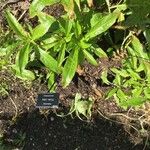
Phyllis nobla
Capitana
Description
Source: leafsnapPhyllis nobla is a small, glabrous or pubescent subshrub in the family Rubiaceae.
Care Guide
💧 Water
The bastard hare's ear, native to moist environments, flourishes with twice-weekly watering but can withstand short periods of dryness. It is best suited for indoor cultivation, where humidity remains stable. During the growing season, careful water management is essential to prevent root rot while ensuring the soil retains adequate moisture.
☀️ Light Partial sun
Bastard hare's ear naturally occurs in habitats like forest understories or rocky sites, where it grows in natural shade. It prefers partial sun but can adapt to full sun or full shade, showing its versatile and hardy nature.
🌡️ Temperature 20–37.8°C
Bastard hare's ear shows good temperature adaptability, able to withstand higher temperatures and wide temperature fluctuations. In hot conditions, attention should be paid to watering and providing appropriate shade to prevent sunburn. However, Bastard hare's ear is relatively sensitive to low temperatures; although it can tolerate some cold, very low temperatures can cause frost damage.
💨 Humidity
🪴 Soil 6-7
🌱 Fertilizer
🪴 Pot & Repot
✂️ Pruning
The Bastard Hare's Ear is an aromatic evergreen shrub known for its yellow flowers. For optimal growth, prune dead branches and lightly trim the shrub from early to late spring. Pruning after the flowering period enhances blooms and improves airflow, which reduces the risk of disease. Always use clean, sharp tools to encourage healthy regrowth.
🌿 Propagating
🐛 Diseases & pets
☠️ Toxicity
Characteristics
- Plant Type
- Tree
- Life Cycle
- Annual
- Genus
- Phyllis
- Family
- Rubiaceae
- Hardiness Zone
- 9-11
- Mature Height
- 0.91 m to 2.13 m
- Mature Spread
- 0.91 m to 1.52 m
- Leaf Color
- Dark Green
- Leaf Type
- Deciduous
- Flower Color
- White, Cream
- Flower Size
- 0.51 cm to 1.02 cm
- Bloom Time
- Late spring, Early summer, Mid summer
- Planting Time
- Spring, Summer, Autumn
- Harvest Time
- Mid summer, Late summer, Early fall