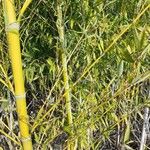
Phyllostachys aurea
Golden Bamboo · Fish-pole bamboo · Fish-pole Japanese bamboo · Golden Japanese bomboo
Description
Source: leafsnapPhyllostachys aurea, commonly known as Golden Bamboo, is a species of bamboo native to China that is widely cultivated around the world. This fast-growing plant can reach heights of up to 10 meters. Its stems are bright yellow when young but turn green as they mature, while its leaves are long, narrow, and pointed. Golden Bamboo is popular for ornamental purposes due to its attractive appearance and rapid growth rate. Additionally, it is used in construction for scaffolding, flooring, furniture making, and paper production. However, it's important to note that Golden Bamboo can become highly invasive if not properly contained or managed. Its quick growth can easily overwhelm other plants in its vicinity if left unchecked. In summary, Phyllostachys aurea is an appealing and versatile plant with many uses, but it requires careful management to prevent it from becoming invasive in certain environments.
🌳 Golden bamboo is not only a prized component of Asian cuisine, but also fulfills key roles in several industries. Its shoots enhance a wide array of culinary dishes. The stems, which are high in silica, are fashioned into durable fishing rods—a custom dating back to the 1700s. In addition, golden bamboo fiber is central to the production of eco-friendly paper products. In coastal areas, it functions as a natural wind barrier and prevents soil degradation. Its abundant blossoms also provide a plentiful supply of nectar for bees.
🎭 A large bamboo that forms spreading clumps.
Care Guide
💧 Water Every 7 days
Golden bamboo thrives in humid, subtropical environments, where it needs consistent moisture and high humidity to grow well. While it can withstand moderate drought conditions, it should be watered twice a week to maintain optimal health. This plant is suitable as either an outdoor privacy screen or an ornamental addition to your garden. During its active growth season, golden bamboo benefits from having evenly moist soil.
What should I do if I give my Golden bamboo too much or too little water?
Proper watering is crucial for the performance of this beautiful ornamental grass. If it is planted in the ground, watering issues can be resolved. However, too much or too little water will quickly kill Golden bamboo when it is in a container. When Golden bamboo doesn't receive the right amount of water, it may stop growing. Overwatering can cause yellow leaves with brown tips, while underwatering can result in drooping leaves, weak seed head production, and browned foliage. If you suspect your Golden bamboo has been watered improperly, determine whether it is getting too much or too little water. If it is getting too much, stop watering immediately and wait for the soil to dry out. Once new growth appears, test the soil for moisture and determine if it needs more water. If it is receiving too little water, give it a deep drink and observe if it improves. Remember that a long, deep watering is better than frequent shallow waterings. This encourages grasses to develop deep roots, making them more resistant to drought and less susceptible to watering-related problems.
How frequently should I water my Golden bamboo?
The watering needs of Golden bamboo depend on where it is planted. In general, watering this grass once a week is sufficient. However, in hot climates, watering once or twice a week during the summer may be necessary. In moderate climates, watering once every seven days or more may be enough. It's important to note that grass in containers usually requires more frequent watering than in-ground grass. Additionally, the location of the grass matters - shaded grass requires less water than in-ground grass. When watering Golden bamboo, it should only be done when the soil is dry. There are a few signs to look out for to determine if watering is needed. Checking the soil's moisture level by pressing your finger a couple of inches into the soil is a good indicator. For potted grass, you can weigh the pot with a scale or simply feel if it is light, indicating lack of water. If the grass lacks sufficient water, the blades may appear folded along their centers and thinner than usual. Although Golden bamboo is drought-resistant, regular and deep waterings will help maintain its beautiful color. In its natural habitat of open scrubland, it is exposed to extreme heat, bright sun, and intermitt
What do I need to be careful of when I water my Golden bamboo at different times of the year, in different climates, or during its different growth stages?
To determine if you are watering enough, observe the rate of growth of your grasses. Golden bamboo tends to double in size during the hottest months of the year. If the weather is hot but the grass is not growing vigorously, you may need to adjust your watering schedule. In winter, you can potentially water just once a month, but make sure to check the soil for moisture. During the growth cycle in the warmest months, the grass will require more water than usual. However, during winter and cooler months, the need for water will significantly decrease. Remember that it is crucial to allow the soil where Golden bamboo is planted to dry out completely before watering.
☀️ Light Full sun
Golden bamboo grows best with abundant sunlight, though it can tolerate shadier conditions. Since it comes from an environment with ample sun, its health and development can be harmed if it receives either too little or too much light.
What are the sunlight requirements for golden bamboo?
Golden bamboo thrives best in full sun, requiring more than 6 hours of sunlight daily. However, it can also grow in partial sun, which means about 3-6 hours of sunlight per day. It's essential to monitor the sunlight patterns in your garden to ensure that your golden bamboo gets the right balance of light and shade, as both too little and too much sunlight can negatively impact the plant's health and growth.
How can artificial lighting support the growth of indoor golden bamboo plants?
Indoor golden bamboo plants may require artificial lighting to ensure optimal growth, especially when natural sunlight is insufficient. LED lights are recommended as they can be customized to provide the specific wavelengths of light needed by the plant. For full sun plants, including golden bamboo, 30-50W/sq ft of artificial light is needed. The artificial light source should be positioned 12-36 inches above the plant and kept on for 8-12 hours per day to mimic natural daylight conditions.
What are the common symptoms of improper light exposure in golden bamboo?
Golden bamboo may display several symptoms if it does not receive the appropriate amount of sunlight. These include small and lighter-colored new leaves, leggy or sparse growth, faster leaf drop, and a halt in new growth indicating a survival mode due to poor light conditions. Overexposure can lead to chlorosis, sunscald, leaf curling and wilting, and leaf scorching. These symptoms signify that the plant is either receiving too much or too little sunlight, affecting its health and growth.
What solutions can improve the light exposure of golden bamboo?
To improve light exposure for indoor golden bamboo, gradually relocate the plant to a sunnier spot each week to achieve at least 6 hours of direct sunlight daily. Utilize a south-facing window or artificial grow lights for ample light. For outdoor plants, move them gradually to avoid sunburn. Reduce obstructions by pruning trees or other barriers. For smaller plants, consider transplanting during their dormant period to a location with better sunlight and drainage. Note that parts of the plant affected by insufficient sunlight may not recover, but adjusting the light exposure will promote healthy new growth.
🌡️ Temperature 15–37.8°C
Golden bamboo can grow in a broad range of temperatures, but it thrives in hot, damp tropical regions like its native China. This species can tolerate temperatures as low as 10 degrees Fahrenheit, although it won't grow as tall or as rapidly (especially during a prolonged cold period).
What is the botanical name of Golden bamboo?
The botanical name of Golden bamboo is Phyllostachys aurea. This classification helps in identifying it precisely within the plant kingdom, distinguishing it from other varieties or species of bamboo.
💨 Humidity
🪴 Soil 5-6
🌱 Fertilizer
Golden bamboo needs extra nutrients to encourage healthy new growth. In spring, spreading compost around the base of the plant can effectively supply the nutrition it requires. Fertilizing helps support vigorous growth and aids the plant in resisting diseases and pests.
Why is it important to add fertilizer to my Golden bamboo?
Fertilizing Golden bamboo is necessary because it provides your plant with the essential nutrients for healthy new growth. In addition, these extra nutrients are crucial in maintaining the health of existing growth and boosting the plant's ability to resist diseases and pests.
When should I fertilize my Golden bamboo for the best results?
To ensure the survival of Golden bamboo in your garden, it's important to know when to fertilize. This plant doesn't need a lot of nutrients and doesn't require extra feeding when it's dying back. While you can use diluted fertilizer during the growing season, it's actually not recommended. Instead, it's best to apply mulch or compost around the base of the plant.
When is it not a good idea to fertilize my Golden bamboo plant?
If you're not using packaged fertilizers, you can relax and not have to worry about when to stop feeding Golden bamboo. Simply applying a layer of compost or mulch in the spring will be sufficient to keep the plant happy all year long. During the winter, when the plant is dormant, there's no need to concern yourself with mulching or composting.
What kind of fertilizer should I give my Golden bamboo?
Instead of rushing to the garden center to buy fertilizer for golden bamboo, you can simply use compost in the spring to provide it with the necessary nutrients. Additionally, if you mulch your garden every year, the bark will also help keep the plant well-fed and happy.
How should I make my Golden bamboo grow better?
For Golden bamboo, the steps are the same whether you are using mulch or compost. Begin by putting down a layer of the chosen material, ensuring that it covers the base of the plant. If you decide to use both materials, reduce the amount of compost. Adding a layer of mulch serves two purposes: it helps the soil retain moisture and provides nutrients to the plant.
🪴 Pot & Repot 2-3 years
When repotting Golden bamboo, select a pot 1-2 inches (2.5–5.1 cm) larger that provides good drainage. Use a well-draining potting mix. Repot in spring or fall, making sure the root ball sits slightly below the rim of the flower pot. Water thoroughly after repotting and place the plant in a warm spot with indirect sunlight.
✂️ Pruning
As with other types of bamboo, you should regularly trim your golden bamboo by removing any failing, dead, or damaged stems. If you want to show off the tortoiseshell pattern on golden bamboo to its greatest advantage, you'll need to prune away any branches and leaves that grow close to the plant's base.
🌿 Propagating
🐛 Diseases & pets
☠️ Toxicity
Characteristics
- Plant Type
- Bamboo
- Life Cycle
- Perennial
- Genus
- Phyllostachys
- Family
- Poaceae
- Hardiness Zone
- 7-11
- Mature Height
- 4.88 m to 11.89 m
- Mature Spread
- 2.13 m to 4.88 m
- Leaf Color
- Green, Yellow
- Leaf Type
- Evergreen
- Flower Color
- Green
- Bloom Time
- Early summer, Mid summer
- Planting Time
- Spring, Autumn
- Harvest Time
- Late summer, Early fall, Mid fall
- Native Area
- Vietnam, China