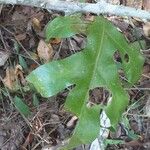
Phymatosorus scolopendria
Monarch fern · Green wave
Description
Source: leafsnapPhymatosorus scolopendria, commonly known as the centipede fern, is a species of fern in the family Polypodiaceae. It is native to tropical regions of Asia, Africa, and the Americas. This plant has a creeping rhizome that produces fronds up to 1 meter long and 15 centimeters wide. The fronds are pinnate with leathery, dark green leaflets that have serrated edges. Centipede ferns are often grown as ornamental plants in gardens and indoor spaces due to their attractive foliage. They prefer moist soil with good drainage and partial shade or filtered sunlight. While they can tolerate full shade, their growth may slow under such conditions. In traditional medicine, Phymatosorus scolopendria has been used for its anti-inflammatory properties and for treating various ailments such as fever, coughs, asthma, and wounds. Overall, Phymatosorus scolopendria is an attractive plant with both ornamental value and medicinal properties, making it an interesting addition to any garden or indoor space.
Care Guide
💧 Water Every 7 days
Native to tropical climates, the monarch fern thrives in high humidity and requires consistently moist soil. It should be watered twice a week. As an epiphyte, it absorbs moisture from the air and flourishes indoors under humid conditions, which promotes healthy and lush foliage.
What do I do if I give my Monarch fern too much or too little water?
The Monarch fern can be overwatered if it is left in standing water or if the planter does not have drainage holes. This can prevent the roots from getting nutrients and moisture, and lead to fungal or bacterial diseases. Signs of overwatering include wilted and yellow leaves, droopy stems, or soft and mushy stems. However, it's important to check for other causes of these symptoms since it's hard to give this plant too much water. On the other hand, the Monarch fern can also be underwatered if not properly monitored. In dry conditions, the plant can quickly turn brown and crispy. In extreme cases, it may seem like all the fronds have died, but there might still be healthy roots. To potentially save the plant, remove all the dry and dead stems, water it thoroughly, and put it back in its usual spot. This plant can be resilient and start growing new fronds, although it may take a few months to reach its previous size with proper care.
What's the right way to water my Monarch fern?
To properly care for your Monarch fern, it is important to keep the soil consistently moist, resembling its natural environment. This means watering it every one or two days, as allowing it to dry out can be detrimental. When you notice the top layer of soil even slightly dry, it's time to water again. Avoid giving it just a few drops of water; instead, completely soak the soil until water drains from the pot's bottom. Once the excess water has drained out, make sure to remove it to prevent the pot from sitting in a puddle. Following this method will help ensure that the soil never becomes too dry.
What do I need to think about when watering my Monarch fern?
The humidity level of the air affects how often you need to water your Monarch fern. Higher humidity means less frequent watering because water evaporates more slowly. To avoid drying out the fern, keep it away from heating or cooling vents and drafty areas. Monarch ferns prefer dappled and indirect sunlight as well as temperatures between 55-80 degrees F (13-27 degrees C). Placing them in a warm and sunny windowsill may cause them to become dehydrated quickly. Rainwater or distilled water is ideal for this plant, but tap water usually works fine in most areas. Tap water may contain minerals and chemicals that can lead to brown leaf tips since Monarch ferns have delicate leaves. Small pots can be problematic since they hold less moisture and dry out faster. It is recommended to give the fern more space in the pot compared to other houseplants. Consider using a self-watering planter for your Monarch fern. This type of pot has a wicking system that continuously absorbs water from a central reservoir, keeping the soil consistently moist. Using a self-watering planter saves you the trouble of frequent watering and provides a steady water supply for the roots, which is beneficial compared to alternating between dry and wet conditions.
☀️ Light Full shade
Monarch fern flourishes in locations with low sunlight exposure, although it can still live in places with a restricted quantity of sun. Its roots are in shadowy environments, therefore too little or too much light can impede its development. A dimly lit environment is better for its strong growth.
What are the sunlight requirements for Monarch Fern?
Monarch Fern thrives in full shade to partial sun conditions, requiring less than 3 hours of sunlight for full shade environments and about 3-6 hours of sunlight for partial sun conditions. It's crucial to observe how sunlight moves through your garden to find the optimal balance of light and shade, ensuring the plant's happiness and robust growth.
How does inadequate or excessive light affect Monarch Fern growth?
Monarch Fern originates from shady habitats and prefers minimal sunlight exposure. Inadequate or excessive light can hinder its growth, with robust growth achieved in dimly lit environments. It's important for the plant's health and growth to provide the right amount of light.
What are the artificial lighting requirements for indoor Monarch Ferns?
Indoor Monarch Ferns require adequate lighting for optimal growth, especially when natural sunlight is insufficient, such as in winter or less sunny spaces. LED lights are a popular choice because they can be customized to provide specific wavelengths. Full sun plants need 30-50W/sq ft, partial sun plants need 20-30W/sq ft, and full shade plants need 10-20W/sq ft of artificial light. The light source should be placed 12-36 inches above the plant to mimic natural sunlight, and most plants need 8-12 hours of light per day.
What symptoms indicate light deficiency in Monarch Fern?
Symptoms of light deficiency in Monarch Fern include slower or no new growth, chlorosis (leaves turning yellow due to the breakdown of chlorophyll), sunscald (damaged leaves or stems from intense sunlight exposure), leaf curling (a defense mechanism to minimize water loss and damage), wilting (loss of turgor pressure causing drooping), and leaf scorching (brown, dry edges on leaves due to excessive sunlight). These symptoms showcase the plant's struggle with poor lighting conditions.
What are the recommended solutions for light-related issues in Monarch Fern?
For indoor Monarch Ferns, move them to spots where they can receive ample filtered light, including brief periods of direct morning sunlight, ideally 1-2 meters away from a window. Use artificial light if necessary, keeping a lamp on for at least 8 hours daily. For outdoor plants, gradually move them to sunnier locations each week to avoid sunburn. If sunlight is obstructed, consider pruning trees or transplanting smaller plants to sunnier areas with good drainage to enhance light exposure and promote healthy new growth.
🌡️ Temperature 20–37.8°C
The monarch fern is indigenous to tropical climates and is comfortable with temperatures that fall between 68 and 100 ℉ (20 to 38 ℃). It profits from being misted in the summer months to keep the moisture levels and regulate the heat. In the winter season, it is recommended to relocate the plant from areas with chilly drafts to avoid harm.
What is the native environment of the Monarch fern?
The Monarch fern, scientifically known as Phymatosorus scolopendria, thrives in tropical environments. It is best suited to temperatures that range between 68 to 100°F (20 to 38°C), which highlights its preference for warm and humid conditions typical of its native habitat.
How should I care for my Monarch fern during the summer and winter?
During the summer months, the Monarch fern benefits from regular misting to help maintain moisture levels and provide relief from the heat, as it loves high temperatures. In winter, it's crucial to protect the plant from cold drafts by relocating it to a warmer spot. Keeping the plant indoors near a bright window, but away from direct heat sources like heaters, helps maintain optimal growth conditions. Ensuring the temperature remains above 68°F (20°C) during the colder months is beneficial for the plant's health, as it is extremely heat-loving and susceptible to damage from cold.
What should I do if my Monarch fern is exposed to low temperatures?
Monarch ferns are not tolerant of cold and prefer temperatures above 68°F (20°C), needing protection when it gets colder than 41°F (5°C). If exposed to temperatures below 33.8°F (1°C), you may notice the leaves lightening in color, eventually turning brown or black with signs of wilting and drooping after frost damage. To assist a cold-affected Monarch fern, trim off the frost-damaged parts and move the plant indoors to a warm, brightly lit spot, preferably near a south-facing window, avoiding direct heat sources to prevent air dryness.
How do I manage my Monarch fern during extreme high temperatures?
When temperatures soar above 100°F (38°C), the Monarch fern can suffer, showing signs like lighter leaf color and susceptibility to sunburn if conditions reach or exceed 109°F (43°C). To care for your fern in such conditions, trim away damaged foliage and move the plant to a shaded area, particularly shielded from the intense midday and afternoon sun. Continue to water the plant in the cooler morning and evening hours to ensure it remains hydrated and the soil retains moisture.
💨 Humidity
🪴 Soil 6-7
🌱 Fertilizer
The Monarch fern needs regular fertilization with high nitrogen content. Apply this fertilizer monthly during the spring and summer, every two months in the fall, and not at all in the winter. Be sure to use a diluted solution and avoid letting it contact the foliage to prevent burning. Adjust the amount of fertilizer according to the fern's growth stage and size to ensure optimal vigor.
Why should I put fertilizer on my Monarch fern?
Fertilizing Monarch fern is important for a few reasons. Firstly, it provides the necessary nutrients for healthy new growth. Additionally, these extra nutrients enhance the well-being of older growth and assist in protecting the plant against diseases and pests.
When should I fertilize my Monarch fern for the best results?
The feeding schedule of the Monarch fern depends on where it is growing. Although it is not a very hungry plant, it does require some extra nutrients. Outdoor plants only need to be fertilized once in the spring, while indoor plants should be fed monthly starting in the spring and continuing through the summer.
When is it not a good time to put fertilizer on my Monarch fern?
To avoid excessive growth before winter, it is best not to fertilize after early autumn. Additionally, Monarch fern should not be fertilized during hot and dry periods as dry soil is not as effective at delivering fertilizer. Fertilizing at this time can also promote growth that requires more water, which might not be available. It is recommended to fertilize earlier in the season when temperatures are cooler. Lastly, be cautious not to accidentally give Monarch ferns too much fertilizer as they can absorb it from neighboring plants or lawns.
What kind of fertilizer does my Monarch fern need?
When selecting a fertilizer for Monarch fern, there are a few options to consider based on whether the plant is grown indoors or outdoors. Outdoor plants can benefit from mulch or compost, while indoor plants thrive with a fertilizer that has a 3-1-2 N-P-K ratio. In some cases, a general-purpose fertilizer with a balanced blend of nutrients can be effective. However, it's important to ensure that the ratio number representing each nutrient volume is 3 or lower, even with a balanced fertilizer.
How do I feed my Monarch fern?
Fertilizing Monarch fern is not complicated, but it depends on the location of the plant. For outdoor garden plants, adding a layer of mulch or compost to the soil around the base of the plant works best. On the other hand, indoor plants tend to do well with a diluted liquid fertilizer applied before watering, typically on a monthly basis in the spring and summer.
🪴 Pot & Repot 2-3 years
When transplanting a Monarch fern, select a pot that is 1-2 inches (2.5–5 cm) larger and has adequate drainage function. Utilize a potting mix that drains well. The ideal times for repotting are spring or autumn, making sure the root ball is a bit lower than the container's edge. Thoroughly water once repotted and position in a warm location with indirect sunlight.
✂️ Pruning
The monarch fern is a tropical plant known for its glossy, lobed fronds. To keep it healthy and looking its best, it's important to prune it in early spring. This helps remove any dead growth and improves air circulation around the plant. Light and regular maintenance can further enhance its health and appearance. When pruning, make sure to use clean, sharp tools and adjust your techniques to accommodate the monarch fern’s natural habitat.
🌿 Propagating
🐛 Diseases & pets
☠️ Toxicity
Characteristics
- Plant Type
- Fern
- Life Cycle
- Perennial
- Genus
- Phymatosorus
- Family
- Polypodiaceae
- Hardiness Zone
- 10-11
- Mature Height
- 30 cm to 61 cm
- Mature Spread
- 30 cm to 61 cm
- Leaf Color
- Green
- Leaf Type
- Evergreen
- Planting Time
- Spring
- Native Area
- Sri Lanka, India, Angola, Vanuatu, Madagascar, Nigeria, Kenya, Uganda, Tanzania, Zimbabwe, Fiji, Benin, Sierra Leone, Indonesia, Cambodia, Equatorial Guinea, Liberia, Mozambique, Cameroon, Ghana, Ethiopia, Central African Republic, South Africa, Sudan, Philippines, Guinea, China, Vietnam, Myanmar, Togo, Côte d'Ivoire, Thailand, Gabon