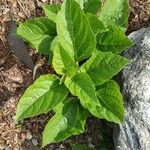
Physalis heterophylla
Clammy ground-cherry · Clammy groundcherry · Wild Ground-cherry
Description
Source: leafsnapPhysalis heterophylla, colloquial name clammy groundcherry, is a herbaceous plant that is a member of the family Solanaceae. It is native to North America, occurring primarily in the eastern United States and Canada. It is known to occur in all contiguous states except for Nevada and California. It is found mainly in habitats such as dry or mesic prairies, gravel hills and rises, sandy or rocky soils, and waste places such as roadsides. Physalis heterophylla is a perennial, and is one of the taller-growing North American members of the genus, reaching a height up to 50 cm. The leaves are alternate, with petioles up to 1.5 cm, ovate in shape, usually cordate at the base (this is especially true of mature leaves), 6–11 cm long at maturity. Each member of the genus Physalis has at least one characteristic that makes it easy to differentiate in the field. For P. heterophylla, the stems and leaves are glandularly pubescent, giving it the "clammy" feel from which its name is derived. The plant also has distinctive thick rhizomes that run horizontal to the stem. Some sources recognize four distinct subspecies based primarily on leaf variation: P. heterophylla var. heterophylla, with thin leaves that have dentate margins; P. heterophylla var. clavipes, with thick, conspicuously veined leaves and sparingly tooth-like protrusions on otherwise entire margins; P. heterophylla var. ambigua, with thick, conspicuously veined leaves and dentate margins; P. heterophylla var. nycangienea, with thin leaves that have sparingly tooth-like protrusions on otherwise entire margins.The flowers are on simple inflorescences that emerge from leaf apexes. The petals are yellow on the exterior, and yellow on the interior with purple highlights emanating up each petal from the base. They are funnelform in shape, with five fused petals. There are five reticulated sepals, which enlarge after flowering to eventually protect the maturing fruit. Stamens five, with yellow anthers and purple filaments. The flowers face downwards when open, and are about 2.5 cm in diameter. The fruits are typical for the family (appearing like a tomatillo), and have a slightly bitter taste, though they are perfectly edible when ripe. The rest of the plant is poisonous, including to animals.
🎭 Affection, Fortune-telling
Care Guide
💧 Water Every 7 days
The clammy ground cherry is a plant native to moderately moist environments and thrives with consistent hydration and evenly moist soil. Although it has some drought tolerance, it benefits from weekly watering. Typically grown outdoors, this plant flourishes best when watering coincides with natural rainfall during its active growth season.
How should I water my Clammy ground cherry plant?
To properly water the Clammy ground cherry, it is recommended to use filtered water at room temperature. Tap water may contain harmful particles that can negatively affect the plant's health. Since this plant is native to warm environments, it is essential to avoid using cold water, which could shock its system. Additionally, overhead watering should be avoided as it can cause complications with the foliage. Instead, it is best to apply the filtered room temperature water directly to the soil until it is completely soaked. This method benefits the plant by ensuring that the roots are moistened and able to spread throughout the soil to gather necessary nutrients.
What should I do if I give my Clammy ground cherry too much water or too little water?
Overwatering is a common issue and can be harmful to your Clammy ground cherry. It can cause wilting, yellowing of stems and leaves, and may lead to diseases like root rot, mold, and mildew that can kill the plant. On the other hand, underwatering is less common but still possible. It can make the leaves brittle and brown. It is important to recognize the signs of overwatering early to prevent irreversible damage. If you notice these signs, reduce the watering immediately and check the soil drainage. Replace poorly draining soil with a loose, well-draining potting mix. If your Clammy ground cherry shows signs of not receiving enough water, simply water it regularly until the signs improve.
How often should I give water to my Clammy ground cherry?
If your Clammy ground cherry is in a pot, the most precise way to determine if it needs water is to stick your finger into the soil. If the top two to three inches of soil are dry, then it's time to water it. If you are growing your Clammy ground cherry outdoors in the ground, you can use a similar method to test the soil. Once the first few inches of soil have dried out, it's also time to water the plant. In the spring and early fall, you will usually need to water it about once a week using this method. However, during extremely hot weather, you may need to increase watering to twice or more per week. Despite this, mature and well-established Clammy ground cherry plants have a impressive ability to withstand drought.
How much water does my Clammy ground cherry plant need?
To water your Clammy ground cherry effectively, don't hold back on the amount of water you give. Wait until the top two to three inches of soil are dry before watering. When you do water, make sure to thoroughly soak the soil. The water should be enough to cause excess water to flow out through the drainage holes in the pot. If you don't see any excess water draining, it means you haven't watered enough. However, be careful not to let water accumulate in the soil, as this can harm the plant. On the other hand, if water doesn't drain through the pot, it could indicate that the soil is not draining well, which is not good for the plant's health. If the plant is outside, about 1 inch of rain per week should be enough to keep it hydrated.
How do I water my Clammy ground cherry as it grows?
The water needs of the Clammy ground cherry can vary depending on its growth stages. In the first few years of its life or after transplanting, it requires more water than usual. During this period, the plant focuses on developing new roots for future growth, which necessitates additional moisture. However, as the plant matures, it will require less water. Additionally, during the bloom period, when the plant is developing flowers, it may need more water to support this process.
☀️ Light Full sun
Clammy ground cherry does best with plenty of sunlight, which promotes vigorous growth. While it can tolerate some shade, it prefers little obstruction of solar radiation. Excessive sun exposure can potentially cause damage, whereas insufficient light may hinder optimal growth. Its native habitat indicates a strong preference for areas with abundant sun.
What are the sun requirements for Clammy Ground Cherry?
Clammy Ground Cherry (Physalis heterophylla) thrives in areas that receive full sun, defined as above 6 hours of sunlight daily, but it can also tolerate partial sun, which translates to about 3-6 hours of sunlight. It's important to watch how sunlight moves through your garden to pick spots that offer an ideal balance of light and shade, ensuring the optimal growth and happiness of your plants. Despite its ability to withstand some shade, this plant prefers minimal obstruction to sunlight, as its origin habitat suggests a preference for ample sun exposure.
How does artificial lighting benefit indoor Clammy Ground Cherry plants?
Indoor Clammy Ground Cherry plants require adequate lighting for optimal growth, especially when natural sunlight is insufficient, like during winter or in less sunny spaces. Artificial lights, such as LED lights customized to provide specific wavelengths, play a crucial role in promoting faster and healthier growth. Full sun plants need 30-50W/sq ft, partial sun plants require 20-30W/sq ft, and full shade plants need 10-20W/sq ft of artificial light. The light source should be placed 12-36 inches above the plant to mimic natural sunlight, and most plants benefit from 8-12 hours of light per day.
What are the signs of light deficiency in Clammy Ground Cherry?
When Clammy Ground Cherry does not receive enough light, several symptoms may appear including small leaves, leggy or sparse growth, faster leaf drop, slower or no new growth, and lighter-colored new leaves. These symptoms indicate a lack of chlorophyll and essential nutrients due to insufficient sunlight. Additionally, overexposure to sunlight can lead to chlorosis, sunscald, leaf curling, wilting, and leaf scorching, which affect the plant's overall health and ability to photosynthesize properly.
What are the solutions to counteract insufficient light for Clammy Ground Cherry?
To address insufficient light for Clammy Ground Cherry, gradually move your plants to a sunnier location each week until they receive at least 6 hours of direct sunlight daily, using south-facing windows or artificial light for indoor plants. For outdoor plants, adapt them gradually to avoid sunburn. Reduce light obstructions by pruning trees or branches, and consider transplanting smaller plants during their dormant period to locations with ample sunlight and good drainage. Note that parts of the plant affected by insufficient sunlight may not recover, but new growth will be healthy after improving light exposure.
🌡️ Temperature 5–35°C
Clammy ground cherry performs best with temperatures ranging from 41°F (5°C) to 95°F (35°C). It can withstand light frosts but cannot survive extended periods of freezing. In winter it may become dormant or show slowed growth until temperatures rise again in spring.
What is the optimal temperature range for clammy ground cherry?
The optimal temperature range for clammy ground cherry (Physalis heterophylla) is between 41℉ (5℃) and 95℉ (35℃). It has strong cold resistance, making it capable of tolerating mild frosts but not prolonged freezing temperatures. When winter arrives, the plant might either go dormant or just slow down in growth until the warmer temperatures of spring return. Although special frost protection measures are generally unnecessary due to its cold resistance, precautions should be taken if temperatures are expected to fall below the critical lower limit. This can involve covering the plant with soil or straw and ensuring it is well-watered before the first freeze of autumn to maintain soil moisture during the cold season.
How does low temperature affect clammy ground cherry and what are the solutions?
Clammy ground cherry thrives best at temperatures above its suitable growth minimum and should be kept above its tolerable growing temperature minimum during winter. When temperatures dip below the critical low growth limit (not indicated in the data provided), the plant may not show any noticeable changes in winter; however, a decrease in spring sprouting or no sprouting may occur. As a solution, in the spring, it's recommended to remove any parts of the plant that have failed to sprout to promote healthier growth for the remaining parts of the plant.
What are the effects of high temperature on clammy ground cherry and how can they be mitigated?
During the summer, it's crucial to ensure that the clammy ground cherry remains below its suitable growth temperature maximum. If temperatures climb above the tolerable growing temperature maximum, the plant's leaves may lighten in color, become prone to curling, suffer from sunburn, and in severe cases, the plant may wilt and dry out entirely. To mitigate these effects, trim away any sunburned and dried-up parts. Move the plant to a shaded area, especially away from the harsh midday and afternoon sun, or use a shade cloth. Additionally, watering the plant in the morning and evening helps maintain soil moisture, aiding in its recovery and continued health.
💨 Humidity
🪴 Soil 6-7
🌱 Fertilizer
One fertilizer application in spring is generally enough for Clammy ground cherry, though several feedings can boost growth to its fullest. Provide nourishment every month to six weeks. Fertilization improves the leaves’ appearance and performance, helping maintain even color and a healthy texture. It also promotes root development and nutrient uptake for lasting plant health.
🪴 Pot & Repot
✂️ Pruning
🌿 Propagating
🐛 Diseases & pets
☠️ Toxicity
Characteristics
- Plant Type
- Herb
- Life Cycle
- Perennial
- Genus
- Physalis
- Family
- Solanaceae
- Hardiness Zone
- 4-9
- Mature Height
- 49 cm
- Mature Spread
- 91 cm
- Leaf Color
- Green, Yellow
- Leaf Type
- Deciduous
- Flower Color
- Yellow
- Flower Size
- 2.54 cm
- Bloom Time
- Early summer, Mid summer
- Planting Time
- Spring
- Harvest Time
- Mid summer
- Native Area
- Central America