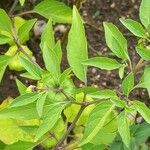
Physalis longifolia
Common ground-cherry · Longleaf ground-cherry · Longleaf groundcherry · Common Groundcherry · Long-Leaf Ground-Cherry
Description
Source: leafsnapPhysalis longifolia, commonly known as the longleaf groundcherry, is a herbaceous plant belonging to the nightshade family. Native to North America, it thrives in a variety of habitats including prairies, savannas, and woodlands. The plant can grow up to 1 meter (about 3 feet) tall and features branching stems with alternate leaves that are ovate or lanceolate in shape. The yellow, five-petaled flowers of Physalis longifolia bloom from June to September. These flowers are followed by green fruits that turn yellow when ripe, each encased in a distinctive papery husk resembling a lantern or Chinese lantern. For centuries, Native Americans have used the fruit of Physalis longifolia for medicinal purposes due to its high levels of antioxidants like carotenoids, which exhibit anti-inflammatory properties. In addition to its medicinal uses, the fruit can also be consumed raw or used in cooking for jams or pies. However, caution is advised: the fruit contains solanine, a compound that can cause gastrointestinal distress if consumed in large quantities. Overall, Physalis longifolia is a noteworthy plant with both medicinal and culinary applications, contributing to the biodiversity of North America's flora.
🌳 The characteristics of the longleaf groundcherry make it a surprising ally in environmental science, especially in biomonitoring. Its occurrence and condition can reflect the concentrations of certain metals in the nearby soil. This capability provides a noninvasive means to evaluate soil health and contamination, acting as a natural indicator for ecological assessments.
Care Guide
💧 Water Every 7 days
The Longleaf groundcherry thrives in moderate humidity and is drought-tolerant, needing a balance of consistent moisture without becoming waterlogged. Weekly watering is ideal. It grows best outdoors, where it can benefit from natural rainfall, as long as the soil is well-drained to prevent root rot.
How should I water my Longleaf groundcherry plant in the best way?
To best care for the Longleaf groundcherry, it is recommended to water it with filtered water at room temperature. Tap water may contain harmful particles that could negatively affect the plant's health. It is important to use water that is at room temperature or slightly warm because the Longleaf groundcherry is accustomed to a warm environment, and cold water can be a shock to its system. To avoid any complications with the foliage, it is advised to refrain from overhead watering and instead, thoroughly soak the soil with the filtered room temperature water. This practice will benefit the plant by moistening the roots and allowing them to continue spreading and collecting necessary nutrients.
What should I do if I give my Longleaf groundcherry too much water or too little water?
Overwatering is a more common issue than underwatering for the health of your Longleaf groundcherry plant. When overwatered, the stems and leaves can wilt and turn yellow, and prolonged overwatering can result in root rot, mold, and mildew, which can be lethal to your plant. Underwatering is less likely, as the plant is somewhat tolerant to drought. However, if underwatering does occur, the leaves may become brittle and brown. It is important to recognize the signs of overwatering early to prevent irreversible damage. If you notice these signs, reduce your watering immediately and consider the quality of the soil the plant is in. If the soil drains poorly, replace it with a loose and well-draining potting mix. If you suspect underwatering, simply water more regularly until the signs improve.
How often do I need to water my Longleaf groundcherry?
Determining when to water your Longleaf groundcherry is a precise process. If it is in a pot, simply put your finger in the soil to check for dryness. If the top two to three inches of soil are dry, then it's time to water. The same method applies if your plant is growing outdoors in the ground. In spring and early fall, watering once a week is usually sufficient. However, during extremely hot weather, you may need to increase watering to twice or more per week. It's important to note that mature, well-established Longleaf groundcherry plants can withstand drought well.
How much water does my Longleaf groundcherry plant need?
When watering your Longleaf groundcherry, don't hesitate to give it a generous amount of water. Make sure the top two to three inches of soil are dry before watering. It's important to thoroughly soak the soil, ensuring that water flows out of the drainage holes at the bottom of the pot. If you don't see excess water draining, you may have not given enough water. However, be careful not to let water accumulate in the soil, as this can harm the plant. If there's no water draining through the pot, it could indicate poorly draining soil, which is not good for the plant's health. If the plant is outside, it will only need about an inch of rain per week.
How do I water my Longleaf groundcherry as it grows?
The water needs of the Longleaf groundcherry vary depending on its growth stages. In the first few years of its life or when transplanted, it requires more water to support root development for future growth. As it matures, less water is needed. Additionally, during the bloom period, the plant may require more water due to the energy used for flower development.
☀️ Light Full sun
Longleaf groundcherry usually does best in places with sunlight all day, though it can tolerate locations with somewhat reduced light. Having evolved in sun-rich habitats allows it to photosynthesize efficiently, which is essential for healthy growth. However, excessive sun can cause leaf burn, while too little light can stunt growth.
What are the sunlight requirements for longleaf groundcherry?
Longleaf groundcherry needs abundant sunlight to thrive, ideally in locations that receive full sun exposure for more than 6 hours a day. However, it can also tolerate partial sun, with about 3-6 hours of sunlight. Observing how sunlight moves through your garden can help you choose spots with the perfect balance of light and shade, ensuring the plants' happiness. The plant has evolved in sunny environments, allowing effective photosynthesis, which is crucial for healthy growth. Nonetheless, excessive sun might cause leaf burn, whereas insufficient light could stunt its growth.
How can artificial lighting be used for longleaf groundcherry?
Indoor plants like the longleaf groundcherry require adequate lighting, especially when natural sunlight is lacking, such as in winter or less sunny spaces. Artificial lights, specifically LED lights that can be tailored to provide specific light wavelengths necessary for the plant, are an excellent solution. For plants requiring full sun, 30-50W/sq ft of artificial light is needed; for partial sun plants, 20-30W/sq ft; and for full shade plants, 10-20W/sq ft. The light source should be placed 12-36 inches above the plant to mimic natural sunlight, and most plants benefit from 8-12 hours of light per day.
What are signs of insufficient light in longleaf groundcherry?
Signs of insufficient light in longleaf groundcherry include the development of smaller new leaves, leggy or sparse growth with longer spaces between leaves or stems, faster leaf drop as the plant conserves resources, slower or halted growth as the plant enters survival mode, and lighter-colored new leaves indicating a lack of chlorophyll and essential nutrients. Providing ample sunlight or supplementing with artificial light can address these issues and promote healthy growth.
How does excessive sunlight affect longleaf groundcherry?
Excessive sunlight can lead to chlorosis, a condition where leaves lose their green color and turn yellow due to the breakdown of chlorophyll, which affects the plant's ability to photosynthesize. Sunscald, characterized by pale, bleached, or necrotic areas on the plant tissue, can also occur, reducing the plant's health. Other symptoms include leaf curling as a defense mechanism to minimize water loss, wilting from increased water loss and difficulty in maintaining hydration, and leaf scorching, observed as brown, dry, and crispy leaf edges, which diminishes the plant's photosynthetic capacity.
What solutions are there for longleaf groundcherry light issues?
To address light issues for longleaf groundcherry, gradually move plants to sunnier locations, ensuring at least 6 hours of direct sunlight daily. Use a south-facing window and keep curtains open during the day for maximum exposure. If moving the plant isn't feasible, consider using artificial light, with at least 8 hours of exposure daily or invest in grow lights for adequate light. Outdoor plants should also be gradually moved to better spots to prevent sunburn. Minimize obstructions by pruning trees or branches blocking sunlight and consider transplanting smaller plants to more sunlit areas with good drainage.
🌡️ Temperature 5–35°C
Longleaf groundcherry is a temperate woody plant native to habitats with temperatures between 41 and 95 ℉ (5 to 35 ℃). It favors temperatures in that 41 to 95 ℉ (5 to 35 ℃) range and requires moderate to high sunlight. In winter, maintaining a temperature of at least 41 ℉ (5 ℃) is recommended to encourage dormancy.
What is the ideal temperature range for Longleaf groundcherry?
The Longleaf groundcherry thrives in environments with temperatures ranging from 41 to 95 °F (5 to 35 °C). To ensure its health and growth, it's important to maintain this temperature range. During winter, temperatures should be kept at least at 41 °F (5 °C) to promote the plant's dormancy phase. This temperature management helps the plant withstand colder conditions and supports its overall lifecycle.
Does Longleaf groundcherry require special frost protection measures?
Longleaf groundcherry possesses strong cold resistance, which means it usually does not require special frost protection measures during winter. However, if temperatures are expected to drop below the plant's cold tolerance threshold, it's important to protect it from frost. This can be done by covering the plant with soil or straw to insulate it against extreme cold. Additionally, watering the plant abundantly before the first freeze of autumn ensures the soil stays moist and enters a frozen state slowly, helping prevent drought and water scarcity for the plant during the colder months.
What should I do if the Longleaf groundcherry experiences temperatures below its growth limit?
If the Longleaf groundcherry is exposed to temperatures below its growth limit, you might not observe any immediate changes during the winter. However, these conditions can lead to a decreased sprouting rate or even a complete lack of sprouting in spring. To address this, it is recommended to remove any parts of the plant that have failed to sprout once spring arrives. This helps in maintaining the health and aesthetic appeal of the Longleaf groundcherry.
How should I care for Longleaf groundcherry during high temperatures?
During the summer, it's crucial to keep the Longleaf groundcherry below its maximum temperature tolerance. Exceeding this limit can cause the leaves to lighten in color, curl, become susceptible to sunburn, and in severe cases, lead to wilting and drying of the entire plant. To mitigate these issues, trim away any sunburned or dried-up parts of the plant. Relocate the plant to a shaded area, away from direct midday and afternoon sun, or use a shade cloth. Additionally, water the plant in the morning and evening to maintain soil moisture and prevent overheating.
💨 Humidity
🪴 Soil 5-6
🌱 Fertilizer
Generally, a single spring application of fertilizer is enough for Longleaf groundcherry, though multiple feedings can maximize growth. Apply fertilizer every month to six weeks. Fertilizing improves the leaves’ appearance and function, helping maintain even color and a healthy texture. It also encourages root growth and nutrient uptake, supporting the plant’s long-term health.
🪴 Pot & Repot 2-3 years
When repotting Longleaf groundcherry, choose a pot 1–2 inches (2.5–5.1 cm) larger with ample drainage. Use a well-draining potting mix. Repot in spring or fall, ensuring that the root ball is slightly lower than the rim of the flower pot. Water thoroughly after repotting and place it in a warm spot with indirect sunlight.
✂️ Pruning
🌿 Propagating
🐛 Diseases & pets
☠️ Toxicity
Characteristics
- Plant Type
- Herb
- Life Cycle
- Perennial
- Genus
- Physalis
- Family
- Solanaceae
- Hardiness Zone
- 4-9
- Mature Height
- 0.3 m to 1.07 m
- Mature Spread
- 30 cm
- Leaf Color
- Green
- Leaf Type
- Deciduous
- Flower Color
- Yellow
- Flower Size
- 1.27 cm to 2.03 cm
- Bloom Time
- Late spring, Early summer, Mid summer
- Planting Time
- Spring, Summer
- Harvest Time
- Mid summer
- Native Area
- Mexico