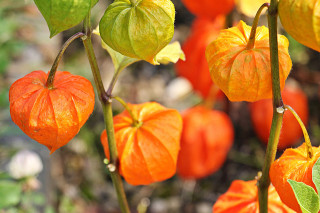
Physalis pruinosa
Strawberry Tomato · Dwarf cape gooseberry · Husk tomato · Strawberry groundcherry
Description
Source: leafsnapPhysalis pruinosa is an annual fruiting shrub native to Central America. It is also known as Ground Cherry, Husk Tomato, or Strawberry Tomato. These plants have a small, sprawling habit, sprouting bright green leaves with toothed margins. In the summer, it blooms with yellow flowers before giving way to small, yellow-orange fruits. Ground Cherry fruits are prized for their sweet, tart flavor similar to that of pineapples with a hint of tomato.
🌳 One lesser-known aspect of cutleaf groundcherry is its potential role as a bioindicator of soil health and heavy metal contamination. The plant has been observed to preferentially absorb certain metals, such as nickel and copper, making it useful for monitoring soil pollution levels and for bioremediation.
🎭 Security, ease and safeguarding
Care Guide
💧 Water
Husk tomatoes, native to temperate regions, thrive with moderate moisture. To support fruit development, they need weekly watering, especially during their active growing season. As an annual herbaceous plant, husk tomatoes are usually grown outdoors and do best in environments that resemble their natural habitat.
How should I water my Husk tomato plant?
To water Husk tomato, you have several options, such as using a garden hose with a spray nozzle or a watering can. Husk tomatoes are not too particular about how they are watered and can survive with rainwater, tap water, or filtered water. It is advisable to avoid watering this plant from above, as it can harm the leaves, flowers, and potentially lead to disease. Instead, setting up a drip irrigation system is often the best method for watering. This system ensures even and direct watering of the soil. When it comes to container-grown Husk tomatoes, you can follow a similar watering approach but using a cup, watering can, or tap to apply water directly to the soil.
What should I do if I give my Husk tomato too much or too little water?
The solution for underwatering Husk tomato is simple: water it more regularly when you notice it lacks moisture. Overwatering, on the other hand, can be more problematic. If you don't catch it early, it can lead to diseases and the plant's decline. To prevent this, choose a sunny location with good soil drainage. If your Husk tomato is in a pot and you've overwatered it, you may need to transfer it to a new pot with better drainage. Make sure to use loose soil and a pot that drains well when repotting.
How much water does my Husk tomato need?
To ensure healthy growth, the Husk tomato plant requires regular watering throughout the growing season. In the spring, watering once a week should suffice. However, as the season progresses and temperatures rise, watering two to three times a week may be necessary. It's important not to exceed this frequency as it can harm the plant. Regardless of how often you water, make sure the soil remains moist but not overly wet. If you're growing Husk tomato in a pot, you'll need to water more frequently. Potted soil tends to dry out faster, so watering a few times per week is usually required compared to just once per week for in-ground plants.
How much water should I give to my Husk tomato plant?
Determining the right amount of water for your Husk tomato can be done in a few ways. Some gardeners prefer to assess soil moisture by feeling the soil, aiming to moisten the first six inches. Another approach is to use a specific measurement as a guideline, such as providing about two gallons per week, adjusting for factors like temperature and soil dryness. However, it is important to avoid overwatering if your plant requires less. When growing Husk tomato in a container, a different method is needed. It is recommended to ensure all layers of soil are moist by checking with your finger or allowing a slight trickle of excess water to drain from the pot's holes.
How can I know if I'm giving enough water to my Husk tomato plant?
Avoiding overwatering your Husk tomato can be a bit challenging. These plants have deep roots and need soil moistening on a weekly basis. However, they are highly susceptible to root rot, which can cause browning. Underwatering is less of a concern as Husk tomatoes can survive for some time without additional watering. But if you go too long without watering, the plant may start to wilt and you may observe dry leaves.
☀️ Light Full sun
Cutleaf groundcherry does best when it gets plenty of sunlight throughout the day, reflecting the brightness of its original habitats—open fields and forests. Excessive sun won’t harm it, but insufficient light can impede its growth.
How many hours of sunlight should Husk tomato get every day to grow well?
To ensure the well-being of the plants, it is necessary to provide them with a minimum of 6 to 8 hours of sunlight each day. In particular, they thrive when exposed to morning light, especially during the summer. The Husk tomato thrives in full sun and benefits greatly from increased sunlight. The more light these plants receive, the better they can produce food, display stunning blooms, and ultimately, survive.
What kind of sunlight does Husk tomato require?
The Husk tomato fares well under full sunlight. When planting, make sure to give them enough space so they can all receive even sun exposure. It's important to not deprive the leaves of sunlight. If you choose to plant them in pots, place them in windows that face direct sun and make sure they always receive full sunlight, even during different months. They won't thrive in partial or filtered light, as this won't result in strong stems and healthy flowers. It's ideal for the Husk tomato to be constantly exposed to sunlight.
Does sunlight harm plants? What can I do to prevent sun and heat damage to husk tomatoes?
When the temperature goes above 90℉ (32℃), the Husk tomato can be damaged by extreme heat, especially if exposed to long hours of sun. It's best to provide some shade in the afternoon during summer, as the sunlight is stronger and lasts 50% longer than in winter. If the Husk tomato is stressed from sunlight, ensure they are well hydrated by watering them when the top 2 inches of soil are dry. If it's too hot outside, consider moving container-planted Husk tomatoes indoors. During the day, it's normal for the plant leaves to wilt, but they usually recover at night. If the Husk tomato continues to droop, it means it's losing water rapidly and needs watering.
Is it necessary to keep Husk tomato away from the sun?
The Husk tomato thrives in the sun and does not need any protection from it. Some species of Husk tomato are even heliotropic, meaning they actively seek out sunlight. For optimal growth, it is recommended to plant them in a south-facing garden where they can be exposed to the sun from morning to afternoon. However, it is important to note that while sunlight is generally beneficial for Husk tomatoes, some may be susceptible to sunburn. To prevent this, you can provide them with protection from the intense afternoon and midday sun by placing them under the shade of a tree or against a wall. It is not recommended to grow Husk tomatoes in shady areas as the larger flowers they produce require a significant amount of energy, which is best obtained under full sun. Therefore, it is important to always provide ample lighting conditions and ensure they are placed in an area with full sun for the best results.
What will happen if Husk tomato doesn't get enough sunlight?
If the Husk tomato doesn't receive enough sunlight or is not placed in a sunny spot, the photosynthetic process will slow down. This lack of sunlight will cause the stems to become long and thin, as they try to reach for more light. Without enough sunlight, they won't bloom or produce seeds. In addition, inadequate sunlight can lead to the older leaves dying, new leaves being lighter in color than the older ones, and new growth being smaller. While the Husk tomato loves the sun, it can wilt in extreme heat and ultraviolet light during the summer months. To prevent the leaves and flowers from scorching, you may want to cover them with a green-shaded net, especially in the summer. If they are indoors, use a fan to help reduce the heat.
🌡️ Temperature 15–37.8°C
Cutleaf groundcherry is native to habitats with temperatures between 68 and 100 °F (20 to 38 ℃). This species prefers warm conditions and will need additional warmth during cooler seasons.
What is the best temperature for Husk tomato?
To help your tropical plants thrive, it's best to maintain a temperature range of 75℉ to 90℉ (25-32℃). While different species can tolerate temperatures outside this range, sticking within a few degrees of these limits will ensure optimal growth. However, there are extreme temperature limits to be aware of. Anything below 50℉ (10℃) or above 95℉ (35℃) can hinder growth and cause issues with the leaves and stems. Low temperatures are particularly damaging, as even a light frost can lead to the death of your tropical plants. In fact, cellular death can occur rapidly, with some species dying within 12 to 24 hours.
Do husk tomatoes need different temperatures at different times while they are growing?
Husk tomatoes do not need temperature changes to progress through different growth phases, but it is important to maintain consistent temperatures. Fluctuations in temperature can slow down growth, regardless of the plant's current phase, so it is best to keep them in a controlled environment. The optimal temperature range for husk tomatoes is between 75℉ and 90℉ (25-32℃), with it being especially important to stay above the lower limit. While temperatures above 90℉ (32℃) are not ideal, as a tropical plant, it can tolerate it relatively well. However, temperatures below 50℉ (10℃), and particularly 40℉ (5℃), will directly harm this plant species that prefers warmth.
Does Husk tomato require different temperatures in different seasons?
The husk tomato doesn't require different temperatures for different growing seasons. The key to taking care of it is to maintain an optimal temperature range. This is why it's advisable to grow this plant indoors. By doing so, you can control the temperature regardless of the climate outside. Light is also crucial for tropical species, including husk tomatoes. These plants prefer partial side-level sun exposure. In other words, they need dappled or filtered light, with bright but indirect light being the best option when growing them indoors. Excessive direct sunlight can harm the plant's leaves and hinder its growth potential.
What temperatures should you keep your Husk tomato at to keep it healthy?
Here are three tips to help you take care of your plants: 1. Keep your plants away from windows during colder months: Cold air can leak into your home through cracks in the windows, and any plants placed near them will be affected. Move tropical plants to an area with bright but indirect light, while avoiding potential drafts. 2. Watch out for dry patches, which may indicate too much sunlight or heat: If you notice white or scorched leaves, your plant may be getting too much heat or sunlight. This can lead to dehydration and hinder growth. Dry spots can spread and eventually cause your plants to die if left unaddressed. 3. Be cautious of frost: Colder temperatures and frost can damage plants by disrupting their water circulation. This can lead to a lack of moisture in the stems and leaves. Look out for signs of hydrosis (a water-soaked appearance) and if the issue persists, the plant may shrivel and turn dark brown or black, eventually leading to death.
How can I keep my Husk tomato at the right temperature?
To maintain the right temperature range for Husk tomato, it is important to keep an eye on both the climate and humidity. Ideally, you should have access to climate control in the room where you keep the plant, as this will help mimic its natural habitat. In addition, monitoring humidity levels is crucial because it directly affects temperature. If you need to increase humidity, you can use a humidifier or lightly mist the leaves with water. However, if you plan to grow Husk tomato outside, it may be challenging to maintain the ideal temperature and humidity. In such cases, if temperatures drop or the air becomes too dry, it is recommended to find a suitable indoor space for the plant. Indoor growing spaces allow for better control of the climate, enabling the plant to thrive.
💨 Humidity
🪴 Soil 5-7
🌱 Fertilizer
Cutleaf groundcherry responds well to regular, light applications of fertilizer to encourage healthy leaf development. You should apply fertilizer to Cutleaf groundcherry roughly once a month during the summer. Nitrogen is essential for foliage, and providing nitrogen-rich sources helps Cutleaf groundcherry thrive.
Why do I have to put fertilizer on my Husk tomato?
Plants require nutrients to grow, and while some can source these nutrients naturally without additional fertilizers, husk tomato plants, like others, rely on nutrients for growth and internal processes. The main nutrients that plants need (nitrogen, phosphorus, and potassium) serve different essential functions, with nitrogen being particularly crucial for foliage growth. However, obtaining sufficient nitrogen from the soil can be challenging for husk tomatoes, prompting many gardeners to provide supplemental nitrogen through feeding.
When should I fertilize my Husk tomato for the best results?
Husk tomato generally grows well and can benefit from monthly fertilization during the spring and summer months. However, it does not require fertilization during the fall and winter when it is less active. If you notice new growth, that is a sign to start fertilizing. Whether the Husk tomato is grown outside or in a container indoors, the fertilization schedule remains the same. However, if it is in a container, you may not need to fertilize for the first one to two months. Container plants typically have enough nutrients in the potting soil, so fertilization can be delayed until the plant has been in the same soil for some time.
When is the best time to not fertilize my Husk tomato plant?
To ensure successful fertilization of your Husk tomato, it is important to consider the plant's health. Avoid fertilizing if the plant has developed a disease or has insect pests. Similarly, refrain from fertilizing dehydrated plants as this can worsen the problem. Only healthy plants should be fertilized. When applying fertilizer, be cautious not to splash it onto the leaves or stem while watering, as this can cause burnt spots. It is advised to prevent direct contact between the fertilizer and the plant, unless you are using a special foliage fertilizer specifically designed for this purpose.
Which fertilizer is best for my Husk tomato?
Fertilizers are important for promoting growth in Husk tomatoes, as they contain high levels of nitrogen, potassium, and phosphorus, along with other essential nutrients like iron, manganese, and zinc. A balanced fertilizer, such as a 10-10-10 NPK all-purpose fertilizer, is recommended for Husk tomatoes. Natural fertilizers like blood meal or worm castings are also effective. If you prioritize leaf growth, a fertilizer higher in nitrogen, like fish fertilizer, may be preferable. However, if your goal is not to produce many flowers or seeds, there's no need to provide excessive supplements for those aspects of the plant.
How can I apply fertilizer to my Husk tomato plant?
To ensure successful fertilization of your Husk tomato plant, follow these steps. First, carefully read and adhere to the instructions provided on the fertilizer packaging. It is advisable to begin with half-strength fertilizer to prevent accidental over-fertilization, as this plant often falls victim to excessive fertilization. Remember that it is easier to add more fertilizer later if needed rather than trying to save an over-fertilized plant. Avoid applying fertilizer to dry soil; instead, ensure that the soil is at least somewhat moist before fertilizing. This will aid in the absorption of the fertilizer and prevent any potential fertilizer burn. After applying dry fertilizers, be sure to water the soil to further aid in absorption. Different types of fertilizers have varying application methods. Some need to be mixed into the soil during planting, while others are applied on top of the soil and then watered in. For Husk tomatoes, a water soluble fertilizer is recommended for its ease of use. Simply mix the fertilizer solution with water in a watering can, following the recommended dosage for Husk tomatoes, and then water the plant as usual. Alternatively, slow-release granules or fertilizer spikes can be utilized if you prefer not to fertilize monthly and instead want a more long-lasting solution.
🪴 Pot & Repot Every 12 months
✂️ Pruning
Pruning husk tomatoes at the right time is beneficial for their growth and fruit production. In early spring, remove any dead or damaged stems to promote healthy growth. Then, in late spring, perform a light pruning to shape the plant and improve fruit yield. Make sure to cut just above the leaf nodes, as this encourages healing, improves air circulation, and helps prevent disease. Precision is key for the best results.
🌿 Propagating
🐛 Diseases & pets
☠️ Toxicity
While the ripe ground cherry fruits are edible, the rest of the plant — the leaves, stems, roots, flowers, and even fruit husks—are toxic to people and animals when ingested.
Characteristics
- Plant Type
- Herb
- Life Cycle
- Annual, Perennial
- Genus
- Physalis
- Family
- Solanaceae
- Hardiness Zone
- 8-11
- Mature Height
- 30 cm to 49 cm
- Mature Spread
- 30 cm
- Leaf Color
- Green
- Leaf Type
- Deciduous
- Flower Color
- Yellow
- Flower Size
- 0.76 cm to 1.02 cm
- Bloom Time
- Early summer, Mid summer
- Planting Time
- Spring
- Harvest Time
- Mid summer, Late summer
- Native Area
- Egypt, Belize, Honduras, Mexico, Guatemala, Peru, Dominican Republic, Panama, Jamaica, Colombia, Bahamas, Cuba, Haiti, Bolivia, Venezuela, Brazil, Guyana, Oman, El Salvador, Nicaragua, Ecuador, Costa Rica