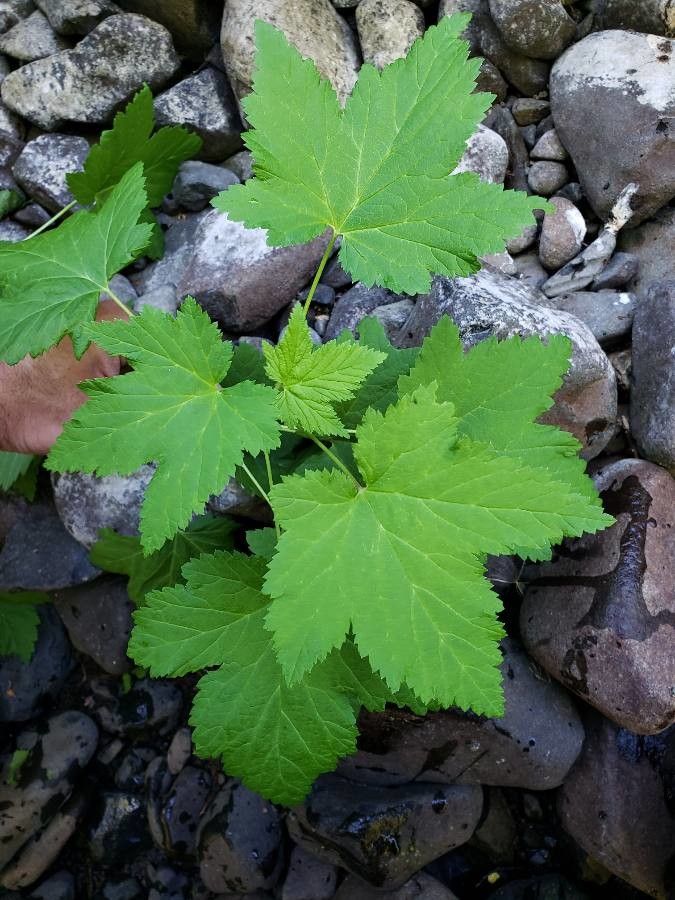
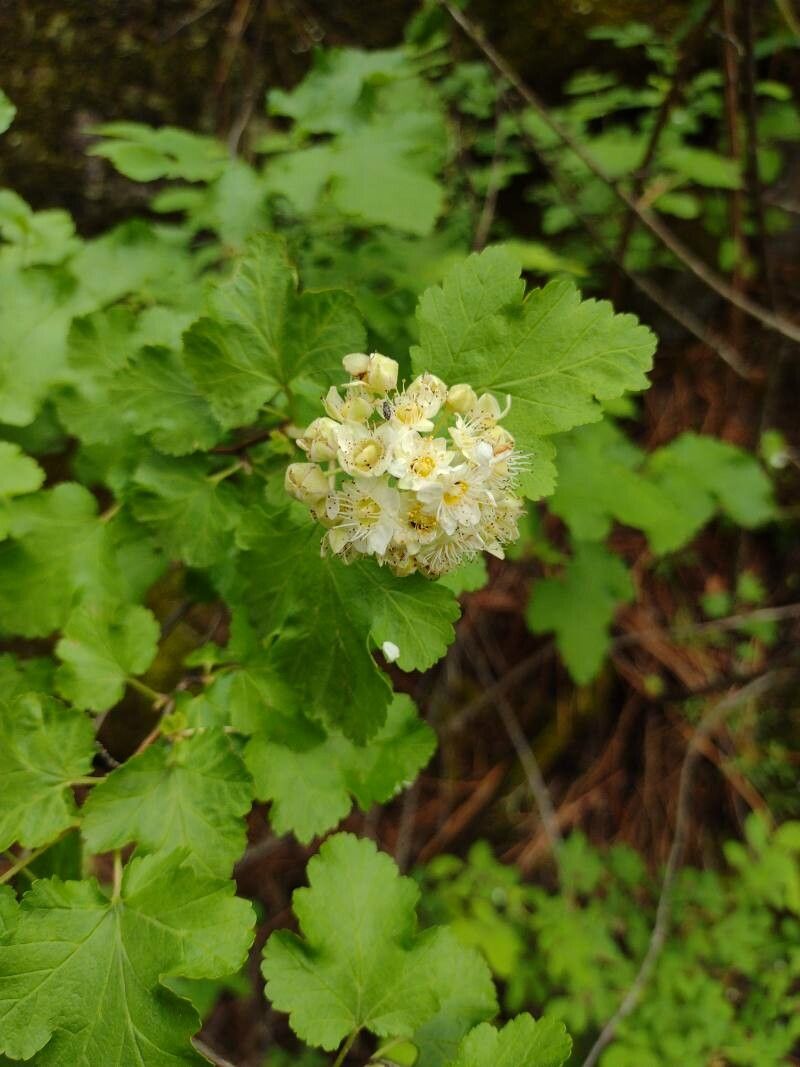
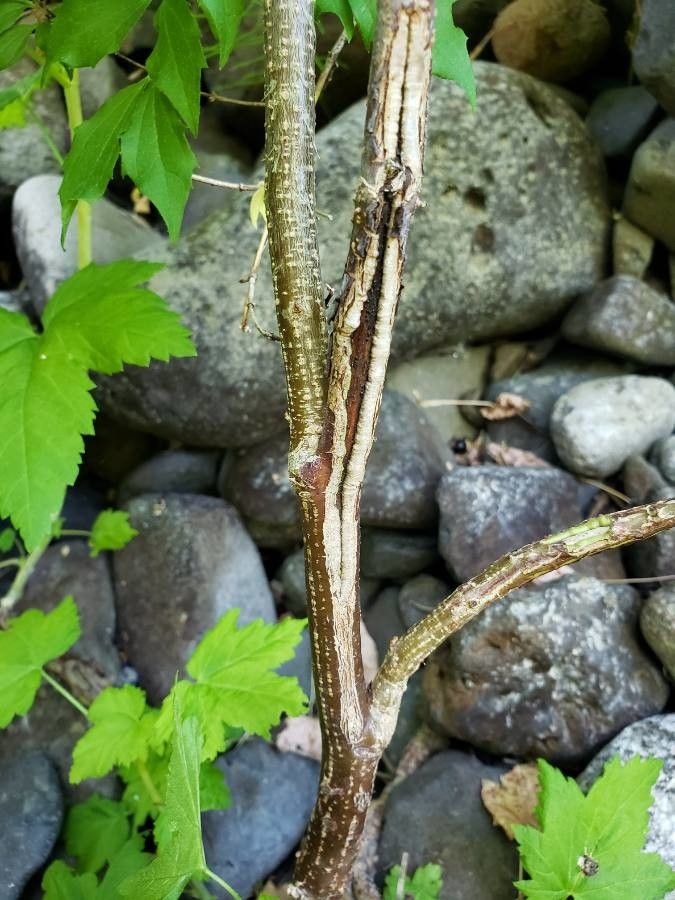
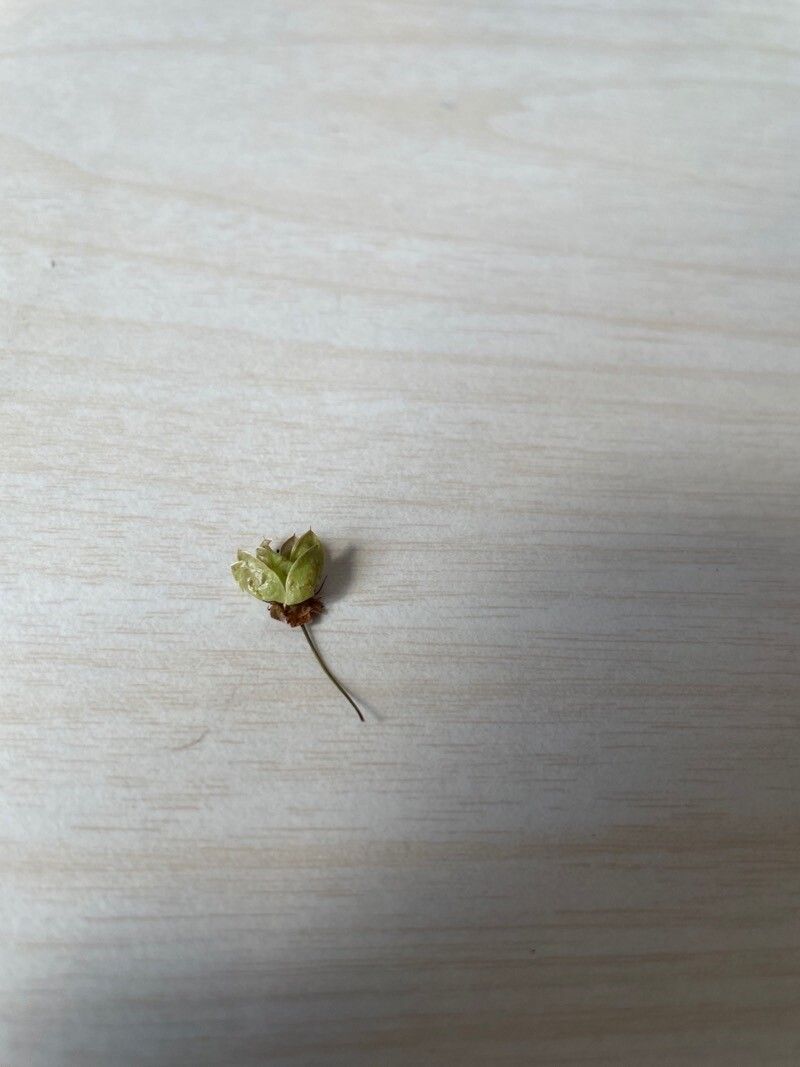
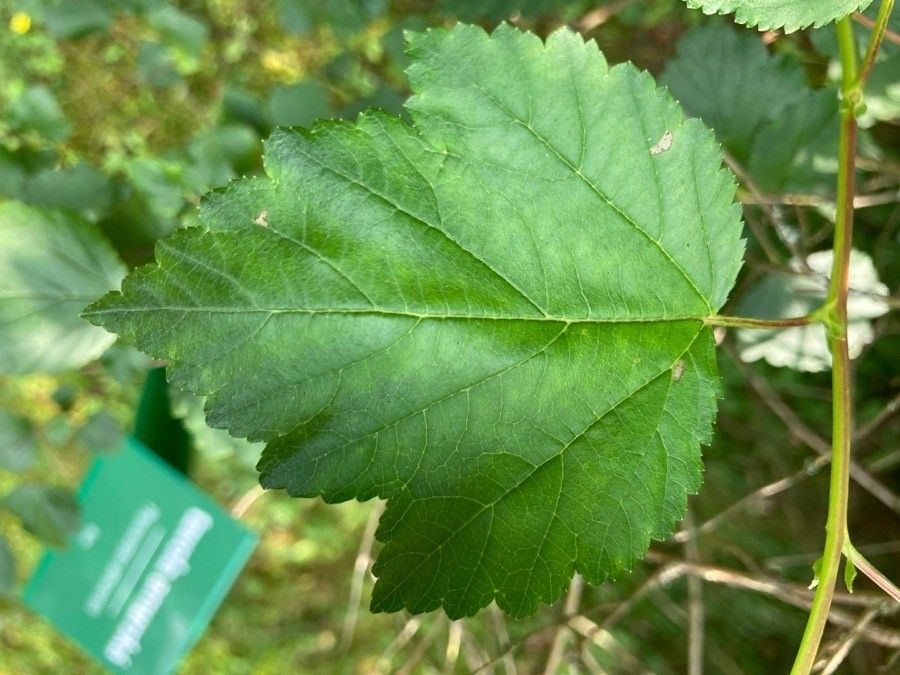
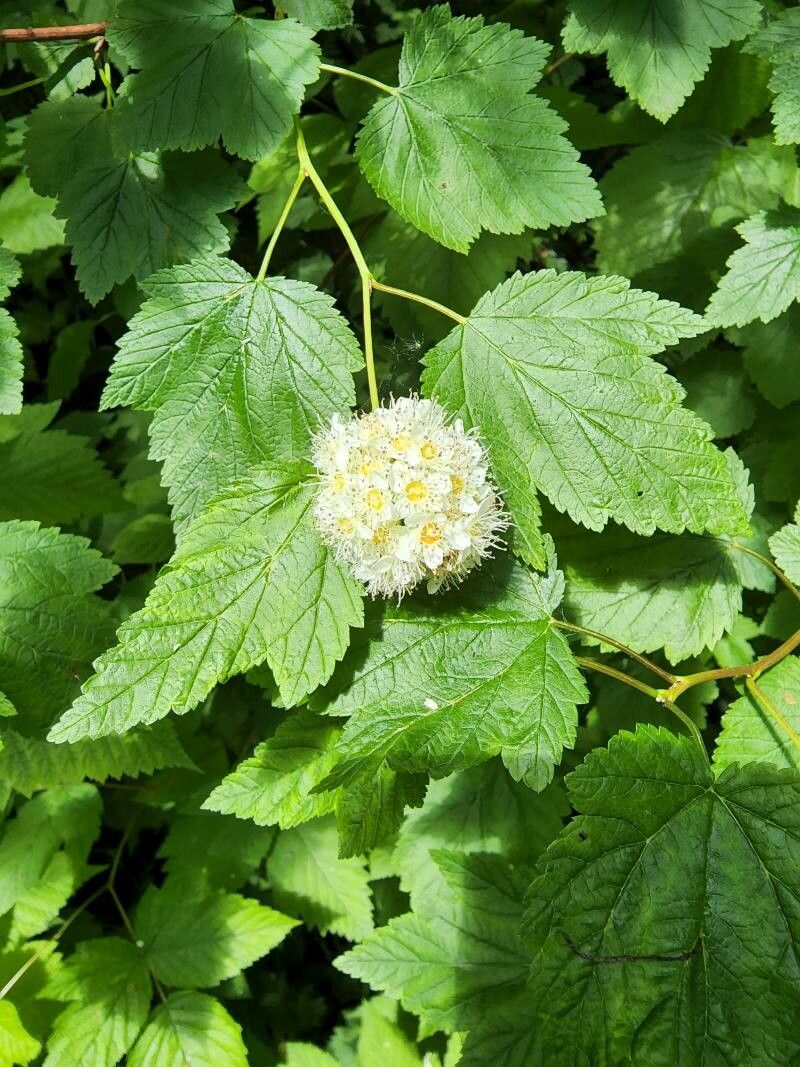
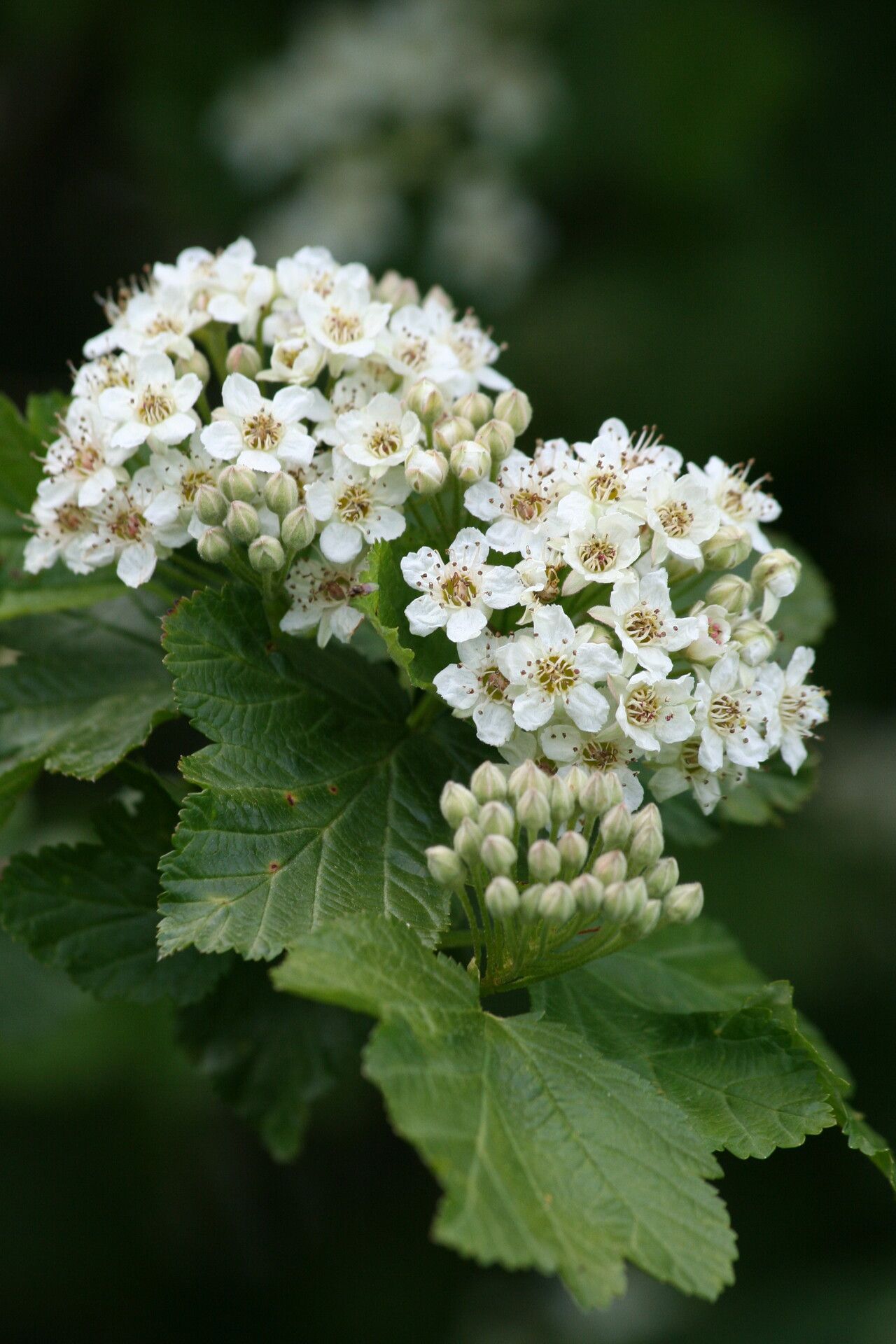
Physocarpus malvaceus is a species of flowering plant in the rose family known by the common name mallow ninebark. It is native to western North America, where its distribution extends from British Columbia to Nevada to Wyoming.This plant is a deciduous shrub usually growing up to 2.1 meters tall, sometimes reaching 3 meters. It can form dense thickets. The branches are hairless, and older ones have shreddy bark. The leaves have three to five lobes and serrated edges. Dark green when mature, they turn brownish red by early fall. The inflorescence is a corymb of flowers that have white petals measuring about 4 millimeters in length. The fruit is a follicle roughly one centimeter long.This shrub grows in forests, woodlands, and oak scrub. The forests are dominated by subalpine fir (Abies lasiocarpa), grand fir (A. grandis), Engelmann spruce (Picea engelmannii), Douglas-fir (Pseudotsuga menziesii) and ponderosa pine (Pinus ponderosa). It is associated with plant species such as oceanspray (Holodiscus discolor), common snowberry (Symphoricarpos albus), mountain snowberry (S. oreophilus), white spirea (Spiraea betulifolia), serviceberry (Amelanchier alnifolia), Oregon-grape (Mahonia repens), and pinegrass (Calamagrostis rubescens). This shrub is codominant with Douglas-fir in a common plant community.This shrub is a pioneer species that increases after disturbance and decreases as the overstory grows back and shades it out. It grows rapidly after events such as wildfire, sprouting up from its rhizomes. It is considered a "fire-resistant" plant. It survives fire and resprouts, becoming more common on burned sites than unburned.This is not a favored food plant among wild and domesticated herbivores. It does provide good cover for small animals. The Dusky Flycatcher (Empidonax oberholseri) nests in it.This plant is known to hamper regeneration of forest habitat after disturbance such as fire or logging. It outcompetes new conifer seedlings. It is controlled with herbicide spray in some regions.
Mallow ninebark displays strong resistance to disease and is typically not susceptible to illnesses. Regarding care, the plant is fairly low-maintenance. When grown outdoors it needs only minimal watering, and larger specimens usually do not require pruning. Smaller plants, however, should be pruned after they have bloomed. Mallow ninebark is suitable for anyone with an outdoor space, such as a garden or deck, and does not demand extensive gardening experience.
How to keep Physocarpus Malvaceus.
Light
Mallow ninebark naturally occurs in habitats such as forest understories or rocky sites, where it grows in natural shade. It prefers partial sun but can adapt to full sun or full shade, demonstrating its versatile and hardy nature.
Water
Native to humid regions, mallow ninebark thrives in consistently moist soil and benefits from stable humidity levels. For optimal growth, water the plant twice a week. It adapts well to outdoor climates where it can rely on natural rainfall. Known for its deciduous nature, mallow ninebark sheds its leaves according to water availability and seasonal changes.
Temperature
Mallow ninebark is very adaptable to a wide range of climate conditions, from blazing summers to freezing winters. Still, it has a preferred temperature range for healthy growth. If temperatures climb too high, the plant can experience heat and humidity stress that may kill it. In locations where temperatures near its lower cold-tolerance limit, providing insulation to protect the plant is necessary.
Fertilizer
Timing is important when fertilizing Mallow ninebark. Apply fertilizer in early spring and continue once a month until early summer. The fertilizer encourages attractive blooms and supplies energy during both dormant and active growth periods.
Pruning
Mallow ninebark is a robust shrub with multiple stems, featuring appealing bark and foliage. To maintain its shape and remove any dead wood, prune it in early spring. Be careful to avoid heavy pruning, as this can affect its blooming. Always use clean, sharp tools to prevent disease, enhance air circulation, and promote growth.
Botanical profile.
- Plant Type
- Shrub
- Life Cycle
- Perennial
- Genus
- Physocarpus
- Family
- Rosaceae
- Hardiness Zone
- 3-8
- Mature Height
- 0.91 m to 1.83 m
- Mature Spread
- 0.91 m to 1.52 m
- Leaf Color
- Green, Dark Green
- Leaf Type
- Deciduous
- Flower Color
- White, Cream
- Flower Size
- 0.51 cm to 1.02 cm
- Bloom Time
- Mid spring, Late spring
- Planting Time
- Spring, Summer, Autumn
- Harvest Time
- Mid summer, Late summer, Early fall
Other names.
Reader questions.
What are the sunlight requirements for Mallow ninebark (Physocarpus malvaceus)?
Mallow ninebark (Physocarpus malvaceus) thrives in varying sunlight conditions, requiring 'full sun' for above 6 hours of sunlight daily, or 'partial sun' for about 3-6 hours of sunlight. It's important to observe the sunlight movement in your garden, selecting spots that offer a harmonious balance of light and shade to ensure the optimal growth and happiness of your plants.
What is Mallow ninebark?
Mallow ninebark, known scientifically as Physocarpus malvaceus, is a plant species without further details provided regarding its essentials or symptoms.