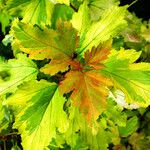
Physocarpus opulifolius
Nine Bark · Common ninebark · Atlantic ninebark · Eastern Ninebark · Viburnum-leaved Ninebark
Description
Source: leafsnapPhysocarpus opulifolius, commonly known as ninebark, is a deciduous shrub native to North America and a member of the rose family. It can grow up to 10 feet tall and wide, boasting distinctive peeling bark that reveals layers of reddish-brown, tan, and white. The shrub features dark green leaves with serrated edges that transform into vibrant yellow or red hues in the fall. Its small, white or pinkish-white flowers, each with five petals, bloom from May to June. Ninebark thrives in full sun but can tolerate partial shade. It prefers moist soil, yet can withstand drought conditions once established. The plant is low-maintenance and requires minimal pruning. Ninebark serves well as an ornamental shrub for landscaping or as a natural hedge due to its dense growth habit. Historically, its bark has been used by Native Americans for its anti-inflammatory properties. In summary, Physocarpus opulifolius is an attractive, low-care shrub with year-round appeal, making it an excellent choice for any garden or landscape design project.
🌳 Common ninebark is widely valued in landscaping for its ornamental qualities, including attractive foliage, exfoliating bark, and clusters of white to pink flowers. Besides its decorative appeal, it plays important ecological roles by providing food and habitat for wildlife. Its potential use in bioengineering, particularly for erosion control, points to a practical application relevant to today's environmentally conscious practices.
🎭 Optimism and affection
Care Guide
💧 Water Every 7 days
The common ninebark thrives in temperate climates with moderate moisture levels. It prefers to be watered consistently every 1-2 weeks to keep the soil moist yet well-drained. Using mulch can help retain moisture and protect against temperature fluctuations, enhancing the plant's resilience in different environments.
When Should I Water My Common Ninebark?
Watering your common ninebark is essential for its health and vitality. The prime time to water is when the top inch of the soil feels dry to the touch. Press your finger about an inch deep into the soil; if it feels dry, it indicates the plant needs water. Observing the plant's leaves for signs of wilting or a dull color can also indicate a need for watering, as these are signs of dehydration. However, wilting may also point to overwatering, so it's vital to assess the soil's moisture before watering. If the leaves and stems begin to look shriveled, this is an urgent sign of dehydration. Overwatering can cause as much harm as underwatering, leading to issues such as root rot and nutrient leaching.
How Should I Water My Common Ninebark?
Water your common ninebark using bottom-watering techniques to ensure that the roots receive adequate moisture without over-saturating the surface, which can prevent fungal diseases. To bottom-water, place the plant pot in a tray of water, allowing the soil to absorb moisture from the bottom up. If using a watering can, opt for one with a narrow spout to direct water to the base of the plant, minimizing moisture on the foliage and ensuring the roots receive targeted hydration.
How Much Water Does Common Ninebark Really Need?
The common ninebark thrives in both moist and dry conditions due to its adaptable nature. When watering, saturate the soil fully until water exits the bottom of the pot, ensuring deep hydration especially as the plant has deep roots. The frequency of watering should be adjusted based on the soil's condition, with over-watering and under-watering presenting clear risks. Over-watering symptoms include yellowing leaves and leaf drop, while under-watered plants may show signs of curled, drying leaves.
What Kind of Water is Best for Common Ninebark?
Common ninebark is not particularly fussy about its water source and can thrive with rainwater, tap water, or filtered water. Distilled water, lacking essential minerals, is still acceptable but not preferred. Though not highly sensitive, common ninebark can be affected by excessive chlorine or fluoride over time. Letting tap water stand to evaporate chlorine can be beneficial, and using water of moderate temperatures is advised to avoid shock.
How Do Common Ninebark's Watering Needs Change with the Seasons?
Seasonal changes affect common ninebark's watering needs. In spring, maintain consistent soil moisture to support growth. Summer might require more frequent watering due to increased evaporation. As autumn approaches, reduce watering frequency in preparation for winter dormancy. During winter, water the plant sparingly, allowing the soil to dry out between watering sessions, to prevent root rot.
☀️ Light Full sun
Common ninebark favors plentiful light for healthy growth, though it can tolerate some shade. During all stages of development it requires a substantial amount of light. Its native habitats reflect this need, often being open areas with plenty of sun. Extreme or inadequate light affects common ninebark, but it is adaptable enough to cope with less-than-ideal lighting.
What are the sunlight requirements for common ninebark?
Common ninebark requires abundant sunlight to sustain robust growth and tolerates some shade. It thrives in full sun conditions, which means it needs above 6 hours of sunlight daily, but it can also grow in partial sun, receiving about 3-6 hours of sunlight. The plant demonstrates flexibility and can handle less-than-ideal light conditions due to its native habitat in commonly open sites with ample solar exposure. However, both extreme or deficient light can influence the common ninebark's health. It’s beneficial to watch how sunlight moves through your garden to choose spots that ensure a balance of light and shade for the plants.
How can artificial lighting be used for indoor common ninebark plants?
Indoor common ninebark plants require adequate lighting for optimal growth, especially when natural sunlight is insufficient. Artificial lights, such as LED, offer a vital solution by promoting faster, healthier growth. For indoor plants, the type of artificial light, its distance from the plant, and the duration of exposure are important factors to consider. Full sun plants need 30-50W/sq ft of artificial light, partial sun plants require 20-30W/sq ft, and full shade plants need 10-20W/sq ft. The light source should be placed 12-36 inches above the plant to mimic natural sunlight, with most plants needing 8-12 hours of light per day.
What are the symptoms of insufficient or excessive sunlight exposure in common ninebark?
Common ninebark may exhibit various symptoms due to insufficient or excessive sunlight exposure. Symptoms of insufficient sunlight include smaller leaves, leggy or sparse growth, faster leaf drop, slower or no new growth, and lighter-colored or yellowing leaves due to chlorosis. Excessive sunlight can lead to symptoms such as sunscald, leaf curling, wilting, leaf scorching, and chlorosis. These symptoms signify that the plant's exposure to light needs to be adjusted to ensure better health and growth.
What solutions can help common ninebark plants receive optimal sunlight?
To ensure common ninebark plants receive optimal sunlight, gradually move outdoor plants to sunnier locations each week to adapt to increased light without getting sunburn. For indoor plants, consider moving them to a south-facing window or using artificial lights such as desk lamps or professional grow lights for at least 8 hours daily. Additionally, minimizing obstructions like pruning trees can help outdoor plants receive more sunlight. Transplanting smaller plants during their dormant period to a location with sufficient sunlight and good drainage is also a viable solution. It's important to note that parts of the plant affected by insufficient sunlight may not recover, but new growth should be healthy with improved light exposure.
🌡️ Temperature 0–32.2°C
In its natural habitat, common ninebark does best with temperatures between 32 and 68 ℉ (0 to 20 ℃) during the growing season. It can tolerate somewhat warmer summer conditions, up to 86 ℉ (30 ℃), though it may need extra watering. While dormant, this plant can endure temperatures as low as -22 ℉ (-30 ℃).
What temperatures are preferred by common ninebark during its growing season?
Common ninebark thrives best in its native climate with a temperature range of 32 to 68°F (0 to 20°C) during the growing season. Although it can adjust to slightly warmer temperatures up to 86°F (30°C) in the summer months, it might need extra watering to remain healthy. During winter, or the dormant season, the plant can withstand temperatures as low as -22°F (-30°C). Common ninebark has strong cold resistance, meaning special frost protection measures are not usually necessary. However, when winter temperatures are anticipated to drop extremely low, protection such as wrapping the trunk and branches with non-woven fabric or cloth can be helpful. Additionally, watering the plant abundantly before the first freeze in autumn to maintain moist soil can help prevent drought and water scarcity during winter and early spring.
How does common ninebark respond to low temperatures, and what are the recommended solutions?
Common ninebark is known for its cold tolerance, ideally thriving when temperatures remain above the minimum suitable growth temperature. During winter, it's crucial to keep it above the tolerable growing temperature minimum. If temperatures fall below the critical growth limit, the branches may not show immediate damage in winter, but they can become brittle, dry by spring, and fail to produce new shoots. To address this, the recommended solution is to prune away any dead branches that have failed to produce new leaves in spring.
How does common ninebark respond to high temperatures, and what actions can mitigate these effects?
During the summer, it's important to keep Common ninebark below the maximum suitable growth temperature. Exceeding the maximum tolerable growing temperature can cause the leaves to lighten in color, tips to dry and wither, and increase the susceptibility to sunburn. To mitigate these effects, trim away the sunburned and dried-up parts. It's also beneficial to move the plant to a location that provides shade during the midday and afternoon sun, or use a shade cloth. Ensuring the plant is watered in the morning and evening will help keep the soil moist and further protect the plant from high temperature stress.
💨 Humidity
🪴 Soil 5-7
🌱 Fertilizer
Timing is crucial for fertilizing Common ninebark. Apply fertilizer in early spring and then monthly up to early summer. Fertilizer encourages attractive blooms and supplies energy during both dormant and active growth phases.
Why should I put plant food on my Common ninebark?
Fertilizing a Common ninebark is important for several reasons. One obvious benefit is that it helps the plant produce beautiful blooms. Another advantage of fertilizing in early spring is that it ensures excellent flower growth during that season. Additionally, fertilizer provides the plant with ample energy that can be stored in the ground during its dormant phases. By giving the Common ninebark extra nutrients in the fall or late spring, it will have more energy to use once active growth resumes.
When should I fertilize my Common ninebark plant?
To ensure effective fertilization of Common ninebark, timing is crucial. It is important not to apply fertilizer too early while the plant is still dormant, as it will not be effectively used and will be washed away by rainwater, leading to unnecessary waste and pollution. The first application of fertilizer should be in the early spring, and continue to fertilize once a month until early summer.
When should I not put fertilizer on my Common ninebark plant?
To ensure optimal blooming, it's important to avoid using fertilizer with high levels of nitrogen for Common ninebark. Such fertilizers may cause excessive leaf growth while reducing the number of blooms. Instead, opt for a fertilizer that contains a lower amount of nitrogen compared to other nutrients. Additionally, refrain from fertilizing Common ninebark during late autumn as it may result in excessive growth just before winter. Moreover, avoid fertilizing the plant during hot and dry periods as dry soil is less effective at delivering nutrients. Fertilizing during this time can also stimulate growth, which requires more water that may not be readily available. It is advisable to apply fertilizer earlier in the season when temperatures are cooler. Lastly, be cautious about unintentionally providing Common ninebark with an excess of fertilizer. The plant can absorb fertilizer from nearby plants or lawns, leading to a potentially harmful double-dose.
What kind of fertilizer does my Common ninebark plant need?
To ensure the optimal growth of your Common ninebark, there are two main options to consider. The first option is to use a fertilizer that contains a balanced mix of the three main plant nutrients, with slightly more phosphorus. Another option is to enrich the soil of your Common ninebark by incorporating organic materials such as compost, worm castings, or manure. Experienced gardeners can also choose to supplement the fertilizer with water-soluble options containing phosphorus when the flower buds begin to appear. This helps the flowers develop well, resulting in larger blooms that last longer. There are various forms of fertilizers available, and most will work effectively for your Common ninebark. However, a liquid or powdered form is often considered the best. Regardless of the type of fertilizer you choose, ensure that you dilute it and apply it while watering your Common ninebark.
How can I make my Common ninebark plant grow better?
To properly fertilize your Common ninebark, it's important to follow the directions for the specific fertilizer type and conduct some research. Avoid over-fertilizing as it can be harmful. To determine the right amount of fertilizer, you can use the tree's age (if known) or the trunk's diameter. As a general guideline, use approximately one-tenth of a pound of fertilizer per year or per inch of trunk, with a maximum of one pound. Sprinkle granular or organic fertilizers like blood meal around the tree's base, extending all the way to the drip line. Make sure the fertilizer doesn't come into contact with the trunk. Over time, the granules will break down and seep into the soil, thereby nourishing the roots. After fertilizing, apply a one-inch layer of compost around the tree's base and thoroughly water it.
🪴 Pot & Repot Every 12 months
✂️ Pruning
The common ninebark is a deciduous shrub that is appreciated for its attractive bark and beautiful floral clusters. To maintain its health and shape, prune it in late spring after it has finished flowering. Focus on thinning and rejuvenating cuts during this time. Regular pruning helps improve air circulation and encourages more blooms. Be sure to always use sterilized tools to prevent the spread of disease.
🌿 Propagating
🐛 Diseases & pets
☠️ Toxicity
Characteristics
- Plant Type
- Shrub
- Life Cycle
- Perennial
- Genus
- Physocarpus
- Family
- Rosaceae
- Hardiness Zone
- 3-8
- Mature Height
- 2.13 m to 3.05 m
- Mature Spread
- 0.91 m to 2.13 m
- Leaf Color
- Green, Yellow, Red, Gold, Brown
- Leaf Type
- Deciduous
- Flower Color
- White, Pink
- Flower Size
- 0.51 cm to 1.02 cm
- Bloom Time
- Late spring, Early summer
- Planting Time
- Spring, Autumn
- Harvest Time
- Mid summer
- Native Area
- Mexico