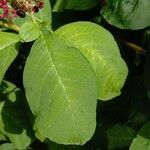
Phytolacca acinosa
سرخاب کولی · Indian poke · Indian Pokeweed · American Pokeweed · Indian pokeberry
Description
Source: leafsnapPhytolacca acinosa, commonly known as Indian pokeweed or Chinese pokeberry, is a perennial herbaceous plant in the family Phytolaccaceae. Native to Asia, it is found in regions such as China, India, Japan, and Korea. The plant can grow up to 2 meters tall, featuring a thick stem and greenish-purple leaves that are oval-shaped with pointed tips. Its small flowers are white or pinkish, and it produces dark purple berries that contain numerous seeds. For centuries, Phytolacca acinosa has been valued for its medicinal properties, particularly its anti-inflammatory effects. Traditionally, it has been used to treat ailments such as rheumatism, arthritis, skin diseases, and even cancer. Beyond its medicinal applications, the plant is also admired for its ornamental value, making it a popular choice for landscaping in gardens and parks due to its attractive foliage. However, it is important to note that all parts of Phytolacca acinosa contain toxic substances that can be harmful if ingested by humans or animals. Therefore, caution must be exercised when using the plant for either medicinal or ornamental purposes.
💡 Indian poke fruits are flat and spherical, resembling pumpkins, and have a very attractive appearance. When ripe, these fruits turn a purplish-black color. They grow in clusters and contain a red juice that can be extracted and is often used by children to paint their nails.
🌳 Indian poke plays an interesting environmental role by functioning as a bioindicator of heavy metal contamination in soil. Its capacity to grow in those conditions can indicate when soil remediation is needed in polluted areas.
🎭 Untamed
Care Guide
💧 Water Every 7 days
Originating from East Asia, Indian poke thrives in moist soil and benefits from consistent moisture. While it can tolerate moderate drought, it does best with weekly watering. This herbaceous perennial grows vigorously outdoors, where regular rainwater supports its hydration and growth cycle.
How should I water my Indian poke plant in the most effective way?
To ensure the good health of the Indian poke plant, it is important to water it properly. Using filtered water at room temperature is advisable, as tap water may contain harmful particles. Since the Indian poke originates from a warm environment, it is best to avoid using cold water, which can be a shock to the plant. Instead of watering from above, it is recommended to apply the filtered room temperature water directly to the soil until it is thoroughly soaked. This method benefits the plant by keeping the roots moist and aiding in their spread through the soil to gather essential nutrients.
What should I do if I give my Indian poke plant too much or too little water?
Overwatering and underwatering can harm your Indian poke plant, but overwatering is more common. When the plant receives too much water, its stems and leaves may wilt, turn yellow, and it may develop diseases like root rot, mold, and mildew that can be fatal. Underwatering is less likely, as Indian pokes can tolerate drought fairly well. However, when underwatering does occur, the leaves may become brittle and brown. It is important to recognize the signs of overwatering quickly. Some diseases caused by overwatering, such as root rot, may be irreversible if not addressed promptly. If you notice early signs, reduce your watering schedule and check the soil's drainage. Replace poorly draining soil with a loose, well-draining potting mix. If you see signs of underwatering, simply water the plant more frequently until the symptoms improve.
How frequently should I water my Indian poke plant?
If your Indian poke plant is in a pot, the most precise way to determine if it needs water is by checking the soil with your finger. If you find that the top two to three inches of soil are dry, it's time to water it. If you grow your Indian poke outdoors in the ground, you can use the same method to test the soil. Once the first few inches of soil have dried out, it's time to water it. Typically, during spring and early fall, watering once a week is sufficient. However, during extremely hot weather, you may need to water it twice or more per week. It's worth noting that mature, well-established Indian poke plants have a remarkable ability to withstand drought.
How much water does my Indian poke plant need?
To properly water your Indian poke, don't hold back on the amount of water you use. Check if the top two to three inches of soil are dry, and if so, give the plant a deep watering. Aim to completely saturate the soil and allow any excess water to drain out from the bottom of the pot. If you don't see water draining from the pot, it's likely that you haven't watered enough. However, avoid letting water accumulate inside the soil, as this can harm the plant. If you notice that water isn't draining well, it may be due to poorly draining soil, which is not good for the plant's health. If the plant is outdoors, receiving about 1 inch of rain per week should be enough.
How should I water my Indian poke as it grows?
The water requirements of the Indian poke can vary at different growth stages. When the Indian poke is in its early years or if it has just been transplanted, it will need more water to support root growth. This is because the plant is focusing its energy on establishing new roots for future growth, and these roots require more moisture during this phase. As the Indian poke matures, it will require less water. Another growth stage that may require increased watering is during the flowering period. Flower development requires a significant amount of moisture, so it is important to provide extra water at this time.
☀️ Light Full sun
Indian poke thrives most in full sun, though it can be fairly resilient in places with moderate sun. This preference for sunlight comes from its native habitat, which gets abundant sun. Too much or too little light can impede its healthy growth.
What are the sunlight requirements for Indian poke?
Indian poke thrives best under full exposure to the sun, enjoying above 6 hours of sunlight, although it can also show resilience in partial sun conditions, with about 3-6 hours of sunlight. This preference stems from its natural habitat that receives abundant sunlight. Observing how sunlight moves through your garden can help in choosing the perfect spots that provide the right balance of light and shade for Indian poke, ensuring its happiness and healthy growth.
What is the impact of sunlight on the growth of Indian poke?
Sunlight has a profound impact on the growth of Indian poke. It thrives in full sunlight and is commonly grown outdoors where it receives ample sunlight. In conditions of inadequate lighting, symptoms such as smaller leaves, leggy or sparse growth, faster leaf drop, slower or no new growth, lighter-colored new leaves, chlorosis, sunscald, leaf curling, wilting, and leaf scorching may occur. These symptoms indicate how crucial proper sunlight exposure is for the health and vitality of Indian poke.
How can artificial lighting support the growth of indoor Indian poke plants?
For indoor Indian poke plants, artificial lighting can play a pivotal role in ensuring optimal growth, especially when natural sunlight is insufficient. Recommendations include choosing the right type of artificial light, such as LED lights, which are favored for being able to provide specific wavelengths needed by plants. For full sun plants, 30-50W/sq ft of artificial light is needed, partial sun plants require 20-30W/sq ft, and full shade plants need 10-20W/sq ft. Additionally, placing the light source 12-36 inches above the plant and mimicking the length of natural daylight hours, usually 8-12 hours per day, are key strategies to promote healthier growth under artificial light conditions.
What solutions exist for managing insufficient sunlight exposure in Indian poke?
To manage insufficient sunlight exposure for Indian poke, several strategies can be employed depending on whether the plants are indoors, outdoors, or in the ground. Indoors, gradually moving the plants to a sunnier location each week until they receive at least 6 hours of direct sunlight daily is advised, along with using south-facing windows and keeping curtains open. Using artificial lighting, like desk or ceiling lamps for at least 8 hours daily or investing in professional grow lights, can also help. Outdoors, moving the plants gradually to locations with better sunlight and avoiding sudden changes in light intensity is crucial to prevent sunburn. When dealing with obstructions to sunlight, such as trees, pruning branches and leaves can increase sunlight exposure. Transplanting smaller plants to a location with ample sunlight and good drainage during their dormant period is another effective approach.
🌡️ Temperature 15–35°C
Indian poke originated in environments with temperatures between 59 and 95 °F (15 and 35 ℃), and therefore prefers those conditions. In colder seasons, moderate temperature adjustments to keep conditions close to that range are recommended.
What are the preferred temperature conditions for Indian Poke?
Indian Poke, scientifically named Phytolacca acinosa, thrives best in environments where the temperature ranges between 59 to 95 °F (15 to 35 °C). These conditions are optimal for its growth. During the colder seasons, it's advisable to make moderate adjustments to the environment to maintain temperatures close to this range. Although Indian Poke has strong cold resistance and usually doesn't require special frost protection measures, it's important to provide cold protection if the winter temperatures are expected to drop below the plant's cold tolerance threshold. This can be achieved by covering the plant with soil or straw. To help prevent drought and ensure the soil remains moist, watering the plant abundantly before the first freeze in autumn is recommended.
How does Indian Poke react to low and high temperatures?
Indian Poke is cold-tolerant and generally thrives best when the temperature remains above its minimum suitable growth temperature. During winter, it should be kept above its tolerable growing temperature minimum to avoid damage. If temperatures fall below its growth limit temperature, the plant might not show noticeable changes during winter but could experience reduced sprouting or none at all in the spring. To mitigate this, any non-sprouting parts should be removed in spring. In terms of high temperature, Indian Poke should be kept below its maximum suitable growth temperature during summer. Exceeding its tolerable growing temperature maximum can lead to the leaves becoming lighter in color, curling, and becoming susceptible to sunburn, with severe cases resulting in the plant wilting and drying out. Solutions include trimming away sunburned and dried parts, moving the plant to a shaded area, or using a shade cloth to protect it from midday and afternoon sun. Keeping the soil moist by watering in the morning and evening is also beneficial.
💨 Humidity
🪴 Soil 6-7
🌱 Fertilizer
The best time to fertilize an Indian poke is in early spring, as it comes out of dormancy and begins active growth. Fertilizing supplies essential nutrients for healthy development. While Indian poke has fairly low fertilizer requirements, applying fertilizer annually can improve its survival and encourage better, longer-lasting flowers.
🪴 Pot & Repot Every 12 months
✂️ Pruning
🌿 Propagating
🐛 Diseases & pets
☠️ Toxicity
Characteristics
- Plant Type
- Herb
- Life Cycle
- Perennial
- Genus
- Phytolacca
- Family
- Phytolaccaceae
- Hardiness Zone
- 7-10
- Mature Height
- 0.61 m to 1.52 m
- Mature Spread
- 61 cm to 91 cm
- Leaf Color
- Green, Blue
- Leaf Type
- Deciduous
- Flower Color
- White, Green
- Flower Size
- 0.76 cm
- Bloom Time
- Early summer, Mid summer
- Planting Time
- Spring, Summer, Autumn
- Harvest Time
- Mid summer
- Native Area
- Nepal, India, Vietnam, Myanmar, Koppen, Bhutan, South Korea, China