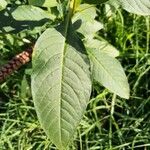
Phytolacca americana
سرخاب · American pokeweed · Pokeweed · Pokeberry · Poke Sallet
Description
Source: leafsnapPhytolacca americana, commonly known as American pokeweed, is a herbaceous perennial plant that belongs to the Phytolaccaceae family. Native to North America, it can grow up to 10 feet tall. The plant features a thick stem and large, ovate leaves that can reach up to 12 inches in length. Its flowers are small and white, and the fruit is a dark purple berry containing numerous seeds. American pokeweed has a long history of medicinal use among Native Americans. It contains various compounds such as saponins, alkaloids, and flavonoids, which possess anti-inflammatory properties. However, it is important to note that all parts of the plant are toxic if ingested in large quantities due to its high concentration of phytolaccatoxin. Therefore, it should be handled with care. In addition to its medicinal properties, Phytolacca americana also has ornamental value. Its attractive foliage and berries make it popular among gardeners. Overall, Phytolacca americana is an interesting plant with both medicinal value and ornamental appeal. However, it should be handled with caution due to its toxicity if ingested in large quantities.
🌳 Beyond its obvious uses, pokeweed demonstrates a notable capacity to act as a bioindicator of heavy metal contamination in soil. Its hyperaccumulation of metals such as zinc and cadmium makes pokeweed a quiet sentinel of soil health, turning this ordinary plant into an unexpected tool for environmental monitoring and ecological research.
🎭 Liberation, intense purification, purge, expulsion
Care Guide
💧 Water Every 7 days
Pokeweed thrives in moist, fertile soils and does best with consistent moisture. While it can tolerate some drought, it still needs regular hydration. During its active growing season, it requires watering once a week. Pokeweed is typically grown outdoors to take advantage of natural rainfall.
When should I water my Pokeweed?
Water your Pokeweed when the top layer of the soil feels dry to the touch, indicating the top inch of soil has dried out. This method helps to prevent overwatering and underwatering, ensuring the plant maintains its health. Leaf drooping can be an early sign that your pokeweed needs water, but excessive drooping might mean it's being overwatered. The best time to water is when you see signs like dry soil, droopy leaves, and a need to restore the plant's lush green color. Be mindful of the risks of watering too early or too late, which can lead to root rot or dehydration. Environmental conditions such as climate and season also affect watering frequency, requiring more water in hotter months and less in cooler or dormant periods.
How should I water my Pokeweed?
When watering Pokeweed, use a bottom-watering technique to ensure the roots get enough moisture without over-saturating the surface. This method involves placing the plant pot in a tray filled with water and letting the plant absorb moisture from the bottom up. Choose a watering can with a narrow spout to direct water to the base of the plant, minimizing moisture on the foliage and reducing the risk of fungal diseases. This technique helps target hydration effectively to where the plant needs it most.
How much water does Pokeweed really need?
Watering pokeweed depends on various factors such as pot size, the plant's root depth, and the overall size of your pokeweed. It typically benefits from a thorough soaking, ensuring that water reaches the bottom of the pot or garden bed. For mature plants in large pots, using 2 to 3 liters of water per session is recommended, but always ensure proper drainage. Look for signs of proper hydration, like vibrant green leaves and sturdy stems. Be cautious of overwatering and underwatering, which manifest through yellowing leaves, mold growth, or wilting, respectively. Moderation is key to maintaining pokeweed's health.
What kind of water is best for Pokeweed?
Pokeweed thrives best when watered with distilled water or rainwater, as these options are free from contaminants and harsh minerals found in tap and groundwater. If tap water is your only option, let it sit for 24 hours before watering to allow chlorine to evaporate. Keep in mind that pokeweed is sensitive to chlorine and might react to high levels of certain minerals in hard water. Using room temperature water is advisable to avoid shocking the plant's system.
How do Pokeweed's watering needs change with the seasons?
Pokeweed's watering needs vary throughout the year. In spring, water regularly to support growth, but avoid waterlogging. Throughout summer, as pokeweed flowers and fruits, maintain consistent moisture in the soil. In autumn, reduce watering frequency as growth slows and keep the soil lightly moist. Winter demands the least watering, as pokeweed enters dormancy. Overall, adapt your watering schedule to the plant's lifecycle and environmental conditions, keeping soil conditions and weather patterns in mind.
☀️ Light Full sun
Pokeweed thrives in full sun, though it can tolerate areas with a mix of sun and shade. Since it originates from sunlit habitats, it does well in those conditions. Too little or too much light can cause poor growth and health problems.
What are the sunlight requirements for Pokeweed?
Pokeweed requires full sunlight to flourish, thriving best in areas that receive unobstructed exposure of more than 6 hours of sunlight daily. It can, however, tolerate partial sun, which means it can manage in places receiving around 3-6 hours of sunlight. Keep in mind that the appropriate balance of light and shade is crucial for the optimal growth and health of the plant, as both lack and excess of light might lead to poor growth and health issues.
Is artificial lighting beneficial for Pokeweed growth?
Yes, artificial lighting can be beneficial for Pokeweed's growth, especially for indoor plants or in situations where natural sunlight is insufficient. LED lights are a popular choice because they can be customized to provide the specific wavelengths of light that plants need. Full sun plants typically need 30-50W/sq ft of artificial light, partial sun plants need 20-30W/sq ft, and full shade plants need 10-20W/sq ft. The light source should be placed 12-36 inches above the plant to mimic natural sunlight, and most plants need 8-12 hours of light per day.
What are the symptoms of improper lighting for Pokeweed?
Symptoms of improper lighting for Pokeweed can vary depending on whether the plant is receiving too much or too little light. Insufficient light can cause smaller new leaves, leggy or sparse growth, faster leaf drop, slower or no new growth, lighter-colored new leaves, and chlorosis (yellowing of the leaves). On the other hand, too much direct sunlight can lead to sunscald, leaf curling, wilting, and leaf scorching, which are indicative of excessive sunlight exposure and can significantly impair the plant's health.
How can I address lighting issues for Pokeweed?
To address lighting issues for Pokeweed, adjust its exposure to sunlight gradually. For indoor plants, move them to a sunnier location each week until they receive at least 6 hours of direct sunlight daily. Utilizing a south-facing window and keeping curtains open during the day can maximize sunlight exposure. If necessary, supplement with artificial light for at least 8 hours daily. For outdoor plants, also adjust light exposure gradually to prevent sunburn. Pruning obstacles blocking sunlight or transplanting the plant to a sunnier location with good drainage may also be necessary. Remember, while affected parts of the plant may not recover, new growth should be healthy with improved lighting conditions.
🌡️ Temperature 10–35°C
Native to North America, pokeweed is well suited to temperate climates and prefers temperatures from 50 to 95 ℉ (10 to 35 ℃). In the spring and fall the plant tolerates temperature fluctuations and adapts well to cooler evenings and warmer days. In the summer months, it is important to provide sufficient watering and shading to prevent heat stress and sunburn.
What are the essential care tips for growing pokeweed in temperate climates?
Pokeweed, native to North America, thrives in temperate climates with temperatures ranging from 50 to 95 °F (10 to 35 °C). It adjusts well to temperature fluctuations in spring and fall, benefiting from cooler evenings and warmer days. During the summer, it's crucial to ensure pokeweed receives enough water and shade to prevent heat stress and sunburn. Despite its strong cold resistance, providing cold protection is important if winter temperatures are expected to drop below the growth limit temperature. Protection can be offered by covering the plant with soil or straw. Additionally, watering the plant abundantly before the first freeze of autumn to keep the soil moist is recommended, helping to avoid drought and water scarcity during the colder months.
How does pokeweed react to temperature extremes, and what are the suitable solutions?
Pokeweed is highly adaptable to different temperature ranges. For low temperatures, it is vital to ensure the surround is above its minimum tolerable growing temperature. If temperatures dip below its growth limit, while the plant may not show noticeable changes in winter, there could be a significant decrease in sprouting, or the plant may not sprout at all in spring. The solution is to prune any parts that fail to sprout in spring. For high temperatures, it's important to keep pokeweed below its maximum suitable growth temperature. Exceeding this threshold may cause the leaves to lighten, curl, become prone to sunburn, or the plant may wilt and dry out in severe cases. Remedies include trimming sunburned and dried-up parts, relocating the plant to a shaded area during peak sun hours, and keeping the soil moist with regular watering in the morning and evening.
💨 Humidity normal (40-60%)
This plant will thrive in moderate humidity, which is probably the level in your home. However, misting it a few times a week can be very beneficial. Make sure the room has good ventilation.
🪴 Soil 5-7
🌱 Fertilizer
A single fertilizer application in spring is generally adequate for Pokeweed, though repeated feedings can boost growth. Feed about once every one to one and a half months. Fertilizing improves the leaves' appearance and function, helping maintain even color and a healthy texture. It also promotes root development and better nutrient uptake, supporting long-term plant health.
🪴 Pot & Repot Every 12 months
Planting pokeweed in a nutrient-rich potting soil is an effective way to control the growth of its taproot. This approach encourages healthy development and helps manage space efficiently.
✂️ Pruning
There is not much care for pokeweeds. To prevent self-seeding and curb the spread of your American pokeweed, you may trim off the inflorescence once they have faded. If you want to remove the plant completely, you must pull up the entire taproot.
🌿 Propagating
🐛 Diseases & pets
☠️ Toxicity
Characteristics
- Plant Type
- Herb
- Life Cycle
- Perennial
- Genus
- Phytolacca
- Family
- Phytolaccaceae
- Hardiness Zone
- 6-10
- Mature Height
- 0.91 m to 3.05 m
- Mature Spread
- 0.91 m to 1.52 m
- Leaf Color
- Green, Purple, Yellow
- Leaf Type
- Deciduous
- Flower Color
- White, Green, Pink
- Flower Size
- 2.03 cm to 5.08 cm
- Bloom Time
- Early summer, Mid summer
- Planting Time
- Spring, Summer, Autumn
- Harvest Time
- Mid summer, Late summer
- Native Area
- Mexico