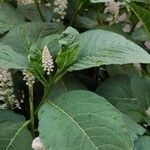
Phytolacca esculenta
Indian pokeberry · Indian pokeweed
Care Guide
💧 Water
☀️ Light Full sun
Indian poke thrives most in full sun, though it can be fairly resilient in places with moderate sun. This preference for sunlight comes from its native habitat, which gets abundant sun. Too much or too little light can impede its healthy growth.
🌡️ Temperature 15–35°C
Indian poke originated in environments with temperatures between 59 and 95 °F (15 and 35 ℃), and therefore prefers those conditions. In colder seasons, moderate temperature adjustments to keep conditions close to that range are recommended.
💨 Humidity
🪴 Soil 6-7
🌱 Fertilizer
The best time to fertilize an Indian poke is in early spring, as it comes out of dormancy and begins active growth. Fertilizing supplies essential nutrients for healthy development. While Indian poke has fairly low fertilizer requirements, applying fertilizer annually can improve its survival and encourage better, longer-lasting flowers.
🪴 Pot & Repot
✂️ Pruning
🌿 Propagating
🐛 Diseases & pets
☠️ Toxicity
Characteristics
- Plant Type
- Herb
- Life Cycle
- Perennial
- Genus
- Phytolacca
- Family
- Phytolaccaceae
- Hardiness Zone
- 7-10
- Mature Height
- 0.61 m to 1.52 m
- Mature Spread
- 61 cm to 91 cm
- Leaf Color
- Green, Blue
- Leaf Type
- Deciduous
- Flower Color
- White, Green
- Flower Size
- 0.76 cm
- Bloom Time
- Early summer, Mid summer
- Planting Time
- Spring, Summer, Autumn
- Harvest Time
- Mid summer
- Native Area
- Nepal, India, Vietnam, Myanmar, Koppen, Bhutan, South Korea, China