Picea omorika
Serbian spruce · Bosnian spruce · Omorica
Description
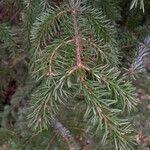
Source: leafsnapPicea omorika, commonly known as the Serbian spruce, is a coniferous tree species native to the Balkan Peninsula in southeastern Europe. This slow-growing evergreen can reach heights of up to 40 meters, boasting a narrow, conical shape. Its needles are short, stiff, and dark green, ranging from 1 to 2 centimeters in length. The bark is thin, gray-brown, and characterized by shallow furrows. Picea omorika thrives in moist soils with good drainage but can tolerate dry conditions once established. It grows best in full sun or partial shade and can withstand cold temperatures as low as -30°C. This tree is widely used for ornamental purposes, particularly as a Christmas tree or in landscaping due to its attractive appearance. Additionally, its wood is valued for construction, such as flooring or furniture, because of its durability. Despite being classified as an endangered species by the International Union for Conservation of Nature (IUCN), there have been concerted conservation efforts. These include seed collection programs and reforestation projects aimed at restoring degraded habitats where the Serbian spruce naturally grows.
Care Guide
💧 Water Every 7 days
The Serbian spruce flourishes with moderate watering, typically needing water every 1-2 weeks. Native to river valleys, it thrives with balanced hydration and proper drainage. For optimal growth, this evergreen plant is best cultivated outdoors, where careful management of soil moisture is essential to prevent water stress.
How should I water my Serbian spruce tree?
Watering your Serbian spruce tree is a simple task. To do it, all you need is a garden hose to soak the soil slowly. This is especially useful for larger trees as they require more water. However, for smaller trees, a watering can or smaller tool can suffice. It's important not to water the leaves too much as this can cause disease, particularly in young trees.
What should I do if I give my Serbian spruce tree too much water or too little water?
Overwatering of Serbian spruce can occur if the soil does not allow water to drain effectively. If this happens, you should either improve the soil's drainage or relocate the spruce to a better growing spot. If the spruce is in a pot, you may need to repot it with looser soil that permits better drainage. Overwatering can lead to diseases, which should be addressed promptly. To address underwatering, simply water the spruce more frequently until it recovers. To determine if the spruce is overwatered, examine the foliage, particularly the new growth, for signs of discoloration or easy breakage. Standing water or slow drainage in the growing area is another indication of excessive moisture. Underwatered spruce trees will also exhibit symptoms in their sparse, brown leaves. Considering recent rainfall or high temperatures can help determine the cause of these symptoms.
How frequently should I pour water on my Serbian spruce tree?
A mature Serbian spruce is very capable of surviving on rainfall alone and does not require much water. During the hottest months, watering once a week is sufficient, but outside of those months, watering may not be necessary at all. The exception is for newly planted trees, which should be watered regularly to establish their roots. However, it is crucial to avoid standing water as Serbian spruce cannot tolerate it. When unsure, it is safer to refrain from watering rather than risking overwatering.
How much water should I give my Serbian spruce tree?
During the height of summer, you'll only need to water your Serbian spruce. Normally, you'll want to give it one inch of water per week, but this can vary if it has rained enough. If there has been one inch or more of rain in a week, then you don't need to water your spruce. However, if you have just planted a Serbian spruce, it will need more water during the establishment period. Generally, this means watering it once every one to two weeks for the first few growing seasons.
How should I water my Serbian spruce throughout the year?
The Serbian spruce tree needs the most water in the summer when it's hot. During that time, water it about once a week if there's no rainfall. The tree can often survive without water at other times of the year. In spring and fall, you may need to water it if it's unusually hot, but this is rare. Unlike most plants, the Serbian spruce keeps growing during winter so it doesn't go fully dormant. However, the tree's water needs remain low in winter because the cool temperatures don't dry out the soil quickly.
☀️ Light Full sun
The Serbian spruce comes from open habitats, like sunny meadows and forest edges, that supply plenty of light. It performs best in full sun but can also tolerate partial sun, adapting well to a range of sunlight conditions.
What are the sunlight requirements for Serbian spruce?
Serbian spruce thrives in environments with ample light, doing best in full sun conditions, which means it requires more than 6 hours of sunlight daily. However, it can also adapt and grow well in partial sun, which is about 3-6 hours of sunlight. The key is finding a spot that provides a good balance of light and shade, ensuring the plant's happiness and health.
How can artificial lighting be used for indoor Serbian spruce plants?
When natural sunlight is insufficient, artificial lighting becomes crucial for the growth of indoor Serbian spruce plants. It's recommended to use LED lights as they can be customized to provide specific wavelengths needed by the plant. Full sun plants should have 30-50W/sq ft of artificial light, partial sun plants 20-30W/sq ft, and full shade plants 10-20W/sq ft. The artificial light source should be placed 12-36 inches above the plant to mimic natural sunlight, and it should be kept on for 8-12 hours per day to simulate the length of natural daylight hours.
What are the common symptoms of light deficiency in Serbian spruce?
Serbian spruce may show various symptoms when exposed to suboptimal lighting, including smaller new leaves, leggy or sparse growth, faster leaf drop, slower or no new growth, lighter-colored new leaves, and chlorosis, where leaves lose their green color. Sunscald, leaf curling, wilting, and leaf scorching are other symptoms that can occur due to excessive sunlight, indicating that the plant's light exposure needs adjustment.
How can I ensure my Serbian spruce receives enough light?
To ensure your Serbian spruce receives enough light, gradually move it to a sunnier spot each week, aiming for at least 6 hours of direct sunlight daily. For indoor plants that are large or not easily movable, using a desk or ceiling lamp for at least 8 hours daily, or investing in professional plant grow lights, can help. Outdoor plants should also be moved gradually to prevent sunburn. Additionally, reducing obstructions by pruning trees or transplanting smaller plants during their dormant period can improve sunlight exposure. It's important to note that parts of the plant affected by insufficient light may not recover, but new growth will be healthy with improved light exposure.
🌡️ Temperature 5–32.2°C
Serbian spruce shows strong adaptability to a range of climatic conditions, whether in scorching summers or cold winters. It does, however, have an optimal temperature range for growth. When temperatures become too high, the plant is susceptible to heat and humidity stress, which can cause it to die. In areas where temperatures approach the lower limit of its cold tolerance, it is important to take insulation measures to protect the plant.
💨 Humidity
🪴 Soil 6-8
🌱 Fertilizer
The Serbian spruce has specific nutrient needs and does not require heavy fertilization. Spring is the best time to apply fertilizer for optimal growth. Providing nutrients strengthens its health, raises its resistance to pests and diseases, and helps preserve a long lifespan.
Why should I put fertilizer on my Serbian spruce tree?
To ensure the healthy growth of Serbian spruce, it's important to fertilize it in the spring. This tree has a long lifespan, so providing support is essential. Adding nutrients to the soil not only improves the plant's overall health, but also helps it resist common pests and diseases that can hinder growth or shorten its lifespan.
What is the ideal time to put fertilizer on my Serbian spruce tree?
Serbian spruce is different from garden plants because it doesn't need a lot of extra nutrients. The growing medium may not provide enough nutrients for healthy growth. To fertilize Serbian spruce, the best time is in the spring before new growth starts.
When is it not a good idea to add fertilizer to my Serbian spruce?
While some plants benefit from regular fertilization, the Serbian spruce is not one of them. This type of tree does not need a significant amount of additional nutrients, and applying too much fertilizer can actually harm it and cause it to deteriorate. Therefore, it is important to only apply fertilizer during the spring season, and refrain from doing so during the summer, fall, and winter. Additionally, it is advised to avoid adding any other types of organic matter to the soil during these seasons as well.
What kind of fertilizer should I use for my Serbian spruce?
The age of your plant determines the fertilizer it needs. However, Serbian spruce does not need excessive nutrients. It is best to use a balanced plant food to promote healthy root development and growth. Avoid fertilizers with high nitrogen levels.
How should I feed my Serbian spruce tree with fertilizer?
The timing and method of fertilizing Serbian spruce are both crucial. To fertilize, apply the fertilizer once in the spring, specifically at the base of the plant. Make sure to avoid getting any fertilizer on the trunk. If you are using granulated fertilizer, cover the pellets with a thin layer of soil to help with absorption into the soil.
🪴 Pot & Repot
✂️ Pruning
The Serbian spruce is an evergreen conifer known for its narrow, pyramidal shape. For best results, prune the tree from early to late winter. Focus on removing dead or damaged branches and perform selective thinning to improve air circulation. This practice not only enhances the tree's health and promotes robust growth but also helps maintain its aesthetic appeal.
🌿 Propagating
🐛 Diseases & pets
☠️ Toxicity
It's non-toxic. When roasted, the center is sweet and syrupy. Inner bark can be dried, ground into a powder, and then added to cereals to make bread or used as a thickening in soups, etc. You'll get a healthy dose of vitamin C from this delectable tea with a piney flavor. The majority of pine and conifer needles can be used as an expectorant to treat respiratory conditions, ease chest congestion, and coughs.
Characteristics
- Plant Type
- Tree
- Life Cycle
- Perennial
- Genus
- Picea
- Family
- Pinaceae
- Hardiness Zone
- 4-8
- Mature Height
- 15.24 m to 18.29 m
- Mature Spread
- 4.57 m to 7.62 m
- Leaf Color
- Green, White
- Leaf Type
- Evergreen
- Flower Color
- Red, Yellow, Violet
- Flower Size
- 2.54 cm to 7.62 cm
- Bloom Time
- Mid spring, Late spring
- Planting Time
- Spring, Winter
- Harvest Time
- Late summer, Early fall, Mid fall
- Native Area
- Serbia