Picea rubens
Red spruce · Eastern spruce · He-balsam · West Virginia spruce · Yellow spruce
Description
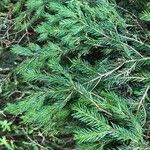
Source: leafsnapPicea rubens, commonly known as the Red Spruce, is a coniferous tree species native to the eastern regions of North America. This slow-growing tree can reach heights of up to 30 meters and has a narrow, conical shape. The bark is thin and grayish-brown, with scaly ridges adding to its distinctive appearance. The needles of Picea rubens are short, stiff, and dark green, featuring four sides and arranged spirally around the branches. The tree produces cylindrical cones that can measure up to 10 cm in length, with thin scales that open when matured. Red Spruce trees thrive in cool climates with high humidity levels and are typically found at elevations ranging between 300 and 1,500 meters above sea level. They grow best in well-drained soils rich in organic matter. The wood of Picea rubens is valued for its strength and durability, making it a popular choice for construction materials, furniture making, and paper production. However, the Red Spruce has been threatened by deforestation activities, particularly logging, which have led to a decline in its population over time. To counter this, conservation efforts, including reforestation programs, have been implemented to restore Red Spruce populations to their natural habitats.
🌳 Beyond its uses for timber and pulp, the red spruce fulfills an important but often overlooked role in its native ecosystem. By forming dense root systems it helps stabilize mountain soils and prevents landslides. Its foliage provides a vital winter food source for the threatened spruce-fir moss spider, and its branches offer essential habitat for migratory songbirds.
🎭 It is an adaptable tree that grows rapidly and establishes dominance throughout its territory.
Care Guide
💧 Water Every 7 days
Red spruce flourishes in cool, moist mountain forests and prefers an environment with moderate humidity. To care for it, water the tree every 1 to 2 weeks, ensuring that the soil remains lightly moist. As an evergreen, red spruce retains moisture in its needles throughout the year, which helps it survive in different outdoor temperatures.
How should I water my Red spruce tree?
Watering your Red spruce is a simple and easy task. To water a mature Red spruce, you can use a garden hose to slowly soak the soil. This is ideal because larger trees may require a lot of water. For smaller trees, you can use a watering can or another smaller watering tool. It's important to avoid overhead watering as it can cause disease, especially in young trees.
What should I do if I give too much or too little water to my Red spruce?
Overwatering can be caused by poor soil that doesn't allow water to drain effectively. If your Red spruce is experiencing this, you can either improve the soil's drainage by adding amendments or move the plant to a better location. If you're growing your Red spruce in a pot, you may need to repot it with looser soil to improve drainage. Overwatering can lead to diseases, so it's important to address them promptly. If your Red spruce is underwatered, simply increase the frequency of watering and it will recover. To determine if your Red spruce is overwatered, check the foliage, especially new growth, for discoloration or easy breakage. Standing water or slow drainage in the growing area can also indicate excessive moisture. Underwatered Red spruces will have sparse, brown leaves. Consider recent rainfall or high temperatures if you notice these symptoms.
How much water does my Red spruce need?
A mature Red spruce is very resilient and can survive with minimal water, mainly relying on rainfall. During the hottest months, you might need to water it once a week, but in other seasons, watering may not be necessary. However, if you recently planted a Red spruce, regular watering is important to establish healthy root growth. It's crucial to avoid overwatering as Red spruce does not tolerate standing water. If unsure, it's better to water less than risk overwatering.
How much water does my Red spruce tree need?
During the height of summer, you will usually need to water your Red spruce about one inch per week. However, this can vary if there has been enough rainfall. If it has rained one inch or more, you don't need to water your Red spruce. Keep in mind that newly planted Red spruce may need more water during the establishment period. Generally, watering once every one to two weeks for the first few growing seasons should suffice.
How do I water my Red spruce tree throughout the different seasons?
During the summer months when it is the hottest, the Red spruce tree requires the most water. During this time, it is advisable to water the plant once a week if there is no rainfall. However, the plant can often survive without water during other times of the year. In spring and fall, if the weather is exceptionally hot, a small amount of water may be needed, although this is rare. Unlike many other plants, the Red spruce does not go into full dormancy in winter and continues to grow during the coldest months. However, due to the cool temperatures, the water needs during winter will remain low as the soil does not dry out quickly.
☀️ Light Full sun
Red spruce grows best with uninterrupted sunlight throughout the day. It can, however, tolerate periods when the sun is partly obscured. In limited light it has trouble developing vigorously and may display sparse foliage, while excessive sun can scorch its needles.
What are the sunlight requirements for red spruce?
Red spruce requires full sun, which means it thrives best with continuous exposure to sunlight throughout the day. This exposure should be above 6 hours of sunlight daily. However, it can also endure partial sun, about 3-6 hours of sunlight. The plant may struggle under scarce sunlight, leading to sparse foliage, while excessive exposure can scorch its needles. It's important to observe how sunlight moves through your garden to ensure the plants receive the appropriate balance of light and shade.
How do indoor plants benefit from artificial lighting?
Indoor plants, including red spruce, require adequate lighting for optimal growth, especially when natural sunlight is insufficient. Artificial lights provide a vital solution, promoting faster, healthier growth. LED lights are a popular choice because they can offer specific wavelengths needed by plants. For full sun plants, 30-50W/sq ft of artificial light is needed, partial sun plants require 20-30W/sq ft, and full shade plants need 10-20W/sq ft. The light source should be placed 12-36 inches above the plant, and most plants require 8-12 hours of light per day to mimic natural sunlight conditions.
What are the common symptoms of insufficient light in red spruce?
When exposed to suboptimal lighting, red spruce may exhibit symptoms like smaller new leaves, leggy or sparse growth due to longer spaces between leaves or stems, and faster leaf drop as the plant tries to conserve resources. Other symptoms include slower or halted growth, indicating a survival mode due to poor light conditions, and lighter-colored new leaves or chlorosis, where the leaves lose their green color and turn yellow. Insufficient sunlight can also lead to sunscald and leaf curling as the plant tries to minimize water loss and damage from extreme sunlight.
How can you address the light requirements of red spruce both indoors and outdoors?
To meet the light requirements for red spruce, gradual adaptation to sunlight is key, whether indoors or outdoors. For indoor plants, move them gradually each week to a sunnier location until achieving at least 6 hours of direct sunlight daily. Utilize south-facing windows and keep curtains open. If the plant is large, supplement with artificial light, keeping a lamp on for at least 8 hours daily or investing in professional grow lights. Outdoors, acclimate the plants by gradually moving them to sunnier spots. Remove obstructions to sunlight by pruning trees or transplanting smaller plants during their dormant period to locations with better sunlight exposure. Note that parts of the plant affected by insufficient light may not recover, but new growth will be healthier with improved light conditions.
🌡️ Temperature 0–25°C
The red spruce plant favors cool conditions and is native to areas with an average temperature of 0 to 15 ℃ (32 to 59 ℉). Its temperature tolerance spans 0 to 25 ℃ (32 to 77 ℉). In winter it can endure temperatures as low as -46 ℃ (-50.8 ℉) through gradual acclimation.
What are the ideal temperature conditions for Red Spruce?
The Red Spruce (Picea rubens) thrives in cool environments and is naturally found in areas where the average temperature ranges from 0 to 15°C (32 to 59°F). It prefers temperature conditions between 0 to 25°C (32 to 77°F). During winter, it is capable of tolerating temperatures down to -46°C (-50.8°F) if it acclimates gradually. This species is remarkably cold-tolerant and does not require additional frost protection measures. However, to prepare for winter, it's advised to water the plant generously before the first freeze of autumn to ensure the soil stays moist and enters a frozen state. This step aids in preventing drought and water scarcity for the plant during winter and early spring.
How does Red Spruce react to low temperatures?
Red Spruce is extremely tolerant of low temperatures, capable of withstanding winter conditions above -40°C without apparent damage. However, if temperatures fall below this threshold, there might not be any obvious signs of distress during winter. Yet, by springtime, the branches may become brittle, dry, and incapable of producing new shoots. To manage this, it is recommended to prune away any dead branches in spring that have failed to produce new leaves, as part of the plant's care regimen.
What should I do if my Red Spruce experiences high temperatures?
Red Spruce does not fare well under high temperatures, particularly when the thermometer exceeds 25°C. Under such conditions, the plant might exhibit significant leaf drop or, in extreme cases, might wither and die. If your Red Spruce is exposed to high temperatures, trim away any sunburned and dried portions of the plant. Relocate it to a spot that offers shade during the midday and afternoon, or consider using a shade cloth to reduce exposure. Additionally, ensure the soil remains moist by watering the plant in the morning and evening. These steps can help mitigate the effects of high temperatures on Red Spruce.
💨 Humidity
🪴 Soil 4-6
🌱 Fertilizer
Red spruce has specific nutrient needs and does not require heavy fertilization. Fertilizing in spring is best for promoting optimal growth. Supplying nutrients enhances its health, increases resistance to pests and diseases, and helps sustain its long lifespan.
Why is it necessary to add nutrients to my Red spruce?
To promote healthy growth in Red spruce, it is recommended to fertilize in the spring. Keep in mind that these plants have a long lifespan and require support. By adding nutrients to the soil, you can improve the overall health of the plant, making it more resistant to common pests and diseases. This can help prevent stunted growth and extend its lifespan.
What is the ideal time to put fertilizer on my Red spruce tree?
Red spruce has specific nutrient needs compared to garden annuals and perennials, as it doesn't require excessive amounts of nutrients. When it comes to fertilizing Red spruce, the ideal time is in the spring before new growth starts, as the growing medium may not always provide enough nutrients for healthy growth.
When is it best not to fertilize my Red spruce tree?
Red spruce does not require frequent fertilization like other plants. Applying too much fertilizer can be harmful and cause it to deteriorate. It is best to only fertilize in the spring and avoid adding any fertilizer or organic matter during the summer, fall, and winter seasons.
What kind of fertilizer does my Red spruce tree need?
Consider the age of your plant when choosing fertilizer. While Red Spruce does not need a lot of additional nutrients, using a balanced plant food can promote healthy root development and growth. Avoid fertilizers with high levels of nitrogen.
How should I fertilize my Red spruce tree?
When fertilizing Red spruce, it is important to consider both the timing and application method. To fertilize, apply the fertilizer once in the spring, focusing on the base of the plant and avoiding contact with the trunk. If using granulated fertilizer, ensure the pellets are covered with a light layer of soil to promote absorption into the soil.
🪴 Pot & Repot 2-3 years
When repotting Red spruce, pick a pot 1–2 inches (2.5–5.1 cm) larger with good drainage. Use a well-draining potting mix. Repot in spring or fall, making sure the root ball is positioned slightly below the rim of the flower pot. Water thoroughly after repotting and place in a warm spot with indirect sunlight.
✂️ Pruning
The red spruce is an evergreen conifer with needle-like leaves and a pyramid-like shape. For optimal growth and structure, it's best to prune the tree from early to late winter. Use clean, sharp tools to carefully remove any dead or weak branches, which will help improve airflow.
🌿 Propagating
🐛 Diseases & pets
☠️ Toxicity
Characteristics
- Plant Type
- Tree
- Life Cycle
- Perennial
- Genus
- Picea
- Family
- Pinaceae
- Hardiness Zone
- 2-5
- Mature Height
- 18.29 m to 21.34 m
- Mature Spread
- 3.05 m to 5.49 m
- Leaf Color
- Green, Yellow, Gold
- Leaf Type
- Evergreen
- Flower Color
- Gold
- Flower Size
- 3.05 cm to 5.08 cm
- Bloom Time
- Late spring, Early summer
- Planting Time
- Autumn
- Harvest Time
- Mid summer, Late summer