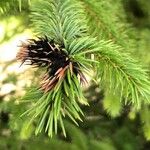
Picea sitchensis
Sitka spruce · Coast Spruce · Menzies's Spruce Fir · Tideland Spruce · Yellow Spruce
Description
Source: leafsnapPicea sitchensis, commonly known as Sitka spruce, is a large evergreen coniferous tree native to the Pacific Northwest region of North America. This impressive tree can reach heights of up to 70 meters and has a conical shape with drooping branches. Its bark is thin, scaly, and reddish-brown in color. The needles of the Sitka spruce are blue-green and arranged in spirals around the branches. They can grow up to 3 centimeters long and have sharp tips. The tree also produces large cones, which can reach up to 20 centimeters in length. Picea sitchensis thrives in moist, well-drained soils but can tolerate some flooding. It grows best in cool climates with high levels of rainfall but is also capable of withstanding some drought conditions. This species has many uses, including as timber for construction, paper production, and musical instruments such as guitars and pianos due to its excellent resonance qualities when properly dried. It is also grown for ornamental purposes because of its attractive shape. Ecologically, Picea sitchensis plays an important role by providing habitat for wildlife, particularly birds. It is an essential food source for many animals, including deer, which feed on its young shoots during winter months when other food sources are scarce. Additionally, extracts from its bark have shown effectiveness against certain types of cancer cells, underscoring its economic and medicinal value. Overall, Picea sitchensis is a vital species, both ecologically and economically. Its diverse applications and benefits make it a critical component of its native ecosystem and a valuable resource for humans.
🌳 The Sitka spruce, renowned as the largest of all spruces, is seldom seen in garden settings due to its immense size. However, if you have a property large enough to accommodate it, the Sitka spruce can thrive in exposed areas or places with poor soil. Its high tolerance to salt spray makes it an excellent choice for coastal landscaping, setting it apart from many of its conifer relatives.
🎭 It is an adaptable tree that grows rapidly and establishes dominance throughout its territory.
Care Guide
💧 Water Every 7 days
Sitka spruce thrives in moist, cool climates and requires consistent moisture. Water the plant every 1-2 weeks, ensuring the soil remains damp but not waterlogged. As an evergreen, Sitka spruce benefits from natural rainfall, which helps maintain its lush foliage in different climates.
How should I water my Sitka spruce tree?
Watering your Sitka spruce is a simple task. One easy way to do it is by using your garden hose to slowly saturate the soil. This is especially effective for mature Sitka spruce trees that require a significant amount of water. However, if you have smaller trees, you can use a watering can or a smaller tool instead. It's important to note that you should avoid overhead watering as it can lead to disease, especially in young trees.
What should I do if I give my Sitka spruce tree too much or too little water?
Overwatering can occur when the soil doesn't drain properly, causing a decline in your Sitka spruce. To address this issue, you can improve drainage by amending the soil or relocate the plant to a better growing spot. If you're growing your Sitka spruce in a pot, you might need to use looser soil in a container with better drainage. An overwatered plant can also be susceptible to diseases, so prompt treatment is important. On the other hand, underwatering is easily resolved by increasing the frequency of watering, allowing the plant to recover. You can determine if your Sitka spruce is overwatered by examining the foliage, particularly the new growth. Discolored or fragile new growth indicates excessive moisture. Additionally, standing water or slow drainage in the growing area may suggest overly moist soil. Sparse, brown leaves are signs of underwatering. Consider recent heavy rains or high temperatures if you notice these symptoms, as they can help you determine the cause.
How often do I need to water my Sitka spruce?
A mature Sitka spruce is drought tolerant and only needs rainfall to survive. During the hottest months, you may need to water it once per week, but in other seasons, watering may not be necessary. Newly planted Sitka spruces need regular watering for the roots to establish. However, it's crucial to avoid overwatering as this species does not tolerate standing water. When unsure, it's better to water less than risk watering too much.
How much water does my Sitka spruce tree need?
During the height of summer, you'll typically need to water your Sitka spruce about one inch per week. However, this amount can vary depending on the rainfall. If it has rained one inch or more that week, you won't need to water your Sitka spruce at all. It's important to note that newly planted Sitka spruce will require more water during the establishment period. In the first few growing seasons, it is recommended to water them approximately once every one to two weeks.
How should I water my Sitka spruce tree throughout the year?
During the summer months, when the weather is hottest, the Sitka spruce tree requires the most water. It should be watered about once a week if there is no rainfall. However, during other times of the year, this plant can often survive without any water. In the spring and fall, it might be necessary to provide some water if the weather is exceptionally hot, although this is rare. Unlike many other plants, the Sitka spruce doesn't go into full dormancy during winter, so it continues to grow during the coldest months. However, the water needs during winter are still quite low as the cool temperatures don't cause the soil to dry out quickly.
☀️ Light Full sun
Sitka spruce thrives in full sun and tolerates somewhat reduced light. Native to naturally sunny habitats, it performs best with ample illumination. Insufficient light can limit its growth, while too much sun may scorch its foliage.
What are the sunlight requirements for Sitka spruce?
Sitka spruce requires full exposure to the sun to flourish, thriving best with over 6 hours of sunlight each day. It can also withstand partial sunlight conditions, which is about 3-6 hours of sunlight. However, it's essential to observe how sunlight moves through your garden to find spots that offer the perfect balance of light and shade, ensuring the plant's health and happiness.
What should I know about using artificial lighting for indoor plants?
For indoor plants, especially when natural sunlight is not sufficient due to seasonal changes or interior locations, artificial lighting can be critical for their growth. LED lights are recommended as they can be tailored to provide specific wavelengths needed by the plants. Full sun plants need 30-50W/sq ft of artificial light, partial sun plants need 20-30W/sq ft, and full shade plants require 10-20W/sq ft. Position the light source 12-36 inches above the plant to mimic natural light conditions and adjust for 8-12 hours per day to complement the plant's natural growth cycle.
What are common symptoms of incorrect lighting conditions in Sitka spruce?
Sitka spruce will show various symptoms if exposed to suboptimal lighting conditions. When there's not enough light, it may develop smaller, paler leaves, experience leggy or sparse growth, faster leaf drop, and slower or no new growth. In contrast, too much sunlight can cause chlorosis, sunscald, leaf curling, wilting, and leaf scorching. These symptoms indicate that the plant is either not receiving enough light to produce chlorophyll and essential nutrients or is being damaged by excessive exposure to sunlight.
How can I manage and improve light conditions for my Sitka spruce?
To optimize growth, gradually introduce your Sitka spruce to more sunlight, aiming for at least 6 hours of direct light daily. This can be achieved by using south-facing windows for indoor plants and moving outdoor plants to sunnier locations week by week. If natural light is insufficient, consider artificial lighting, keeping it on for at least 8 hours daily. For plants affected by low light, removing obstructions or transplanting to sunnier spots can encourage healthier growth. Remember, parts of the plant that suffered from insufficient light might not recover, but new growth should be healthy with improved lighting.
🌡️ Temperature 0–32.2°C
The sitka spruce prefers temperatures of 32 to 90 ℉ (0 to 32 ℃) and does best in cool, moist conditions. This species is native to the temperate rainforests of the Pacific Northwest and is adapted to year-round temperatures of 41 to 57 ℉ (5 to 14 ℃). In hot summers it may benefit from afternoon shade or misting to prevent overheating.
What temperature and environment does Sitka spruce prefer?
The Sitka spruce prefers temperatures ranging from 32 to 90°F (0 to 32°C) and thrives in cool, moist environments typical of the temperate rainforests of the Pacific Northwest. It is well adapted to temperatures that range from 41 to 57°F (5 to 14°C) throughout the year. To ensure the tree remains healthy, particularly during hot summers, it may benefit from afternoon shade or misting to prevent overheating. The species is also highly cold-tolerant and does not require additional frost protection measures during winter, although generous watering before the first freeze in autumn is recommended to keep the soil moist and prevent drought and water scarcity during winter and early spring.
What should be done if the Sitka spruce experiences temperatures below -35°C?
Sitka spruce is extremely cold-tolerant, but it is crucial to maintain winter temperatures above -35°C to prevent damage. If temperatures drop below this threshold, the branches may become brittle and dry, and no new shoots will emerge by springtime. To mitigate this, you should prune away any dead branches that have failed to produce new leaves in spring as part of the care routine for the tree.
How should Sitka spruce be cared for in high temperatures?
Sitka spruce struggles with high temperatures, particularly when the mercury climbs above 32°C, leading to significant leaf drop and, in severe cases, the death of the entire plant. To care for Sitka spruce in high temperatures, trim away the sunburned and dried-up parts of the plant. Relocate the plant to a location with shade from the midday and afternoon sun, or use a shade cloth to protect it. Additionally, water the plant in the morning and evening to maintain soil moisture and help the tree cope with the heat.
💨 Humidity normal (40-60%)
This plant will thrive in moderate humidity, which is probably the level in your home. However, misting it a few times a week can be very beneficial. Make sure the room has good ventilation.
🪴 Soil 4-6
🌱 Fertilizer
Sitka spruce has particular nutrient needs and does not require heavy fertilization. Spring is the best time to fertilize for optimal growth. Supplying nutrients enhances its health, raises its resistance to pests and diseases, and helps sustain its long lifespan.
Why should I put fertilizer on my Sitka spruce?
To promote healthy growth for Sitka spruce, fertilize it in the spring. Keep in mind that this plant has a long lifespan and requires support. By adding nutrients to the soil, you can enhance the plant's health and help it resist common pests and diseases, which can hinder growth or reduce its lifespan.
When should I fertilize my Sitka spruce?
While the growing medium may not always provide sufficient nutrients for healthy growth, Sitka spruce has different requirements compared to other plants in your garden. It does not need an excessive amount of additional nutrients. Ideally, fertilization should be done during the spring, before new growth starts to appear.
When is not a good time to put fertilizer on my Sitka spruce?
While some plants benefit from regular fertilization, Sitka spruce does not require excessive nutrients. Over-fertilizing can actually harm this tree by causing it to deteriorate. To properly care for Sitka spruce, only apply fertilizer during the spring season and refrain from doing so during the summer, fall, and winter. Avoid adding any additional fertilizer or organic matter to the soil during these seasons.
What kind of plant food does my Sitka spruce tree need?
When choosing fertilizer for your Sitka spruce plant, keep in mind that its age matters. Sitka spruce does not need a lot of extra nutrients, so look for a balanced plant food that supports healthy root development and growth. Avoid fertilizers with high nitrogen contents.
How should I give nutrients to my Sitka spruce to help it grow?
Fertilizing Sitka spruce is crucial, both in terms of timing and method. To properly fertilize, apply the fertilizer once during spring, focusing on the base of the plant. Be careful not to get any fertilizer on the trunk. If you're using granulated fertilizer, cover the pellets with a thin layer of soil. This helps facilitate absorption into the soil.
🪴 Pot & Repot 2-3 years
When repotting Sitka spruce, select a pot 1–2 inches (2.5–5 cm) larger with ample drainage. Use a well-draining potting mix. Repot in spring or fall, making sure the root ball is slightly below the rim of the flower pot. Water thoroughly after repotting and place in a warm spot with indirect sunlight.
✂️ Pruning
Prune Sitka spruce trees each winter to remove dead branches and maintain their shape. Make your cuts just outside the branch collar to promote healing. Avoid heavy pruning, as it can stress the tree. Proper pruning enhances air circulation and light penetration, boosting the plant's overall health and vigor.
🌿 Propagating
🐛 Diseases & pets
☠️ Toxicity
Characteristics
- Plant Type
- Tree
- Life Cycle
- Perennial
- Genus
- Picea
- Family
- Pinaceae
- Hardiness Zone
- 3-7
- Mature Height
- 79.86 m
- Mature Spread
- 6.1 m to 9.14 m
- Leaf Color
- Green, Blue
- Leaf Type
- Evergreen
- Flower Color
- Green, Yellow, Purple, Red, Brown, Lavender, Burgundy
- Flower Size
- 6.35 cm to 10.16 cm
- Bloom Time
- Late spring, Early summer
- Planting Time
- Autumn
- Harvest Time
- Mid summer, Late summer