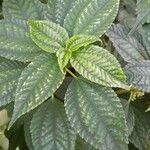
Pilea angulata
Care Guide
💧 Water
Pilea angulata thrives in environments with high humidity and requires weekly watering to remain healthy. It is best grown indoors, where humidity levels can be controlled. Ideally, you should mimic its native rainforest habitat by regularly misting the plant and maintaining high ambient moisture.
☀️ Light Partial sun
Pilea angulata occurs naturally in habitats like forest understories and rocky sites, where it receives natural shade. It prefers partial sun but can tolerate full sun or full shade, reflecting its versatile, hardy character.
What are the sunlight requirements for Pilea angulata?
Pilea angulata thrives in environments that mimic its native understory or rocky areas, preferring conditions of partial sun, which equates to about 3-6 hours of sunlight daily. However, it can also adapt well to full shade, where it receives less than 3 hours of sunlight. Observing the movement of sunlight through your garden and selecting locations that offer a healthy balance of light and shadow will greatly contribute to the plant's well-being.
Can artificial lighting be used for Pilea angulata when natural sunlight is insufficient?
Yes, artificial lighting is a crucial alternative for Pilea angulata's growth when natural sunlight is insufficient, especially during winter or in less sunny indoor areas. Optimal growth is achieved by providing adequate exposure to artificial light sources like LED lights, which can mimic specific wavelengths necessary for plant health. For full sun plants, 30-50W/sq ft is needed; partial sun plants require 20-30W/sq ft, and full shade plants benefit from 10-20W/sq ft. The light source should be positioned 12-36 inches above the plant and be kept on for 8-12 hours per day to simulate natural daylight conditions effectively.
What are the symptoms of insufficient light for Pilea angulata?
When Pilea angulata receives insufficient light, it may exhibit several symptoms indicating stress. These include smaller new leaves, leggy or sparse growth due to increased distances between leaves or stems, premature leaf drop to conserve resources, halted growth as the plant enters survival mode, paler new leaves or irregular color patterns due to a lack of chlorophyll, chlorosis where leaves turn yellow, sunscald characterized by pale or necrotic spots from too much direct light, leaf curling as a defense against excessive sunlight, wilting from increased water loss, and leaf scorching with brown, crispy edges or patches due to overexposure to sunlight.
What solutions can help Pilea angulata adapt to various light conditions?
To aid Pilea angulata in adapting to various light conditions, consider gradually relocating them to sunnier spots weekly until they receive the optimal 3-6 hours of direct sunlight a day. This enables the plant to adjust progressively. If moving the plant is not feasible, artificial lighting like desk or ceiling lamps or professional grow lights should be used for at least 8 hours daily to provide sufficient light. Outdoors, a gradual shift to sunnier locations helps prevent sunburn. Removing obstructions such as trimming branches or relocating the plant to sunnier areas with good drainage during its dormant period can also improve sunlight reception. Note that parts of the plant affected by previous insufficient light may not recover, but new growth should be healthy with improved light conditions.
🌡️ Temperature 20–37.8°C
Pilea angulata comes from tropical areas where the climate is typically warm and humid. Therefore it is well suited to high temperatures and humidity. It dislikes sudden temperature changes and prefers a steady temperature, so it’s important to prevent temperature swings indoors. It usually cannot tolerate cold and needs warmer conditions to grow; if temperatures fall too low, the plant may stop growing or even die.
What is the botanical name of Pilea angulata?
The botanical name of Pilea angulata is Pilea angulata itself. This name helps in scientifically identifying the plant, ensuring there is no confusion with other similar plant species.
💨 Humidity
🪴 Soil 6-7
🌱 Fertilizer
Pilea angulata needs the most fertilizer during its active growth period, which occurs mainly in spring, summer, and early fall. Fertilizing provides essential nutrients the soil may lack, supporting healthy root and stem development and preserving the plant's attractive foliage, a key characteristic of this species.
🪴 Pot & Repot
✂️ Pruning
Pilea angulata is a trailing plant known for its delicate foliage. To encourage healthy, bushy growth and maintain its shape, prune the plant from early to late spring. Regular trimming helps prevent overgrowth and improves air circulation. Make sure to use clean, sharp tools to avoid damaging the plant.
🌿 Propagating
🐛 Diseases & pets
☠️ Toxicity
Characteristics
- Plant Type
- Herb
- Life Cycle
- Perennial
- Genus
- Pilea
- Family
- Urticaceae
- Hardiness Zone
- 11-12
- Mature Height
- 91 cm
- Mature Spread
- 15 cm to 20 cm
- Leaf Color
- Green
- Leaf Type
- Evergreen
- Flower Color
- Yellow, Green
- Flower Size
- 1.02 cm to 2.03 cm
- Bloom Time
- Mid spring, Late spring, Summer, Early fall
- Planting Time
- Spring, Summer
- Harvest Time
- Summer, Fall