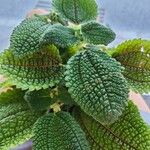
Pilea involucrata
Friendship plant · Silver Friendship Plant · Glistenplant · "freindship plant" is the common name for the pilea involucrata but this is is the SILVER pilea involucrata and therefore NOT the friendship plant · Perish mint
Description
Source: leafsnapPilea involucrata, commonly known as the Friendship Plant or Moon Valley, is a tropical plant native to Central and South America. It belongs to the nettle family and is appreciated for its attractive foliage. The leaves are round or oval-shaped with deep green veins that create a unique pattern on the leaf's surface. The plant grows up to 12 inches tall and 18 inches wide, making it an ideal choice for small spaces. The Friendship Plant prefers bright but indirect light and well-draining soil that is kept moist but not waterlogged. It can be easily propagated through stem cuttings in either water or soil. Besides its decorative appeal, Pilea involucrata has been used in traditional medicine for its anti-inflammatory properties. The leaves can be crushed into a paste and applied topically to treat skin irritations, such as insect bites. Overall, Pilea involucrata is an easy-to-care-for plant with unique foliage that adds interest to any indoor space while also offering potential health benefits.
Care Guide
💧 Water Every 7 days
Permit the main 2"- 3" of the Pilea peperomioides' dirt to dry between waterings. Commonly, profoundly watering this plant once seven days will get the job done, however it will rely upon the sum and nature of light it is getting.
☀️ Light Partial sun
The friendship plant is native to habitats like forest understories or rocky areas, where it grows under natural shade. It prefers partial sun but can adapt to full sun or full shade, showing its adaptable and hardy nature.
🌡️ Temperature 20–37.8°C
The friendship plant comes from tropical areas, where the climate is usually warm and humid. As a result, it is well adapted to high temperatures and humidity. It does not tolerate sudden temperature changes and prefers a steady temperature, so avoiding indoor temperature fluctuations is important. It generally cannot withstand cold and requires warmer temperatures to grow. If the surrounding temperature falls too low, the plant may stop growing or even die.
💨 Humidity normal (40-60%)
This plant will thrive in moderate humidity, which is probably the level in your home. However, misting it a few times a week can be very beneficial. Make sure the room has good ventilation.
🪴 Soil 5-6
🌱 Fertilizer
Proper fertilization is essential for the Friendship plant's health and appearance. Fertilize the Friendship plant during summer, applying fertilizer monthly throughout the season. Nutrients support growth and preserve the plant's parts. Fertilizing improves the Friendship plant's floral display, ensuring the best blooms.
🪴 Pot & Repot 2-3 years
When you repot a Friendship plant, select a pot 1-2 inches (2.5–5.1 cm) larger that has good drainage. Use a well-draining potting mix. Repot during spring or fall, making sure the root ball sits slightly lower than the rim of the flower pot. Water thoroughly after repotting and place the plant in a warm spot with indirect sunlight.
✂️ Pruning
The friendship plant is known for its striking foliage and compact growth. To keep it healthy, regular pruning is important, particularly from early to late spring. Trim any leggy stems and remove damaged leaves to improve light and air circulation. Be sure to use clean, sharp tools to prevent the spread of disease.
🌿 Propagating
🐛 Diseases & pets
☠️ Toxicity
It's non-poisonous and protected inside a home with felines, canines and children.
Characteristics
- Plant Type
- Herb, Vine
- Life Cycle
- Perennial
- Genus
- Pilea
- Family
- Urticaceae
- Hardiness Zone
- 11-12
- Mature Height
- 30 cm
- Mature Spread
- 30 cm to 46 cm
- Leaf Color
- Green, Bronze
- Leaf Type
- Evergreen
- Flower Color
- Cream, Pink
- Flower Size
- 0.20 cm to 0.25 cm
- Bloom Time
- All year round
- Planting Time
- Spring, Summer, Autumn
- Harvest Time
- All year round