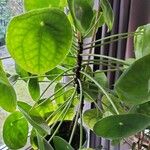
Pilea peperomioides
Chinese Money Plant · Pancake Plant · Friendship Plant · Chinese Missionary Plant · Missionary plant
Description
Source: leafsnapPilea peperomioides, also known as the Chinese money plant or pancake plant, is a popular houseplant native to southern China. It belongs to the Urticaceae family and is characterized by its round, flat leaves that grow on long petioles. The bright green leaves have a shiny texture, making them quite distinctive. The Chinese money plant can grow up to 12 inches tall and 12 inches wide. It thrives in bright, indirect light and well-draining soil. Propagation is easy, either by taking stem cuttings or by separating its offsets. Pilea peperomioides has gained popularity in recent years due to its unique appearance and ease of care. It has become a favorite among houseplant enthusiasts not only for its aesthetic appeal but also for its ability to purify indoor air. In summary, Pilea peperomioides is an attractive and low-maintenance houseplant that enhances indoor spaces with its unique look and air-purifying properties.
💡 The leaves of the Chinese money plant are thick and shiny, resembling an ancient mirror. This suggests that we should reflect on ourselves honestly and recognize our own shortcomings.
🌳 Chinese money plant is more than an attractive houseplant; it also serves as an unexpected aid to mental health. Research indicates that tending a Chinese money plant can lower stress and boost concentration, thereby supporting mental wellness in a particular way — not through usual methods like oil extraction or beverage production, but by attending to often neglected psychological well-being.
🎭 Be honest and transparent.
Care Guide
💧 Water Every 7 days
The Chinese Money Plant, which originates from Yunnan Province in China, thrives in environments with high humidity and consistent moisture. To keep its foliage lush, water it weekly, although it can tolerate occasional delays in watering. This plant is ideal for indoor spaces, especially in humid rooms like kitchens and bathrooms, which mimic its native habitat's conditions.
When should I water my Chinese Money Plant?
The Chinese Money Plant (Pilea peperomioides) requires careful attention to watering to maintain its health and vitality. Water the plant when the top 1 to 2 inches of soil feel dry to the touch. Signs that your plant needs water include soil dryness, drooping leaves, yellowing or browning of the leaves, wilting or wrinkling leaf texture, and indications of water stress during the pre-flowering stage. Be mindful of the plant's environment; high temperatures and direct sunlight increase its water needs. Avoid both early and late watering to prevent the risks of root rot and dehydration, respectively. Recognizing these signs will help you manage a proper watering schedule, promoting the plant's growth and prolonging its lifespan.
How should I water my Chinese Money Plant?
To optimally water your Chinese Money Plant (Pilea peperomioides), ensure the soil is consistently moist but not soggy, avoiding both overwatering and underwatering conditions. You can utilize bottom-watering by placing the plant pot in a tray of water, allowing the roots to absorb moisture from below which prevents overwatering. Misting the plant can also be beneficial, especially in dry environments, by lightly misting the leaves with a spray bottle to increase humidity around the plant. Use a watering can with a narrow spout for precision, ensuring water is directed at the base and not on the leaves, to avoid fungal diseases. A moisture meter can be an invaluable tool in determining when the plant requires watering. It's crucial to maintain proper drainage in the plant pot to prevent waterlogging and promote healthy root development.
How much water does Chinese Money Plant really need?
The Chinese Money Plant (Pilea peperomioides), rooted in the moist yet well-drained soil of its natural understory habitat in southwestern China, benefits from moderate and consistent moisture levels. The amount of water it requires varies with the plant size, pot size, and root depth. It is essential to thoroughly moisten the soil until water drains from the bottom of the pot, ensuring the root zone is saturated without causing waterlogging. Let the top 1-2 inches of soil dry out before watering again. Both underwatering and overwatering can lead to adverse health effects for the plant, including wilted or drooping leaves in the case of underwatering and root rot or yellowing leaves due to overwatering.
What kind of water is best for Chinese Money Plant?
The optimal water type for the Chinese Money Plant (Pilea peperomioides) is rainwater, owing to its natural alignment with the plant's needs, being chemical-free and having a balanced pH. If rainwater is unavailable, distilled or filtered water are suitable alternatives, ensuring harmful contaminants are removed. While tap water can be used, it's important to dechlorinate it due to the plant's high sensitivity to chlorine, which can cause leaf burn, and moderate sensitivity to fluoride. Ensure the water is at room temperature, about 68-72°F (20-22°C), to avoid shocking the plant with extreme temperatures.
How do Chinese Money Plant's watering needs change with the seasons?
The Chinese Money Plant's (Pilea peperomioides) watering needs vary with season changes. In spring, during its active growth phase, maintain consistent soil moisture with regular watering. Reducing the watering frequency slightly during the summer reflects the plant's natural adaptation to drought, mimicking dormancy. As autumn approaches and the plant prepares for winter dormancy, gradually decrease watering further, ensuring the soil stays lightly moist. During winter, the plant's dormant period, water sparingly, allowing the topsoil to dry out between waterings.
☀️ Light Partial sun
The growth of the chinese money plant is aided by lighting that provides the softer morning rays while avoiding the stronger afternoon light. Although it comes from areas with heavy tree cover where sunlight is diffused, it can still thrive in shadier conditions. However, too little or too much light can cause the leaves to discolor or become droopy.
What are the sunlight requirements for a Chinese Money Plant?
A Chinese Money Plant thrives under certain light conditions; it requires partial sun, which translates to about 3-6 hours of sunlight daily. In contrast, a full shade environment is described as having less than 3 hours of sunlight per day. Observing the movement of sunlight through your garden is essential to choose locations that offer an optimal balance of light and shade, ensuring your plant's health. The plant benefits from morning light, which is less intense, while avoiding the harsher afternoon sun. Originally from regions with heavy tree cover where sunlight is dappled, the plant can still prosper in shade. However, both insufficient and excessive light exposure can lead to leaf discoloration or droopiness.
How can artificial lighting be used for a Chinese Money Plant?
When natural sunlight is inadequate, especially during winter or in less sunny locations, artificial lighting can be crucial for the growth of indoor plants like the Chinese Money Plant. Optimal growth can be achieved by selecting the appropriate type of artificial light, such as LED lights, which can be customized to provide specific light wavelengths needed by plants. The required intensity of artificial light varies; full sun plants need 30-50W/sq ft, partial sun plants 20-30W/sq ft, and full shade plants 10-20W/sq ft. The light source should be placed 12-36 inches above the plant to mimic natural sunlight, with a duration of 8-12 hours of light per day.
What are the symptoms of improper lighting for a Chinese Money Plant?
The Chinese Money Plant shows various symptoms when subjected to less than ideal light conditions. Poor lighting can trigger survival mode, halting leaf production, and leading to delayed growth or growth cessation. Leaves may develop lighter colors or appear pale, indicating a lack of chlorophyll and nutrients. Other signs include chlorosis (leaves losing their green color), sunscald (damage from intense sunlight exposure), leaf curling (as a defense mechanism to minimize water loss), wilting (due to excessive water loss from overexposure to sunlight), and leaf scorching (brown, dry edges on leaves from excessive sunlight). Each symptom underscores the need for proper light management.
How can lighting conditions be optimized for a Chinese Money Plant?
Optimizing light conditions for a Chinese Money Plant involves several strategies, whether the plant is kept indoors or outdoors. For indoor plants, especially those that are large or not easily movable, gradually increase their exposure to sunlight by shifting them to sunnier spots each week until they receive 3-6 hours of direct sunlight a day. Using artificial light, such as desk lamps or professional grow lights, for at least 8 hours daily can also supplement light needs. Outdoors, plants should be gradually moved to brighter locations to prevent sunburn, adjusting to changes in light intensity smoothly. If obstruction blocks sunlight, consider trimming or pruning to allow more light to reach the plant. For smaller plants, transplanting them during their dormant period to a spot with better light and drainage might be necessary. Note that parts of the plant damaged by insufficient light might not recover, but new growth should be healthy with improved lighting.
🌡️ Temperature 20–37.8°C
The Chinese money plant comes from areas where temperatures range from 20 to 38 ℃ (68 to 100 ℉). It prefers that same temperature span, doing best in warm, humid conditions. In winter, maintain temperatures between 13 and 18 ℃ (55 to 64 ℉) to prevent cold stress.
What is the origin and ideal temperature range for a Chinese money plant?
The Chinese money plant, known botanically as Pilea peperomioides, originates from regions where temperatures fluctuate between 20 to 38°C (68 to 100°F). This plant thrives in warm and humid conditions typical of its native environment. To keep the plant healthy during winter, it's crucial to maintain the temperature between 13 to 18°C (55 to 64°F) to prevent cold stress. Chinese money plants love heat, and exposure to cold temperatures can harm them. Therefore, if you've been growing the plant outdoors during warmer months, it's advisable to bring it indoors in autumn. When indoors, place it near a bright window while ensuring it's not too close to heaters to maintain optimal growth temperatures above 20°C during the colder months. Avoid letting the temperature drop to 0°C to protect the plant from damage.
How does low temperature affect the Chinese money plant and what are the solutions?
The Chinese money plant is not tolerant of low temperatures and shows optimal growth when the temperature is above 20°C. Exposure to temperatures below 0°C, especially when falling below -5°C, can lead to significant signs of stress on the plant. Symptoms may include a lightening of leaf color which, following frost damage, may turn brown or black. Additionally, the plant may exhibit wilting or drooping. The solution to frost damage includes trimming off the frost-damaged parts of the plant and moving it to a warmer indoor location immediately. For best results, place the plant near a south-facing window to ensure it gets enough sunlight while avoiding direct placement near heaters or air conditioners to prevent air from becoming too dry.
What are the effects of high temperature on the Chinese money plant and how can they be mitigated?
During the summer, it's important to keep the Chinese money plant in conditions below 38°C to prevent heat stress. Temperatures exceeding 43°C can cause the leaves to lighten in color and increased susceptibility to sunburn. To mitigate these effects, trim away any sunburned or dried parts of the plant and move it to a shaded location, particularly to protect it from the midday and afternoon sun. To maintain soil moisture and support plant health, it's beneficial to water the plant in the morning and evening.
💨 Humidity normal (40-60%)
This plant will thrive in moderate humidity, which is probably the level in your home. However, misting it a few times a week can be very beneficial. Make sure the room has good ventilation.
🪴 Soil 6-7
🌱 Fertilizer
The Chinese money plant requires the most fertilizer during its active growth period, which takes place mainly in spring, summer, and early fall. Fertilizing supplies essential nutrients that the soil may lack, encouraging healthy root and stem growth as well as the attractive foliage that is a key characteristic of this plant.
Why should I add fertilizer to my Chinese money plant?
All plants need soil nutrients to grow, including the Chinese money plant. However, it's not guaranteed that the soil your plants grow in will have all the necessary nutrients. Fertilizing and amending the soil will ensure that your garden plants have all the nutrients they need, including the ones specific to them. For the Chinese money plant, fertilization is crucial for healthy root and stem development throughout the growing season. It also helps the plant have beautiful leaves, which are its main decorative feature.
When should I fertilize my Chinese money plant for best results?
It's best to fertilize a Chinese money plant when it is actively growing, which is usually during spring, summer, and early fall. During these months, you should feed the plant every two to four weeks. As winter approaches, you can gradually reduce the amount of fertilizer you give until you stop completely, as the plant will have less active growth during this season.
When is it not a good idea to add fertilizer to my Chinese money plant?
For most of the year, including spring, summer, and fall, it is important to regularly feed your Chinese money plant. However, there are a couple of exceptions to this rule. If you notice that your Chinese money plant has had too much fertilizer or has been fertilized incorrectly, causing issues like fertilizer burn, you will need to address these problems before resuming a regular feeding schedule. Additionally, it is important to note that during the winter, when the plant enters a dormant phase, you should not fertilize it. This is particularly important if you are growing the plant indoors in a cold climate, as feeding it during this time can be detrimental and increase the risk of fertilizer burn.
What kind of fertilizer does my Chinese money plant need?
The fertilizer needed for a Chinese money plant contains a specific blend of nutrients, which are each present in relatively low amounts. Ideally, the fertilizer should have an N-P-K ratio of 3-1-2. However, a general-purpose fertilizer with an even blend of nutrients can also be effective in some cases. Regardless of the type of fertilizer used, the ratio number representing the volume of each nutrient should be at 10 or lower. You can choose between granular or liquid-based fertilizer. If you opt for a liquid-based fertilizer, it is recommended to dilute its strength by half. While there are few disadvantages to using granular fertilizer, it is often more practical to use liquid fertilizer, especially if you water your Chinese money plant while providing nutrients.
How do I give nutrients to my Chinese money plant?
When purchasing fertilizer for your Chinese money plant, it's important to follow the application instructions that usually come with it. For this specific plant, it's recommended to fertilize just before or during watering to avoid damaging the roots. If you're using slow-release granular fertilizer, sprinkle it on the soil and water immediately afterward. If you're using liquid-based fertilizer, dilute it with water, apply it to the soil, and then provide additional water. In spring and fall, when the plant's growth is increasing or slowing down, respectively, it's especially important to dilute the fertilizer by at least half.
🪴 Pot & Repot 2-3 years
When repotting a Chinese money plant, select a pot 1–2 inches (2.5–5 cm) larger with ample drainage. Use a well-draining potting mix. Repot in spring or fall, making sure the root ball sits slightly below the rim of the flower pot. Water thoroughly after repotting and place it in a warm spot with indirect sunlight.
✂️ Pruning
The Chinese money plant is known for its round, coin-shaped leaves. To encourage new growth and maintain its shape, it's best to prune the plant from early to late spring. To do this, trim off any offshoots at the base, remove damaged leaves, and improve air circulation to promote the plant's health. These pruning techniques are recommended by reputable horticultural sources as effective for the Chinese money plant.
🌿 Propagating
🐛 Diseases & pets
☠️ Toxicity
Chinese money plants are considered safe for cats, dogs, other pets, and humans.
Characteristics
- Plant Type
- Herb
- Life Cycle
- Perennial
- Genus
- Pilea
- Family
- Urticaceae
- Hardiness Zone
- 9-11
- Mature Height
- 30 cm
- Mature Spread
- 30 cm
- Leaf Color
- Green
- Leaf Type
- Evergreen
- Flower Color
- Green, White, Pink, Cream
- Flower Size
- 2.54 cm
- Bloom Time
- Early summer, Mid summer
- Planting Time
- Spring, Summer, Autumn, Winter
- Harvest Time
- Mid summer, Late summer, Early fall, Mid fall
- Native Area
- China