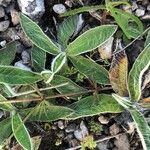
Pilosella officinarum
Mouse-ear hawkweed · Mouse-ear-hawkweed · Mouseear hawkweed · Mouse-eared Hawkweed
Description
Source: leafsnapPilosella officinarum (synonym Hieracium pilosella), known as mouse-ear hawkweed, is a yellow-flowered species of flowering plant in the daisy family Asteraceae, native to Europe and northern Asia. It produces single, lemon-coloured inflorescences. Like most hawkweed species, it is highly variable and is a member of a species complex of several dozens of subspecies and hundreds of varieties and forms. It is an allelopathic plant.
Care Guide
💧 Water
Mouse-ear hawkweed originally comes from well-drained meadows where it thrives with moderate moisture. To simulate these native conditions, it needs to be watered weekly. When grown indoors, this plant requires a balance of humidity and soil moisture. It's important to maintain these conditions to encourage healthy growth and avoid root rot caused by overwatering.
How should I water my Mouse-ear hawkweed?
To properly water the Mouse-ear hawkweed, it is best to use filtered water at room temperature. Tap water may contain harmful particles, so filtering is recommended. The plant prefers warm water as it is accustomed to a warm environment. Cold water can be a shock to its system. Additionally, avoid watering the foliage from above, as it can cause issues. Instead, thoroughly soak the soil with the filtered room temperature water. This helps moisten the roots and facilitates the spread and nutrient absorption of the plant.
What do I do if I give my Mouse-ear hawkweed too much or too little water?
Overwatering can harm your Mouse-ear hawkweed by causing wilting, yellowing leaves, and potential diseases like root rot, mold, and mildew. Underwatering is less common, but it can cause brittle, brown leaves. It's important to spot signs of overwatering early and reduce watering immediately. Check the soil's drainage and replace it if it doesn't drain well. For underwatering, simply water more regularly until the signs improve.
How much water does my Mouse-ear hawkweed need?
If your Mouse-ear hawkweed is in a pot, the best way to check if it needs water is by sticking your finger into the soil. If the top two to three inches are dry, it's time to water it. If you're growing the Mouse-ear hawkweed outside in the ground, you can use the same method. When the top few inches are dry, it needs water. During spring and early fall, you'll typically need to water this plant about once a week. But in hot weather, you may need to water it twice a week or more. It's worth noting that mature and well-established Mouse-ear hawkweed can handle drought quite well.
How much water does my Mouse-ear hawkweed require?
To properly water your Mouse-ear hawkweed, don't hold back on the amount of water you give. Make sure that the top two to three inches of soil are dry before watering, and then give the plant a good, thorough watering. This means adding enough water to fully saturate the soil, allowing excess water to flow out through the drainage holes at the bottom of the pot. If you don't see any excess water draining, it means you haven't watered enough. On the other hand, be careful not to let water accumulate and sit in the soil, as this can be harmful to the plant. If water doesn't drain well through the pot, it could indicate that the soil isn't draining properly, which can negatively impact the plant's health. If the plant is kept outdoors, receiving about 1 inch of rain per week should be sufficient.
How do I water my Mouse-ear hawkweed as it grows?
The water needs of the Mouse-ear hawkweed vary throughout its growth stages. When the plant is young or has just been transplanted, it requires more water to support root growth. As the plant matures, it requires less water. Additionally, during the bloom period, the plant requires extra water to support flower development.
☀️ Light Full sun
Mouse-ear hawkweed strongly prefers abundant sunlight for optimal growth, just as in its native environment. Insufficient or excessive sunlight can harm its development. Its need for sun stays consistent throughout all stages of growth.
What are the sunlight requirements for Mouse-ear hawkweed?
Mouse-ear hawkweed thrives under full sun conditions, requiring above 6 hours of sunlight daily to grow optimally. This necessity remains constant throughout all its growth phases, mirroring the plant's natural habitat condition. It's crucial to observe the movement of sunlight through your garden to select spots that provide a perfect balance of light and shade, ensuring the plant's happiness and healthy development.
How does artificial lighting support Mouse-ear hawkweed growth indoors?
Indoor Mouse-ear hawkweed plants benefit significantly from artificial lighting, especially when natural sunlight is insufficient. LED lights are a popular choice as they can be customized to provide specific wavelengths needed for optimal plant growth. For full sun plants like Mouse-ear hawkweed, 30-50W/sq ft of artificial light is recommended. The light source should be positioned 12-36 inches above the plant to mimic natural sunlight, and plants typically require 8-12 hours of light per day. This setup promotes faster, healthier growth during the winter or in less sunny spaces.
What are some common light deficiency symptoms in Mouse-ear hawkweed?
Light deficiency in Mouse-ear hawkweed can lead to several symptoms impacting its health and appearance. These include the development of smaller new leaves, leggy or sparse growth, premature leaf drop, and a halt in new leaf production, indicating the plant's entry into survival mode. The leaves may also develop pale coloration or show signs of chlorosis - a condition where leaves lose their green color. Excessive sunlight exposure can lead to other issues such as sunscald, leaf curling, wilting, and leaf scorching, which are all detrimental to the plant's health.
How can you mitigate sunlight-related issues for Mouse-ear hawkweed, both indoors and outdoors?
To mitigate sunlight-related issues for Mouse-ear hawkweed, gradually increase its sunlight exposure to ensure it receives at least 6 hours of direct sunlight daily. For indoor plants, use south-facing windows or artificial light if the plant is not easily movable, keeping lamps on for at least 8 hours daily. Outdoors, move plants to sunnier spots gradually to prevent sunburn. Eliminate obstructions that block sunlight, and consider transplanting smaller plants to sunny locations during their dormant period. Although parts of the plant affected by insufficient sunlight may not recover, new growth after adjusting light exposure will be healthy.
🌡️ Temperature 5–32.2°C
Mouse-ear hawkweed is native to habitats where the temperature ranges from 41 to 89.6 °F (5 to 32 ℃). It grows best when temperatures stay within this range. In hotter or colder seasons, adjustments may be needed to maintain optimal growth.
What is the native temperature range for Mouse-ear hawkweed?
Mouse-ear hawkweed, or Pilosella officinarum, is native to environments where the temperature ranges from 41 to 89.6 °F (5 to 32 °C). For optimal growth, it is crucial to maintain temperatures within this range. During seasons with hotter or colder weather, adjustments may be required to ensure the plant thrives. It possesses strong cold resistance, meaning special frost protection measures aren't generally needed in winter. However, if temperatures are expected to drop below -30°C, cold protection through covering the plant with soil or straw is advisable. Additionally, watering the plant abundantly before the first freeze in autumn helps maintain soil moisture through winter and early spring, preventing drought and water scarcity.
How does low temperature affect Mouse-ear hawkweed, and what are the solutions?
Mouse-ear hawkweed displays good cold tolerance and generally thrives best when the temperature remains above 5°C. Throughout the winter months, it should ideally be kept above -25°C. When temperatures fall below -30°C, the plant might not show noticeable changes during the winter, but come spring, there may be a decrease in sprouting or even no sprouting at all. To address this, in spring, you should remove any parts of the plant that have failed to sprout, encouraging new growth and health.
How does high temperature affect Mouse-ear hawkweed, and what are the solutions?
During the summer, it is critical for Mouse-ear hawkweed to stay below 32°C for its well-being. Exceeding temperatures of 35°C can result in the leaves becoming lighter in color, prone to curling, susceptibility to sunburn, and in severe cases, the entire plant might wilt and dry out. To mitigate these effects, prune the sunburned and dried-up parts of the plant. Moving the plant to a location with shade during the midday and afternoon sun, or using a shade cloth for protection is advisable. Additionally, watering the plant in the morning and evening ensures the soil remains moist, providing a conducive environment for the plant's survival in higher temperatures.
💨 Humidity
🪴 Soil 5-7
🌱 Fertilizer
One fertilizer application in spring is typically enough for Mouse-ear hawkweed, though several feedings can boost growth to its fullest. Feed every four to six weeks. Fertilizing improves the leaves' appearance and function, helping maintain even color and a healthy texture. It also encourages root development and nutrient uptake for the plant's long-term health.
🪴 Pot & Repot
✂️ Pruning
🌿 Propagating
🐛 Diseases & pets
☠️ Toxicity
Characteristics
- Plant Type
- Herb
- Life Cycle
- Perennial
- Genus
- Pilosella
- Family
- Asteraceae
- Hardiness Zone
- 4-8
- Mature Height
- 20 cm to 30 cm
- Mature Spread
- 20 cm to 30 cm
- Leaf Color
- Green, White, Gray, Silver
- Leaf Type
- Evergreen, Semi-evergreen
- Flower Color
- Yellow
- Flower Size
- 2.54 cm to 7.62 cm
- Bloom Time
- Late spring, Early summer, Mid summer
- Planting Time
- Spring, Summer, Autumn
- Harvest Time
- Early summer, Mid summer
- Native Area
- Turkey, Austria, Sweden, Slovakia, Montenegro, Croatia, Slovenia, Belarus, Russia, Germany, Estonia, Romania, Latvia, Belgium, Moldova, Netherlands, France, Portugal, Czech Republic, Bulgaria, Armenia, Poland, Greece, North Macedonia, Ukraine, Serbia, Lithuania, Norway, Italy, Kazakhstan, Spain, Switzerland, Denmark, Finland, Bosnia and Herzegovina, Iran, Albania, Ireland, United Kingdom, Hungary, Azerbaijan