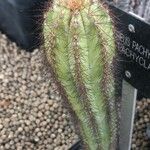
Pilosocereus pachycladus
Blue Columnar Cactus
Description
Source: leafsnapPilosocereus pachycladus, commonly known as the "thick-stemmed hairy cactus," is a species of cactus native to Brazil and belongs to the family Cactaceae. The plant features a cylindrical stem that can reach up to 3 meters in height and 10-15 cm in diameter. The stem is characterized by numerous ribs adorned with areoles, which produce spines and hairs. The spines are typically brown or black, while the hairs can be white or yellow. During the summer months, Pilosocereus pachycladus blooms beautiful white flowers with pinkish-red centers, which open at night. These flowers are succeeded by small red fruits that house numerous black seeds. The plant thrives in well-drained soil and prefers full sun exposure, although it can also tolerate partial shade. It requires minimal watering during the winter but needs regular watering in the summer. Due to its unique appearance and beautiful flowers, Pilosocereus pachycladus is commonly used as an ornamental plant. Additionally, it possesses medicinal properties, containing antioxidants that help reduce inflammation and improve digestion. In summary, Pilosocereus pachycladus is an intriguing cactus species with distinctive features, making it a popular choice for both ornamental and medicinal purposes.
Care Guide
💧 Water Every 7 days
The blue columnar cactus is a drought-tolerant evergreen plant well-suited to arid environments. It only needs to be watered once every three weeks, thanks to its efficient water retention abilities. Its ability to thrive with minimal moisture makes it an excellent choice for outdoor cultivation, especially considering its size and striking structural form.
☀️ Light Full sun
The blue columnar cactus thrives with abundant sunlight, reflecting its natural growth environment. It can also tolerate moderately sunny conditions, but excessive exposure may cause scorching while insufficient light can impede growth. Its light requirements remain largely the same across different growth stages.
What are the sunlight requirements for Blue columnar cactus?
The Blue columnar cactus requires full sun, which is above 6 hours of sunlight, to thrive. It can also tolerate partial sun, defined as about 3-6 hours of sunlight. Observing the movement of sunlight through your garden can help identify the ideal locations for planting, ensuring a balance of light and shade to keep your plants healthy.
What are the essentials for growing Blue columnar cactus?
The Blue columnar cactus performs best under plentiful sun exposure, which is crucial for its natural growth environment. It can tolerate moderately sunny conditions, but both overexposure and underexposure can be detrimental, leading to scorching or impeding growth, respectively. Growth stages of the cactus do not significantly alter its light demand. Additionally, when natural sunlight is not available, especially in winter or less sunny spaces, artificial lighting can be employed. Using the right type of artificial light, like LED, which can be customized for the plant's needs, is vital. The required wattage per square foot varies depending on the plant's sunlight needs, with full sun plants needing 30-50 W/sq ft, partial sun plants requiring 20-30 W/sq ft, and full shade plants needing 10-20 W/sq ft. Placement and duration of light exposure should mimic natural conditions as closely as possible.
What are common symptoms of incorrect light exposure in Blue columnar cactus?
Incorrect light exposure can cause various symptoms in Blue columnar cactus, indicating either light deficiency or overexposure. Symptoms of deficiency include smaller new leaves, leggy or sparse growth, faster leaf drop, slower or no new growth, and lighter-colored new leaves. Overexposure can lead to chlorosis (leaves turning yellow), sunscald, leaf curling, wilting, and leaf scorching. These symptoms either indicate an excessive loss of chlorophyll, damage by intense light, or a protective response to reduce water loss and minimize damage.
How can you address light exposure issues in Blue columnar cactus?
To optimize growth, it's crucial to gradually adjust the plant's exposure to sunlight, aiming for at least 6 hours of direct sunlight daily for indoor plants. This may involve moving the plant closer to a south-facing window or utilizing artificial light for large or immobile plants. For outdoor plants, a gradual transition to sunnier spots can prevent sunburn. Removing obstructions or transplanting to brighter locations can help outdoor or ground-planted cacti. It's important to note that parts of the plant damaged by insufficient light may not recover, but new growth will be healthier following improved light conditions.
🌡️ Temperature 20–37.8°C
The blue columnar cactus is native to regions where temperatures typically range from 68 to 100.4°F (20 to 38℃). For thriving growth, it prefers conditions that replicate this range. Adjust the environment seasonally to maintain these temperature preferences.
💨 Humidity dry (<40%)
This plant prefers dry conditions, so don't mist it. However, watering it less often can also thrive in higher humidity.
🪴 Soil 6-7
🌱 Fertilizer
For the blue columnar cactus, light applications of fertilizer once or twice a year during the growing season are sufficient. Avoid fertilizing in winter or in summer when it is dormant. Reduce feeding for repotted plants and wait a couple of months after repotting before applying fertilizer. Fertilizing supports healthy growth and encourages blooming.
🪴 Pot & Repot 2-3 years
Repot your blue columnar cactus every 2 to 3 years during spring. Choose a slightly larger pot with drainage holes for this task. After repotting, place the cactus in a location with bright, indirect light. Water sparingly until you see new growth, which indicates that the cactus has successfully acclimated.
✂️ Pruning
The blue columnar cactus needs very little pruning. However, it's a good idea to remove any withered flowers and branches. This helps the plant direct its nutrients towards healthy growth.
🌿 Propagating
🐛 Diseases & pets
☠️ Toxicity
Characteristics
- Plant Type
- Succulent
- Life Cycle
- Perennial
- Genus
- Pilosocereus
- Family
- Cactaceae
- Hardiness Zone
- 9-11
- Mature Height
- 10.06 m
- Mature Spread
- 11 cm
- Leaf Color
- Blue
- Leaf Type
- Evergreen
- Flower Color
- White
- Flower Size
- 7.62 cm to 10.16 cm
- Bloom Time
- Summer, Early fall
- Planting Time
- Spring, Summer, Autumn
- Harvest Time
- Late summer, Fall
- Native Area
- Mexico, South America, Caribbean