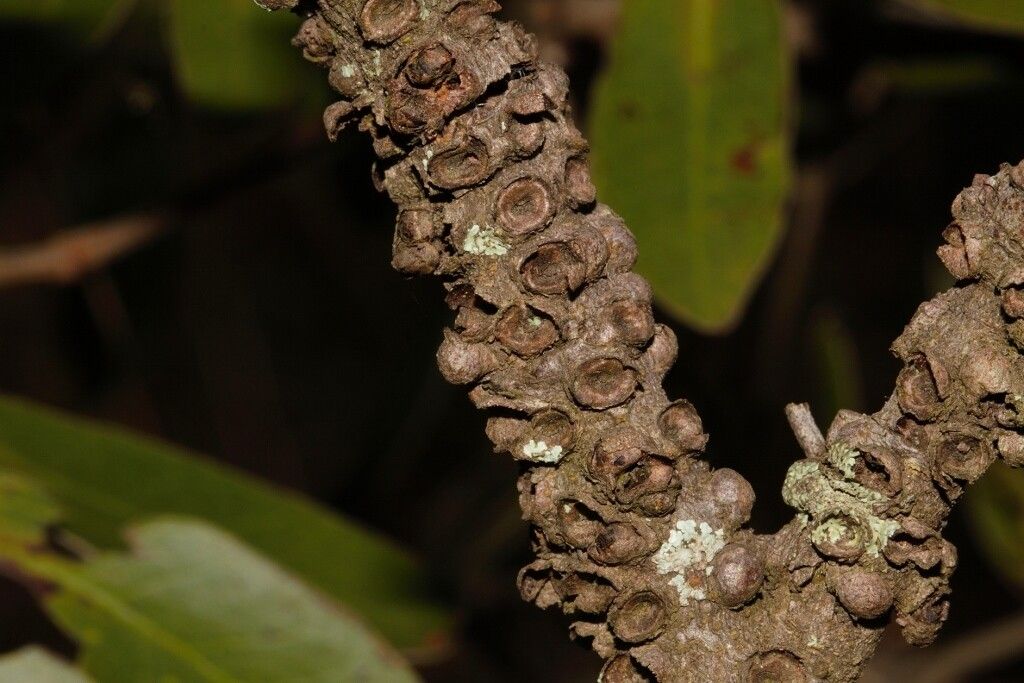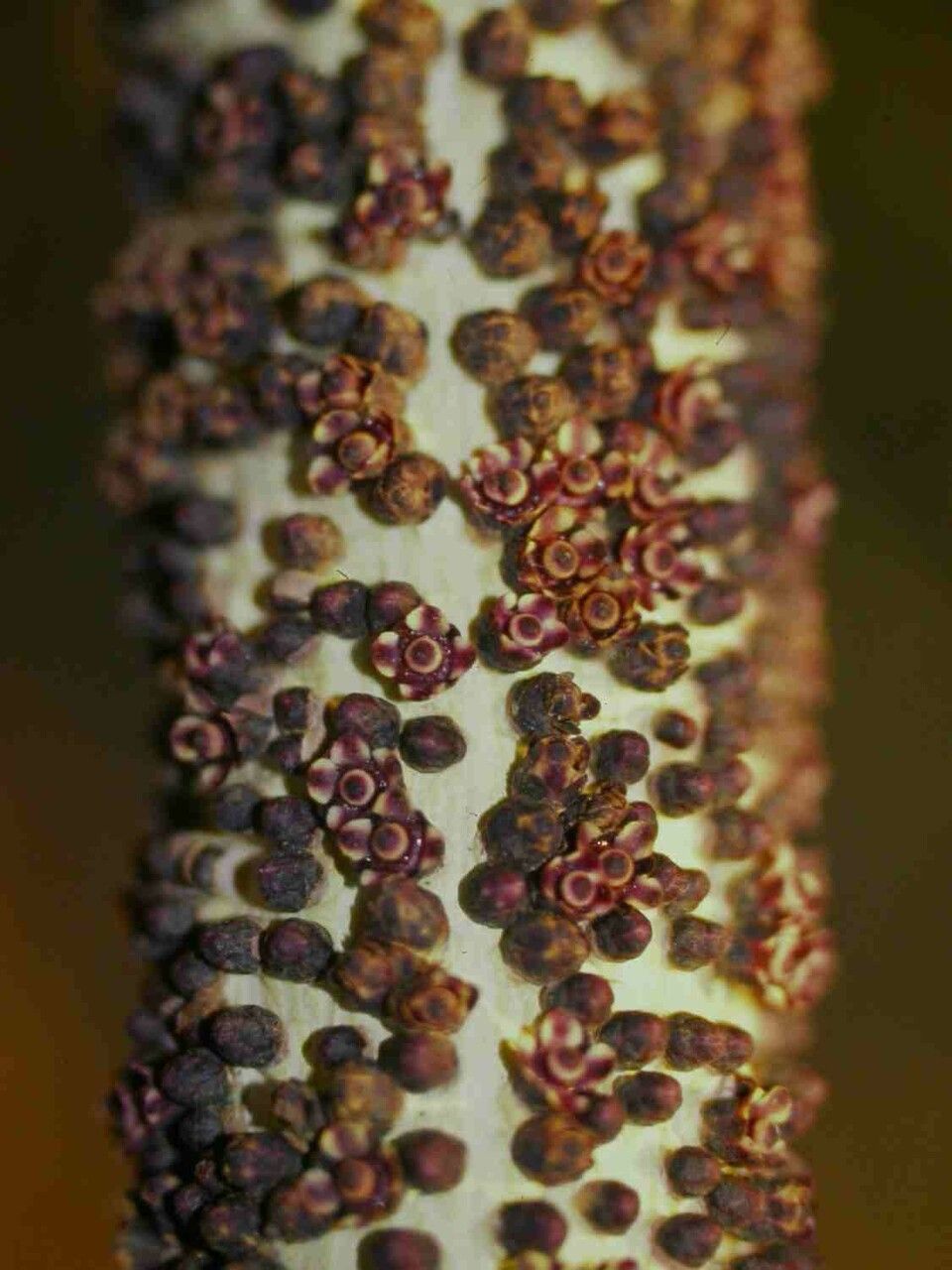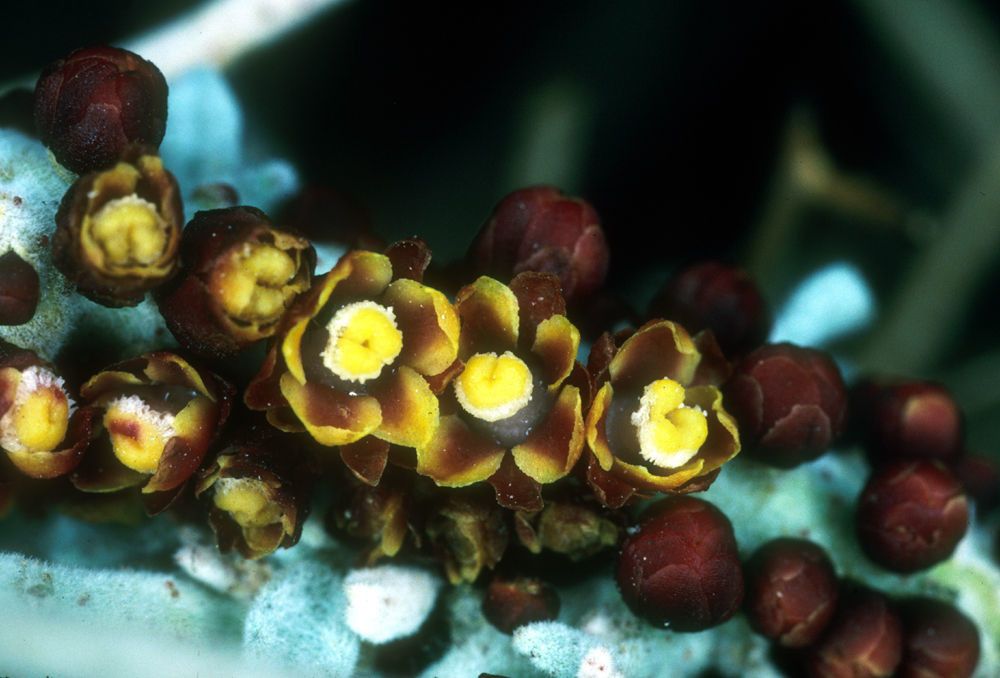
Pilostyles thurberi is a unique and fascinating plant from the family Apodanthaceae, commonly known as "Thurber's pilostyles." It is native to the southwestern United States, particularly in Arizona and Texas, as well as in Mexico.
This plant exhibits a parasitic lifestyle, relying on other plants for survival. It attaches to the roots of its host plant using specialized structures called haustoria to absorb nutrients. Pilostyles thurberi lacks leaves and chlorophyll, producing only small, reddish-brown flowers.
The flowers of Pilostyles thurberi are particularly distinctive, growing directly from the host stem without any leaves or branches. They have a tubular shape and feature five petals that curl back at their tips, forming an umbrella-like structure over the center of each flower.
Despite having a parasitic nature and no visible foliage or stems above ground for most of their life cycle, Pilostyles thurberi plays a crucial role in maintaining ecological balance. It provides a habitat for insects such as bees and butterflies.
In conclusion, Pilostyles thurberi is an intriguing plant species with unique characteristics that make it stand out. Its parasitic lifestyle, though unusual, contributes significantly to biodiversity within its natural ecosystems.
Thurber's stemsucker shows strong resistance to disease and is typically not vulnerable to illnesses. Still, it can be affected by pests and diseases present in its environment. When infections do occur, they are generally mild. Regarding upkeep, this plant demands a moderate level of care. It should be trimmed regularly to preserve an attractive appearance and support healthy growth. Applying fertilizer can also encourage blooming. Thurber's stemsucker is appropriate for anyone who has an outdoor area, such as a garden or patio, and does not call for extensive plant-care experience. If cultivated indoors, it may need a higher level of attention.
How to keep Pilostyles Thurberi.
Fertilizer
One fertilizer application in spring is generally adequate for Thurber's stemsucker, but several feedings can maximize growth. Fertilize every month to every month and a half. Feeding improves the appearance and function of the leaves, helping maintain even color and a healthy texture. It also promotes root development and nutrient uptake for the plant's long-term health.
Pruning
Thurber's stemsucker is a non-chlorophyll parasitic plant that requires careful pruning in early spring. This strategic pruning helps remove damaged parts and improve air circulation. Proper pruning plays a crucial role in managing the plant's spread and promoting the health of nearby host plants. However, it's important not to over-prune, as Thurber's stemsucker relies on its host for nutrients.
Botanical profile.
- Plant Type
- Herb
- Life Cycle
- Perennial
- Genus
- Pilostyles
- Family
- Apodanthaceae
- Mature Height
- 0 cm to 30 cm
- Native Area
- Mexico