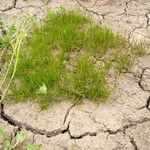
Pilularia americana
American pillwort
Description
Source: leafsnapPilularia americana, the American pillwort, is an unusual species of fern. The fronds essentially consist of the petioles only, any form of flattened laminae having been lost. It is in the aquatic fern family Marsileaceae, and is related to the water clovers and also to Azolla and Salvinia.
Care Guide
💧 Water
The American pillwort thrives in wetland habitats and prefers consistent moisture. It has moderate drought tolerance, so it should be watered weekly to ensure it gets the hydration it needs. This plant is adaptable to different water levels, making it ideal for rain gardens or the edges of ponds.
☀️ Light Full sun
American pillwort is native to habitats with plentiful sunlight, such as the shallow margins of ponds and lakes. It favors full sun but can also tolerate partial sun.
What are the sunlight requirements for American pillwort?
American pillwort, known botanically as Pilularia americana, is a sun-loving perennial herb that thrives in full sun conditions, requiring above 6 hours of sunlight daily. It can also tolerate partial sun, which means about 3-6 hours of sunlight. It's important to observe how sunlight moves through your garden to choose spots that provide the right balance of light and shade, ensuring the plant's happiness and optimal growth.
How can artificial lighting support American pillwort growth indoors?
When natural sunlight is insufficient, especially during winter or in less sunny indoor spaces, artificial lighting becomes crucial for the growth of American pillwort. LED lights are recommended because they can be customized to provide specific wavelengths necessary for the plant. Full sun plants like American pillwort require 30-50W/sq ft of artificial light. The light source should be placed 12-36 inches above the plant to mimic natural sunlight conditions, and the plants typically need 8-12 hours of light per day to thrive.
What are the symptoms of insufficient light in American pillwort, and how can they be addressed?
Insufficient light can cause various symptoms in American pillwort, including smaller new leaves, leggy or sparse growth, faster leaf drop, slower or halted growth, paler new leaves, chlorosis, sunscald, leaf curling, wilting, and leaf scorching. Solutions include gradually moving the plant to sunnier locations, ensuring at least 6 hours of direct sunlight daily, and using artificial lighting if the plant is large or not easily movable. Outdoor plants should also be moved gradually to avoid shock. If sunlight is blocked by obstructions like trees, consider pruning to let more light through. For smaller plants, transplantation to a sunnier location might be necessary.
🌡️ Temperature 10–35°C
American pillwort can tolerate a wide range of temperatures, but its distribution may still be restricted by different combinations of moisture and heat. It does best in warm summer climates with sufficient rainfall or regular watering. Extended periods of cloudy, rainy weather and prolonged high temperatures both raise the chances of the plant dying. In winter, providing adequate protection from cold increases its survival rate.
💨 Humidity
🪴 Soil
🌱 Fertilizer
🪴 Pot & Repot
✂️ Pruning
American pillwort is an aquatic fern with slender foliage. To manage its growth and remove dead fronds, it's best to prune it from early to late spring. Regular pruning encourages healthy development and improves the plant's appearance. Handle the plant gently to protect its delicate roots, and aim to complete pruning before the growing season for the best results.
🌿 Propagating
🐛 Diseases & pets
☠️ Toxicity
Characteristics
- Plant Type
- Herb
- Life Cycle
- Perennial
- Genus
- Pilularia
- Family
- Marsileaceae
- Hardiness Zone
- 6-9
- Mature Height
- 0 cm to 30 cm
- Mature Spread
- 10 cm to 30 cm
- Leaf Color
- Green
- Leaf Type
- Deciduous
- Planting Time
- Spring, Summer, Autumn
- Native Area
- Colombia, Mexico, Bolivia, Venezuela, Brazil