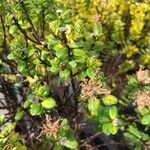
Pimelea ferruginea
Rosy riceflower
Description
Source: leafsnapPimelea ferruginea is a small shrub native to southwest Western Australia. It was described by Labillardiere in 1805.
Care Guide
💧 Water
The rosy rice flower thrives in arid regions and has a moderate tolerance for drought. It does best with consistent, balanced watering, ideally every 1-2 weeks. As an evergreen plant, it retains its foliage throughout the year, so it requires consistent moisture in all seasons to achieve optimal growth.
☀️ Light Full sun
Rosy rice flower is native to open habitats, such as sunny meadows and forest edges, which provide abundant light. It thrives in Full Sun but can also tolerate Partial Sun, adjusting well to various sunlight conditions.
What are the sunlight requirements for Rosy rice flower?
The Rosy rice flower thrives in environments that provide ample light. It requires full sun, which means it needs above 6 hours of sunlight daily to flourish. However, it can also tolerate partial sun, wherein it receives about 3-6 hours of sunlight. It's important to watch how sunlight moves through your garden to find spots that offer a perfect balance for your plants, ensuring they get the right amount of light and shade.
Can Rosy rice flower grow under artificial lighting?
Yes, Rosy rice flower can grow under artificial lighting, especially when natural sunlight is insufficient, such as during winter or in less sunny spaces. Adequate lighting is crucial for indoor plants to grow optimally. LED lights are a popular choice as they can provide the specific wavelengths of light that plants need. Full sun plants require 30-50W/sq ft of artificial light, partial sun plants need 20-30W/sq ft, and full shade plants need 10-20W/sq ft. The light source should be placed 12-36 inches above the plant to mimic natural sunlight, and most plants need 8-12 hours of light per day.
What symptoms indicate Rosy rice flower is not receiving enough light?
When Rosy rice flower does not receive sufficient light, it may display several symptoms, including small new leaves, leggy or sparse growth, faster leaf drop, slower or no new growth, lighter-colored new leaves, and chlorosis. Chlorosis is the condition where leaves lose their green color and turn yellow due to a lack of chlorophyll and essential nutrients. Insufficient sunlight can also lead to symptoms like sunscald, leaf curling, wilting, and leaf scorching, which indicate excessive sunlight exposure rather than a lack.
How can I address light deficiency in Rosy rice flower?
To address light deficiency in Rosy rice flower, gradually move plants to a sunnier location each week until they receive at least 6 hours of direct sunlight daily. For indoor plants, use a south-facing window and keep curtains open during daylight for maximum exposure. If the plant is large or not easily movable, consider using artificial light, keeping a desk or ceiling lamp on for at least 8 hours daily, or investing in professional plant grow lights. For outdoor plants, avoid sudden changes in light intensity to prevent sunburn, and for ground plants, reduce obstructions like branches from trees that block sunlight, or consider transplanting smaller plants during their dormant period to a location with ample sunlight and good drainage.
🌡️ Temperature 20–37.8°C
Rosy rice flower is highly adaptable to a variety of climates, from extremely hot summers to cold winters. However, it does have a preferred temperature range for growth. If temperatures become too high, the plant is vulnerable to heat and humidity stress, which can cause its death. In areas where temperatures approach the lower limit of its cold tolerance, it is important to use insulation to protect the plant.
💨 Humidity
🪴 Soil 6-7
🌱 Fertilizer
Correct timing is essential when fertilizing Rosy rice flower. Apply fertilizer beginning in early spring and continue monthly until early summer. The fertilizer encourages attractive blooms and supplies energy during both dormant and active growth phases.
🪴 Pot & Repot Every 12 months
✂️ Pruning
The rosy rice flower is an evergreen shrub known for its clusters of rosy-pink flowers. To encourage growth and blooming, prune it in early spring by removing damaged stems and shaping the plant for a compact appearance. Light pruning throughout the growing season helps maintain the plant’s vitality and attractive form. Avoid heavy pruning in late fall or winter to minimize stress on the shrub.
🌿 Propagating
🐛 Diseases & pets
☠️ Toxicity
Characteristics
- Plant Type
- Shrub
- Life Cycle
- Perennial
- Genus
- Pimelea
- Family
- Thymelaeaceae
- Hardiness Zone
- 9-11
- Mature Height
- 49 cm to 91 cm
- Mature Spread
- 49 cm to 91 cm
- Leaf Color
- Dark Green
- Leaf Type
- Semi-evergreen
- Flower Color
- Pink
- Flower Size
- 1.02 cm to 2.03 cm
- Bloom Time
- Late summer, Early fall, Mid fall
- Planting Time
- Spring, Summer, Autumn
- Harvest Time
- Late fall, Early winter, Mid winter