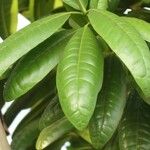
Pimenta dioica
Allspice · Clover-pepper · Pimenta · Jamaica-pepper · Jamaican pepper
Description
Source: leafsnapAllspice, also known as Jamaica pepper, myrtle pepper, pimenta, or pimento, is the dried unripe berry of Pimenta dioica, a midcanopy tree native to the Greater Antilles, southern Mexico, and Central America, now cultivated in many warm parts of the world. The name allspice was coined as early as 1621 by the English, who valued it as a spice that combined the flavours of cinnamon, nutmeg, and clove.Several unrelated fragrant shrubs are called "Carolina allspice" (Calycanthus floridus), "Japanese allspice" (Chimonanthus praecox), or "wild allspice" (Lindera benzoin).
Care Guide
💧 Water
Allspice is native to the Caribbean, where it thrives in humid climates with consistent moisture. It generally requires watering every 1-2 weeks. While allspice is moderately drought-tolerant, it benefits from mulching to help retain soil moisture. Commonly grown outdoors, allspice flourishes in warm conditions, which are essential for maintaining its evergreen nature.
How should I water my Allspice plant?
Your Allspice plant is not too particular about how you water it, so you can use any common watering tool. Whether it's a watering can, hose, or even a cup, it will work just fine. Just make sure to water the soil directly and evenly, so that every part of the root system gets the moisture it needs. Using filtered water is recommended, as tap water may contain harmful particles. It's also helpful to use water that is at or slightly above room temperature, as extremely hot or cold water can be a shock to the Allspice. However, the plant generally responds well to any type of water you provide.
What should I do if I give my Allspice plant too much water or too little water?
Outdoor plants, especially newly planted ones or seedlings, can often suffer from lack of watering. It's important to remember to water these plants enough for the first few months, especially when the tree is still small or newly planted. Once the plant's roots are established, it will rely on rain for most of its water needs. When you have Allspice plants in pots, overwatering is more likely to happen. If you accidentally overwater your Allspice, it's important to act quickly to remedy the situation. Immediately stop watering the plant to minimize the effects of overwatering. Then, take the plant out of its pot to check its roots. If none of the roots show signs of root rot, you can return the plant to its container. However, if you do find signs of root rot, trim away the affected roots and consider applying a fungicide to prevent further damage. Finally, repot the Allspice in well-draining soil. If your Allspice plant is underwatered, simply water it more frequently. Underwatering can be easily addressed. If the plant's leaves droop, dry out, and fall off, water the plant sufficiently and the leaves will quickly regain their fullness. Adjust your watering frequency as needed to prevent underwatering. Overall, it's important to be mindful of the watering needs of your outdoor plants, especially when they are newly planted or in pots.
How often do I need to water my Allspice plant?
Most outdoor plants can rely on rainfall for their watering needs. However, if your area lacks rainfall, you should water your plants adequately every 2 weeks in the spring and fall. In the summer, you will need to water them more frequently. In winter, when plants grow slower and need less water, you should water them sparingly or not at all. If your Allspice plant is young or newly planted, it will need more frequent watering to help it establish and grow into a more adaptable and drought-tolerant plant. For potted plants, there are two main ways to determine how often to water your Allspice. The first option is to follow a predetermined watering schedule, either once a week or once every other week. However, keep in mind that this may not always be accurate as it doesn't consider the specific conditions of your growing environment. Another approach is to base watering frequency on the moisture level of the soil. It's best to wait until the first two to four inches of soil, about ⅓ to ½ depth of the pots, have completely dried out before watering again. Remember, during the summer months when water needs are highest, a set watering schedule may not be sufficient.
How much water does my Allspice plant need?
When watering your Allspice plant, you may be surprised to find that it doesn't always need a lot of water. If only a few inches of soil have dried out since your last watering, giving it about five to ten ounces of water should support healthy growth. You can also base the amount of water on the moisture level of the soil. Keep track of how many inches of soil have dried between waterings. To ensure your Allspice gets enough moisture, water enough to moisten all the dry soil layers since the last watering. If over half of the soil is dry, consider giving more water than usual until you see excess water draining from the pot. If your Allspice is planted in a rainy outdoor area, it may not need additional watering. When it's young or establishing, make sure it gets 1-2 inches of rain per week. As it grows, it can rely on rainwater, and only water it fully if there's been no rainfall for 2-3 weeks during hot weather to prevent stress.
How can I know if I'm giving enough water to my Allspice plant?
Overwatering is a common issue for the Allspice. If your Allspice is overwatered, you will notice yellowing leaves and possible leaf drop. Overwatering can also cause the plant to shrink and increase the risk of root rot. On the other hand, if your Allspice is underwatered, it will start to wilt and may have brown or brittle leaves. No matter which issue you notice, it is important to take action and restore your Allspice's health.
☀️ Light Full sun
Allspice prefers to receive ample sunlight each day, though it can tolerate lower light levels. Native to environments with abundant sun, it may experience reduced growth when light is insufficient, while excessive sunlight can also cause stress.
What are the sunlight requirements for Allspice?
Allspice plants flourish best when exposed to generous quantities of sunlight daily, thriving in full sun exposure of over 6 hours, but they can also tolerate partial sun, receiving about 3-6 hours of sunlight. Being native to environments with abundant sunlight, Allspice may experience slowed growth if it doesn't get enough light, while excessive exposure can also stress the plant. It's essential to observe your garden's sunlight patterns closely to find spots that offer the right balance of light and shade, ensuring the plant's well-being.
How can artificial lighting support Allspice growth indoors?
Indoor Allspice plants require sufficient lighting, especially when natural sunlight is inadequate, like in winter or less sunny locations. Artificial lighting serves as an excellent alternative, promoting healthier and faster growth. For optimal results, using LED lights is advised as they can be adjusted to provide specific light wavelengths needed by the plants. The artificial light intensity should range between 10-50W/sq ft depending on whether the plant requires full sun, partial sun, or shade. The light source should be placed 12-36 inches above the plant, mimicking natural sunlight as closely as possible, and should be left on for 8-12 hours a day.
What are the symptoms of inadequate sunlight for Allspice?
Allspice plants show several symptoms when they don't receive sufficient sunlight. These include small, new leaves that are smaller than the older ones, leggy or sparse growth with longer spaces between leaves or stems, faster leaf drop as the plant conserves resources, slower or halted growth as the plant enters survival mode, and new leaves appearing pale or with irregular color patterns indicating a lack of chlorophyll. Additionally, symptoms like chlorosis (leaves turning yellow), sunscald (damage from intense sunlight), leaf curling (defense mechanism against excessive sunlight), wilting (loss of turgor pressure), and leaf scorching (brown, dry patches on leaves due to too much sunlight) can also occur if the light conditions are not optimal.
What are the solutions for Allspice suffering from inadequate sunlight?
For Allspice struggling with inadequate sunlight, improving light exposure is key. Indoors, gradually relocating plants to sunnier spots until they get at least 6 hours of direct sunlight daily is beneficial. Using south-facing windows and keeping curtains open during the day maximizes sunlight absorption. If moving the plant isn't feasible, supplemental artificial lighting, such as desk, ceiling lamps, or professional grow lights, used for at least 8 hours daily, can provide necessary light. Outdoors, it's crucial to transition plants to sunnier locations gradually to prevent sunburn. Observing the surrounding environment for obstructions and considering pruning or transplanting during dormant periods to brighter locations can significantly enhance sunlight accessibility. Remember, while alleviating sunlight deficiency, affected plant parts may not fully recover, but new growth will thrive under improved conditions.
🌡️ Temperature 20–37.8°C
Allspice comes from regions where temperatures range from 68 to 100 °F (20 to 38 ℃). The plant favors a warm, mild climate and may need artificial heating during colder months.
What are the ideal temperature conditions for growing Allspice?
Allspice thrives in balmy environments with temperature ranges between 68 to 100 °F (20 to 38 °C). It is a heat-loving plant that can be affected negatively by cold temperatures. During cooler seasons or in regions with temperatures below its preferred range, artificial warming might be necessary to maintain its health. When outdoor temperatures start to drop in autumn, it's advisable to bring Allspice plants indoors, positioning them near a bright window but away from direct heat sources to avoid drying out the plant. It's essential to keep the temperature above 20°C during winter to support the plant's growth, as temperatures nearing 5°C can be harmful.
What should I do if my Allspice experiences low temperatures?
Allspice plants prefer to be kept in warm conditions, thriving best above 20°C and struggling in temperatures below 5°C. If the temperature falls below 1°C, the leaves may start to lighten in color, leading to brown or black discoloration and symptoms like wilting and drooping after frost damage. To handle frost damage, trim off the affected parts and move the plant indoors to a warmer area for protection against the cold. Position the plant near a south-facing window for ample sunlight, ensuring it's not placed near heaters or air conditioning vents to prevent the air around it from becoming too dry.
How should I care for my Allspice in high temperatures?
During the summer, it's crucial to keep the Allspice plant's environment below 38°C to prevent stress and damage. When exposed to temperatures above 43°C, the plant's leaves may lighten and become more prone to sunburn. To care for an Allspice plant in high temperatures, trim away any sunburned or dried parts of the plant. Move it to a location where it can be shaded from the harsh midday and afternoon sun. Ensure that the plant is watered in the morning and evening to maintain moist soil conditions.
💨 Humidity normal (40-60%)
This plant will thrive in moderate humidity, which is probably the level in your home. However, misting it a few times a week can be very beneficial. Make sure the room has good ventilation.
🪴 Soil 6-7
🌱 Fertilizer
Use organic fertilizers (for example fish emulsion or compost) instead of chemical ones for Allspice. Give young plants increased nitrogen and phosphorus in spring. Mix compost or fertilizer into the soil either before or after planting. For mature plants, apply a balanced fertilizer or one targeted to specific deficiencies in spring. Nutrient deficiency leads to small leaves, shortened branches, yellow or bronze foliage, acidic fruits, premature fruit drop, and splitting.
🪴 Pot & Repot 2-3 years
Every two years in spring, repot your allspice plant into a large pot with good drainage. Ensure the soil remains moist and place the plant in partial shade after repotting. With proper care, the allspice plant's fragrant leaves will thrive, adding charm to your garden and flavor to your kitchen.
✂️ Pruning
To keep your allspice plant healthy and productive, it's important to prune it regularly during its dormant period, which is from early to late winter. Focus on removing any dead or crossing branches, and thin out the interior branches to improve air circulation. This encourages better growth and berry production in the spring. Be sure to use sharp, clean tools to prevent the spread of disease, which will help maintain a healthier plant.
🌿 Propagating
🐛 Diseases & pets
☠️ Toxicity
Characteristics
- Plant Type
- Tree
- Life Cycle
- Perennial
- Genus
- Pimenta
- Family
- Myrtaceae
- Hardiness Zone
- 10-12
- Mature Height
- 6.1 m to 12.19 m
- Mature Spread
- 4.57 m to 7.62 m
- Leaf Color
- Green
- Leaf Type
- Evergreen
- Flower Color
- White
- Flower Size
- 2.54 cm
- Bloom Time
- Summer
- Planting Time
- Spring, Summer, Autumn
- Harvest Time
- Late summer, Fall
- Native Area
- Bahamas, Belize, Cuba, Honduras, Mexico, Guatemala, Brazil, El Salvador, Nicaragua, Costa Rica, Jamaica